
Last updated August 26, 2026
Free on-site gate assessment - hinges, posts, and your LiftMaster or Nice gate operator checked before anything is quoted
The assessment is free and the quote is the invoice.
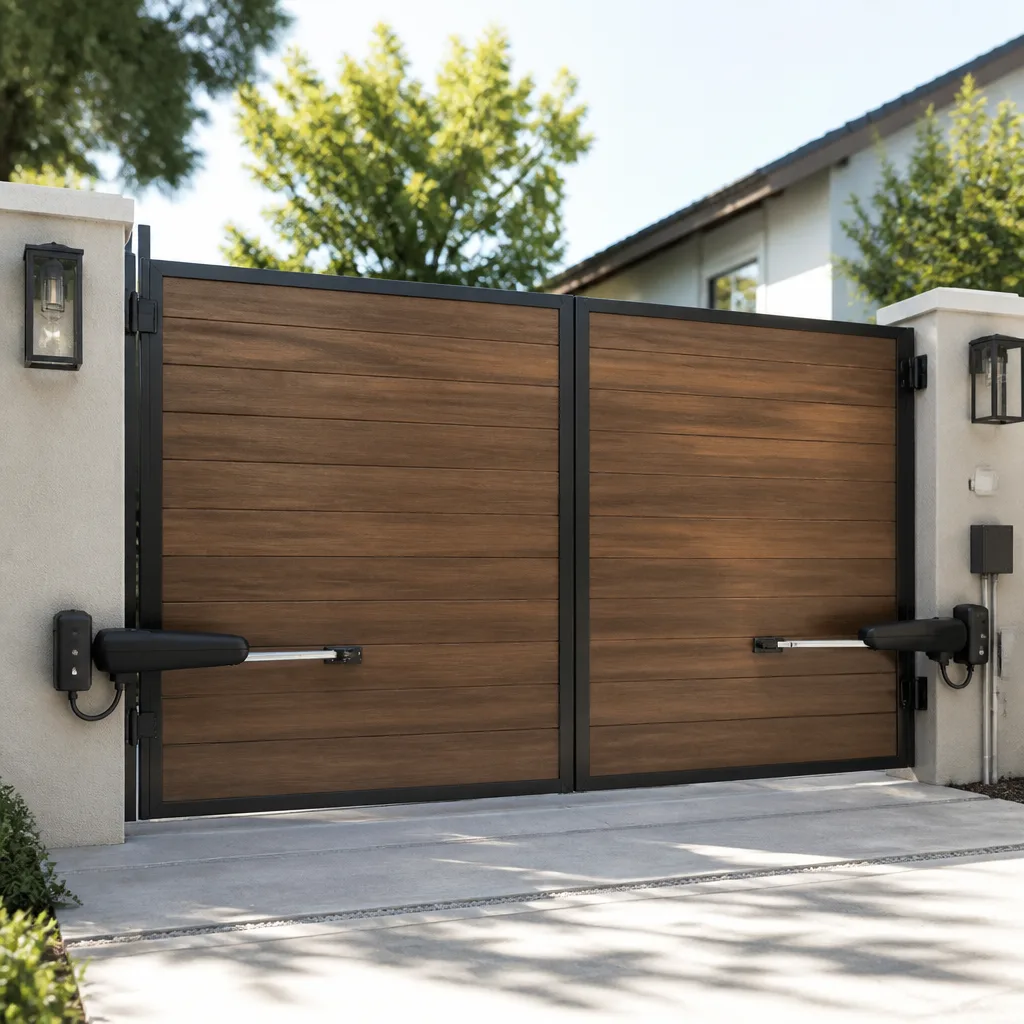
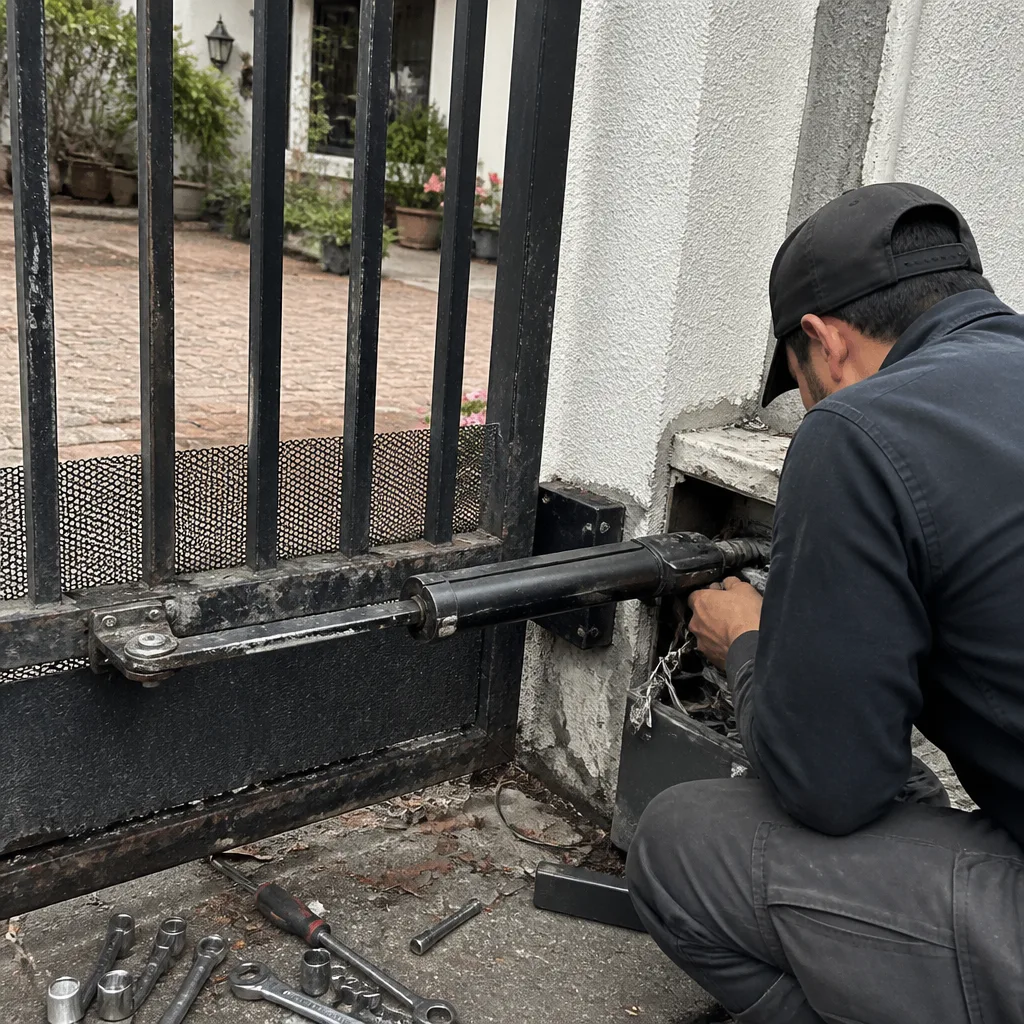 Before
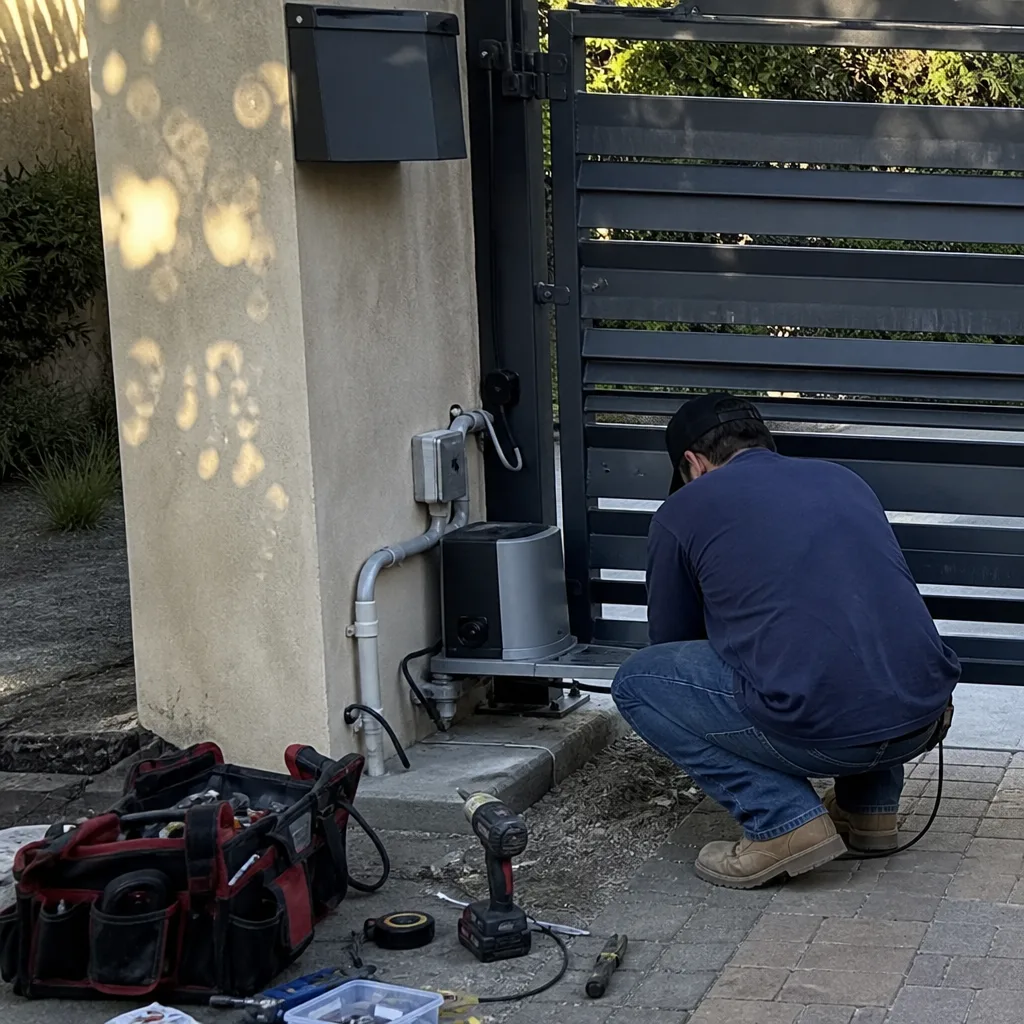 After
After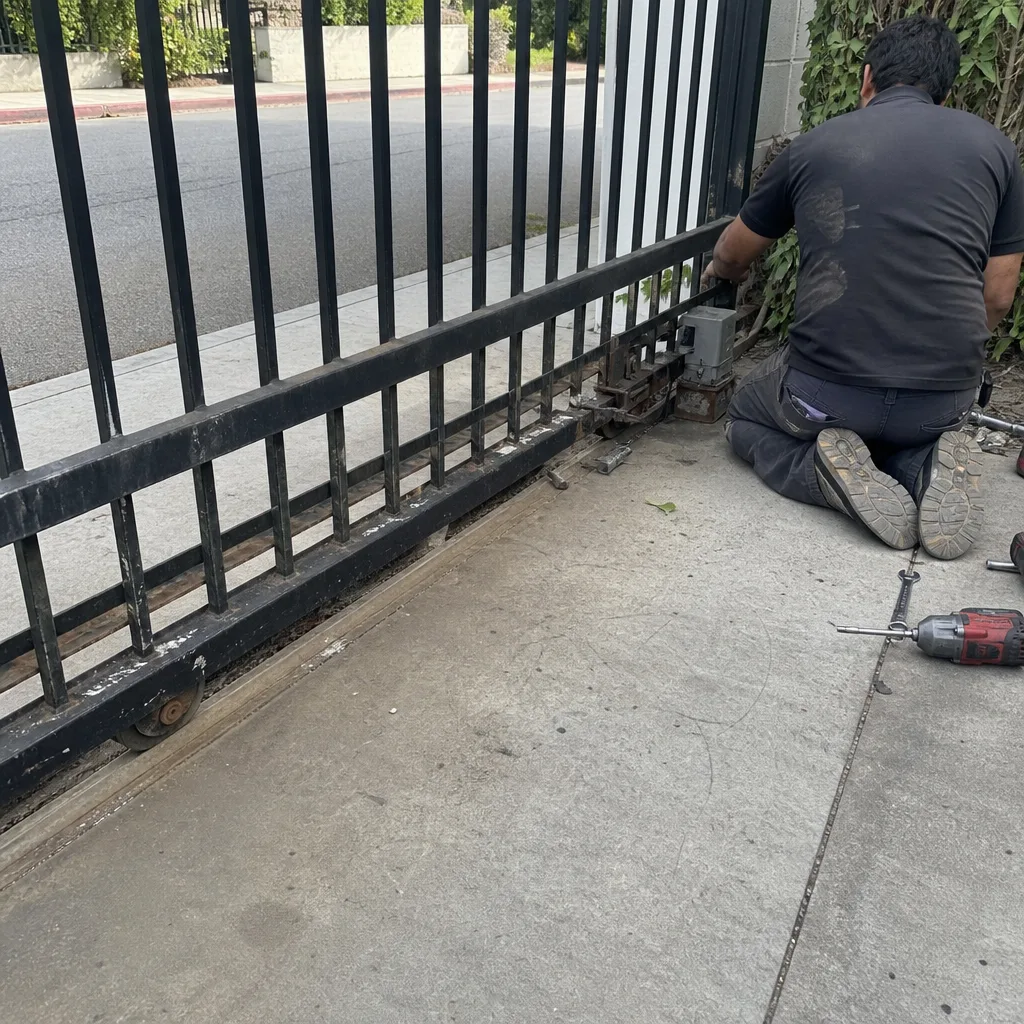 Before
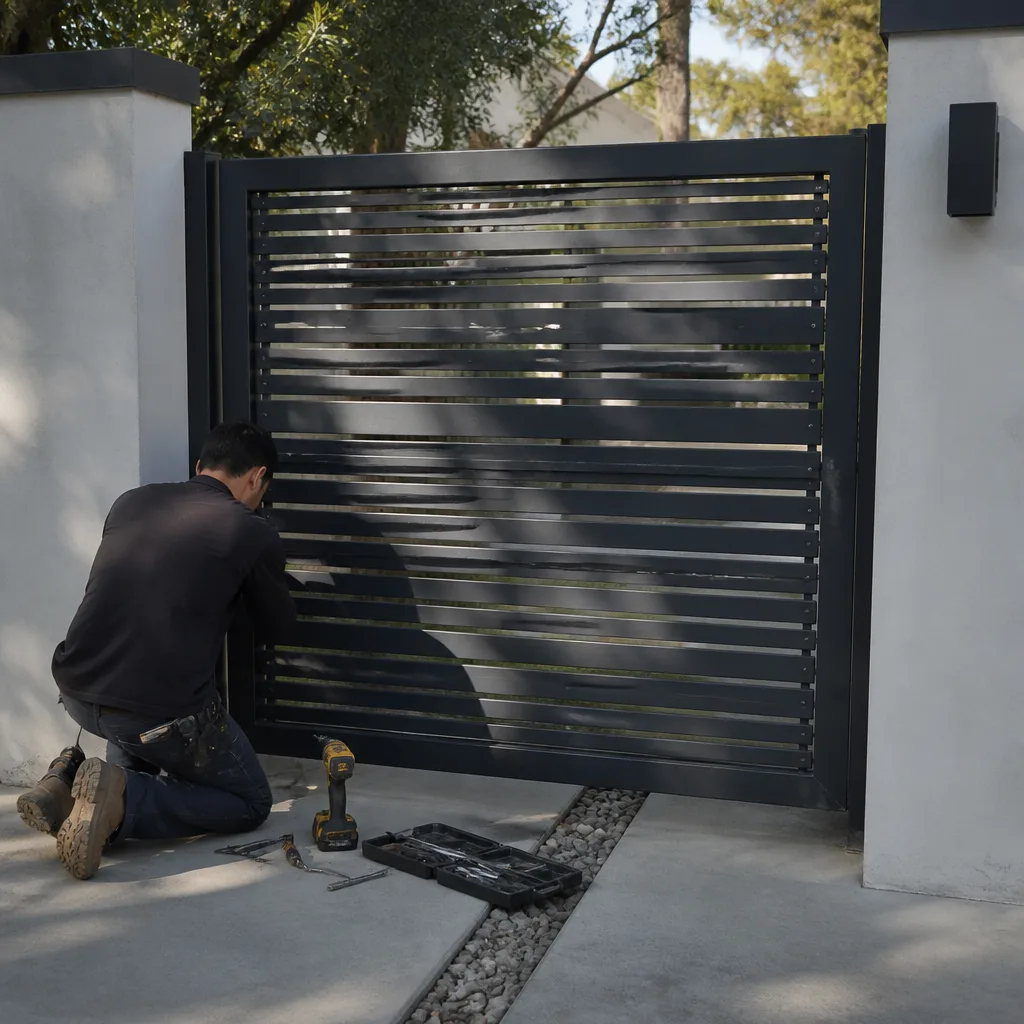 After
After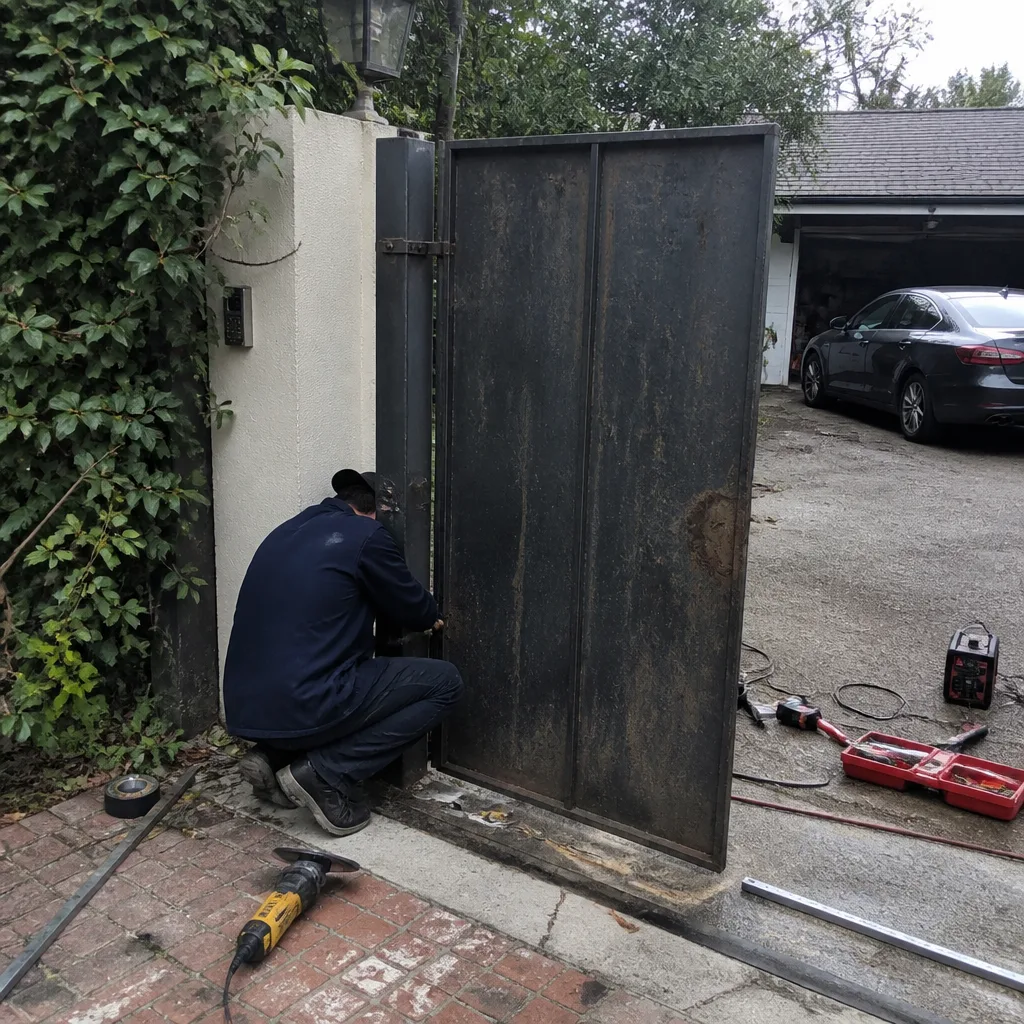 Before
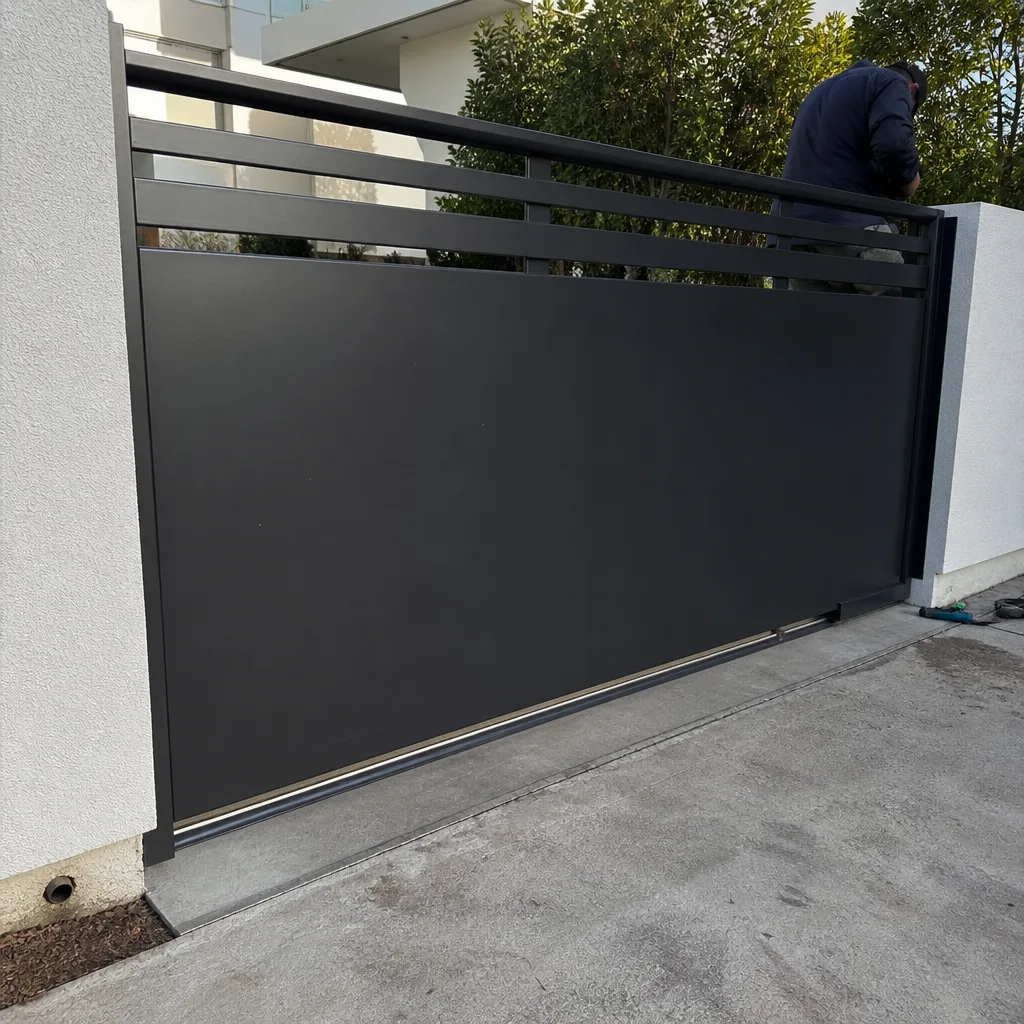 After
AfterSeasonal Gate Repair Care for West Hollywood: Year-Round Homeowner’s Guide
Most gate maintenance guides read like they were copied from a Minneapolis snow-belt checklist and given a sunny zip code. That’s worse than useless - it’s misleading. West Hollywood has its own rhythm: months of arid heat followed by a damp marine season, and each does specific, predictable damage to gates, hinges, and operators. We’ve fixed enough gates in the flats, the hills above Sunset, and the canyons to know exactly what fails and when it fails. This guide maps maintenance to what actually happens in West Hollywood, season by season, so your gate doesn’t just survive the year - it works when you need it, every time.
Quick Answer
The single most important seasonal maintenance habit for West Hollywood homeowners is lubricating hinges and checking tension before Santa Ana season, then inspecting for rust and water intrusion after the rains. Most gate failures here are not sudden - they’re the result of dry-heat cycles cracking lubricant and wet-season moisture working into unprotected steel. A one-hour seasonal walkaround twice a year prevents the majority of gate repair calls we see.
Table of Contents
- The Pre-Santa Ana Season Checklist (September)
- Post-Rain Inspection Priorities for Hillside Properties
- Summer Heat Expansion: Travel Limits and What to Adjust
- The Spring Task Most People Skip: Weld and Joint Inspection
- Annual Operator Battery Replacement as a Calendar Item
- A Lubrication Schedule That Matches West Hollywood’s Climate
- Common Mistakes to Avoid
- When to Call a Professional
- Frequently Asked Questions
- The Bottom Line
The Pre-Santa Ana Season Checklist (September)
Every September, the humidity in West Hollywood drops and the wind picks up. For a gate, that combination is harder than it looks. The dry air does two things: it evaporates whatever lubrication remains on hinge pins and roller tracks, and it causes fine dust to stick to every surface that is even slightly tacky. When the Santa Ana winds arrive in October and November, that dust acts like sandpaper on moving parts.
We also see a spike in operator thermal cutoffs tripping during Santa Ana season. Here’s why: dry heat makes the gate itself slightly harder to move (dry hinges, dust friction), which makes the operator work harder. Working harder means running hotter. In West Hollywood, where daytime temperatures in the fall can still touch the mid-90s, that extra heat pushes some operators past their thermal protection threshold. The gate stops mid-cycle, the homeowner resets the breaker, and it happens again the next afternoon. The fix is usually not a new operator - it’s removing the friction that’s making the old one strain.
Here is the September checklist we recommend for every West Hollywood gate:
- Lubricate hinge pins, roller wheels, and the operator chain or belt track. Use a dry silicone spray or white lithium grease. Avoid WD-40 as a primary lubricant - it displaces moisture but leaves almost no lasting film, and it attracts dust.
- Tighten every bolt you can see. Wood gates in the hills above Sunset dry out and shrink in September, which loosens hinge bolts and latch hardware. A gate that rattles in September will sag by December.
- Check the operator’s thermal cutoff behavior. If your gate has ever stopped mid-cycle on a hot afternoon, now is the time to address it - not during the first Santa Ana event. Clean the operator vents, re-lubricate the track, and see if the motor still runs hot.
- Inspect the safety edges and photocells. Dust buildup on photocell lenses is a September problem in the flats, where construction dust and canyon breezes combine. A clean photocell is the difference between a gate that stops for a delivery truck and one that reverses on a kid’s bike.
- Clear the track of debris. Palm fronds, eucalyptus bark, and bougainvillea trimmings all end up in gate tracks during September landscaping. A blocked track makes the operator push harder, which circles right back to the overheating problem.
This is also the right time to look at the gate’s travel limits. If the gate has been working fine all summer, you might not notice a slight over-travel until the first hot afternoon when the metal expands another millimeter, the gate binds against the stop, and the operator trips. More on that in the summer section below.
If any of this feels like more than you want to take on, start with our Gate Repair in West Hollywood page - a full September service call typically takes under an hour, and it’s the cheapest insurance you’ll buy all year.
Post-Rain Inspection Priorities for Hillside Properties
West Hollywood’s wet season is not long, but it is concentrated. When it rains, it often rains hard for a day or two, then sits damp for a week. For gates on hillside properties - especially in the neighborhoods above Sunset where driveways slope down toward the street - water runs toward the gate posts and collects at the base. That standing water is where rust starts, and it starts faster than most homeowners expect.
The post-rain inspection should happen within a week after any meaningful rainfall. Here’s what to look for, in order of importance:
- Standing water at the base of gate posts. If you see water pooling around a post, that post is sitting in moisture. Over the course of a single wet season, that’s enough to start pitting the steel below the surface. Grade the soil away from the post or add drainage. This one fix prevents a post failure that costs ten times the effort later.
- Rust bloom at weld joints and hardware. Welds are the most corrosion-prone part of any steel gate. The heat from welding changes the metal’s surface chemistry, and that’s where rust wants to start. After rain, look for orange staining at every joint, hinge, and bracket. Treat surface rust now with a wire brush and rust converter, and it stops. Ignore it, and it has a full year to eat inward before the next wet season.
- Water intrusion into the operator housing. Even weather-rated operators can take on moisture if the gasket is old or the housing was mounted at an angle. Open the unit and look for condensation, corrosion on terminals, or a mildewed smell. A damp operator will run erratically within a few months, and by then it’s often too late for a cheap repair.
- Soft ground around the post foundation. Hillside soil in West Hollywood shifts after heavy rain. If the concrete around a gate post has visible cracks that weren’t there in the fall, or if the post feels loose when you push on it, the gate is moving. A post that shifts even a quarter inch changes the gate’s geometry enough to strain hinges and defeat the latch. This is a repair-now situation, not a monitor-it situation.
For hillside gates, water management is everything. The gate itself might be dry, but if the post base is sitting in saturated soil for a week at a time, the clock is running. We’ve replaced posts in the hills that looked fine above ground and were structurally compromised four inches below the surface. You can’t see it until the gate starts sagging, and by then the damage is done.
If you’re thinking about a more permanent solution for a gate in a high-runoff area, our Gate Installation in West Hollywood guide covers drainage planning and post foundation best practices.
Summer Heat Expansion: Travel Limits and What to Adjust
Metal expands when it gets hot, and in West Hollywood, summer afternoons routinely push steel gates several degrees past their mild-weather temperature. That expansion is measurable - a 12-foot steel gate can grow a noticeable fraction of an inch on a 95-degree day. If your operator’s travel limits were set during a mild spring, that extra expansion can be enough to cause a bind at the closed position, which trips the operator’s safety reversal.
Here’s how to check whether your gate’s travel limits need seasonal adjustment:
- Run the gate through a full open-close cycle on a hot afternoon. Not in the morning - the afternoon is when expansion is at its maximum. Watch and listen for any hesitation, grinding, or thumping at the extremes of travel.
- At the closed position, check the gate’s contact with the stop. If the gate is pressing hard into the stop, the operator is trying to push it further than it can go. On a LiftMaster or Linear operator, that excess pressure can trigger the force sensor and reverse the gate.
- Also watch for over-travel. If the gate slams into the open stop and bounces back an inch, the limit is set too far. Over-travel is harder on the operator than most people realize - it’s the mechanical equivalent of slamming a car door every single time.
- On LiftMaster, FAAC, and BFT units, adjust the limit screws or digital settings slightly back from the stop. You want the gate to come to rest just before full contact, not after. A quarter-inch gap at the stop is ideal on a hot day; it will close up as the metal cools.
- Test again the next morning. If the gate now stops a quarter-inch short of the closed position when cool, that’s the right setting. The gap exists because the metal contracted overnight. It’ll close up on the next hot afternoon.
Most gate operators have simple mechanical limit switches or digital settings. The exact procedure varies by brand and model, and if you’re not comfortable opening the operator housing, this is one of those tasks where a wrong guess can put the gate out of action entirely. But the seasonal principle is the same across every brand: set limits for the hottest conditions, not the mildest.
On FAAC and BFT hydraulic operators, expansion is less of an issue than on chain-drive and belt-drive units - hydraulic systems self-adjust to a degree. But the gates those operators move still expand, so the limit-setting logic still applies. We set every operator we install with a hot-weather test cycle as the final step, which is why our summer service call volume stays flat while other companies in West Hollywood run hot-weather repair specials. The adjustment is a ten-minute job if you know the operator. If you don’t, it’s a good candidate for a professional touch - Gatewood Fence & Gate home has our contact details and our promise, in writing.
The Spring Task Most People Skip: Weld and Joint Inspection
Spring in West Hollywood is the easiest time of year to ignore your gate. The days are mild, the rain has stopped, and nothing is failing loudly. But spring is exactly when the damage from the wet season is most visible - if you bother to look. Once summer arrives, that same damage has a full year of hot, dry expansion cycles to turn a small crack into a structural failure.
Here’s what we check on spring service calls, and what you can check yourself with a flashlight and ten minutes:
- Weld joints at the frame corners and gate-to-hinge connections. Look for hairline cracks radiating from any weld. These start small, but they grow with every open-close cycle. A hairline crack in March becomes a visible gap by August.
- Surface rust at any scratch or gouge. If the gate scraped against a post during winter, or a rock chip exposed bare steel, that exposed spot started rusting during the rains. Spring is when the rust is still light enough to clean and seal.
- Hinge play. Lift the gate slightly at the latch end and feel for movement. A well-hung gate moves smoothly with no vertical play. Any clunking or vertical shift means the hinge pins or bushings are wearing. Hinge wear is a spring problem to fix - it gets dramatically worse over a hot summer.
- Wood gate panels for warping or splitting. Wood gates in West Hollywood’s flats have a different failure pattern than anything in Santa Monica. The dry season pulls moisture out of the wood faster than in coastal neighborhoods, which means splits and cracks open up faster. Catching a split before it runs the length of the panel saves the whole gate.
For steel gates, the spring inspection is where a little effort pays off disproportionately. Surface rust that gets treated with a wire brush and rust-inhibiting primer in April looks brand new in October. The same rust ignored for six months becomes pitting that needs welding to repair. The difference is a $40 afternoon versus a $400 repair. If you find joint cracks or deep pitting, we do on-site welding at your driveway - the gate doesn’t leave your property, and the repair is done the same day. Hal Gatewood’s name is on the shop and on every invoice, and a weld that fails gets redone. That’s the whole promise.
Annual Operator Battery Replacement as a Calendar Item
Most homeowners never think about their gate operator’s battery until the power goes out and the gate doesn’t. That’s backwards. Backup batteries in gate operators have a typical service life of three to five years, but in West Hollywood’s temperature range - where summer afternoons can hit the high 90s and operators mounted in direct sun run even hotter - we see batteries degrade on the faster end of that range. Heat is the enemy of battery chemistry, and a black operator housing in full West Hollywood sun is effectively a small solar oven.
Make battery replacement an annual calendar item, not a reactive fix. Here’s the simple version:
- Add a recurring reminder for the same month every year. We suggest September, alongside the pre-Santa Ana checklist. That way the battery check happens before the windy season, when power outages are most likely in West Hollywood.
- Check the battery’s date code and voltage. Most operator batteries are sealed lead-acid (SLA) units, 12V with an amp-hour rating between 7Ah and 9Ah. Replace with the same chemistry and capacity - don’t substitute a different amp-hour rating just because it’s cheaper. The operator’s charging circuit is designed for a specific battery profile.
- Look for swelling, corrosion on the terminals, or a sulfur smell. Any of these means the battery is failing even if the voltage reads normal. A swollen battery should be replaced immediately, not next month.
- On LiftMaster and Linear operators, the battery is usually a drop-in replacement. Disconnect the old one, connect the new one, and the operator handles charging. On FAAC and BFT units, the battery may be integrated into the control board housing - if you’re not sure where it lives, it’s worth a professional look rather than guessing.
For homeowners who want battery backup but don’t have it, this is also the time to consider adding it. A gate operator with a functioning battery backup will open and close a few dozen times during an outage, which is enough for coming and going during a typical Southern California power event. It’s a small upgrade that matters on the days you actually need it - and those days are never scheduled in advance.
One more West Hollywood-specific note: hillside gates on steep driveways often have larger motors and higher-travel gates, which means they draw more current during operation. If your gate is on a grade, the battery needs to be in top condition to hold up under that additional load. A battery that tests fine for a flat driveway gate may fail under the load of a hillside gate when the power drops. This is one of those cases where Gate Access Control in West Hollywood systems - keypads, remotes, and interlocks - all depend on the operator having clean power, and we’ve chased enough phantom “remote stopped working” calls to know that a dying battery is often the hidden culprit.
A Lubrication Schedule That Matches West Hollywood’s Climate
Every gate maintenance guide says “lubricate regularly” and then leaves it at that. Vague advice is how gates get neglected. Here’s the actual schedule we recommend for West Hollywood’s specific conditions, based on 29 years of seeing what works and what doesn’t in this climate.
The problem with generic lubrication advice is that West Hollywood’s dry season is not like anywhere else within a hundred miles. Parts that would stay lubricated for a year in Santa Monica will be dry and grinding in West Hollywood within six months. The hot, dry air wicks moisture out of oil-based lubricants, leaving a gummy residue that attracts dust and creates more friction than bare metal. The fix is not more frequent lubrication alone - it’s the right lubricant and the right schedule.
| Season | What to Lubricate | Recommended Product | Notes for West Hollywood |
|---|---|---|---|
| September (pre-Santa Ana) | Hinge pins, roller wheels, track, latch mechanism | Dry silicone spray or white lithium grease | Most important service of the year. Dry air begins now. |
| December (early wet season) | Hinge pins only | White lithium grease | Water-resistant layer before rains. Light coat only. |
| March (post-rain) | Re-lubricate anything that got washed | Dry silicone spray | Check for rust while you’re in there. |
| June (mid-dry-season touch-up) | Roller wheels and track | Dry silicone spray | Two minutes of work. Prevents the July grinding sound. |
For operators, the lubrication rules are different. Most modern gate operators - LiftMaster, FAAC, BFT, Linear - have sealed gearboxes that never need oil. The parts that need attention are the external moving components: the chain or belt, the roller wheels, and the track. A dry chain is loud and wears fast. A dry track makes the operator work harder and run hotter, which circles back to the thermal cutoff issue in September. In our experience, the most common operator problem in West Hollywood is not the motor - it’s the friction built up around it by neglected lubrication.
And a word on WD-40: it has its uses, but as a lasting gate lubricant, it’s not one of them. WD-40 displaces moisture and can free a stuck part, but the film it leaves is thin and non-durable. For hinge pins and tracks that need real protection through a West Hollywood dry season, use a silicone or lithium product that stays put. Using WD-40 as your primary lubricant is like putting water on a plant instead of watering it - it looks like maintenance on the surface and does about as much long-term good.
Common Mistakes to Avoid
- Following a generic “winterizing” checklist. West Hollywood does not need antifreeze or snow-load reinforcement. What it needs is protection against dry heat and dust. Following a Minnesota winter checklist means you’re maintaining for the wrong climate and skipping what actually matters in ours.
- Lubricating with WD-40 and calling it done. It feels like maintenance, it smells like maintenance, but a week later the gate is dry again. Use a real lubricant that leaves a lasting film, or you’ll be re-doing the job monthly.
- Ignoring a gate that’s slightly binding in the summer because it works fine in the morning. That afternoon binding is the first warning sign of expansion-related limit problems. Ignore it and you’ll get a gate that reverses mid-cycle on the hottest day of the year, exactly when you need the gate to work.
- Waiting to fix a rust spot until it’s “bad enough to matter.” By the time a rust spot looks significant to the naked eye, it has already penetrated the surface. Spring is the time to treat surface rust. Waiting until fall means the rust had a full dry season to work deeper.
- Assuming a hillside gate has the same needs as a flat driveway gate. Runoff, slope load, and drainage all change the failure patterns. What works for a gate in the flats won’t necessarily work above Sunset, where water moves differently and the grade loads the hinges year-round.
- Replacing the operator when the real problem is friction. We see this constantly - a gate that’s binding due to dry hinges or a dirty track gets diagnosed as a “burned-out motor” by someone who wants to sell a new operator. Clean the track, lubricate the hinges, and see if the operator still strains. Often, the motor is fine; the maintenance didn’t happen.
- Never checking the battery until the power goes out. By the time you discover a dead backup battery, you’re already in an outage with no way to open the gate. Annual checking is the only way this works. September is the time to do it.
When to Call a Professional
Some jobs are DIY-friendly - lubricating hinges, cleaning tracks, checking for surface rust. Others are not, as our DIY vs Professional Gate Repair: The West Hollywood Homeowner’s Decision Guide explains. If you find a structural crack in a weld or a gate post that moves when you push on it, that’s a repair-now situation, and it’s not a weekend project. High-tension gate springs, especially on heavy steel gates, store enough energy to cause serious injury if they release unexpectedly. We never recommend a homeowner work on spring tension without proper training and the right tools. The same goes for adjusting travel limits on an operator you’re not familiar with - a limit set wrong can cause the gate to drop off the track entirely, and that’s a new gate, not a new adjustment. Gatewood Fence & Gate offers free estimates in West Hollywood - call (323) 677-4063, and if you’ve got a written estimate from another company, bring it with you. Hal will give you a free second opinion on it, and he’ll tell you straight if the work doesn’t need doing.
Frequently Asked Questions
Twice a year is the right cadence for most West Hollywood gates: once in September before Santa Ana season, and once in March after the wet season ends. Each service takes about an hour and covers lubrication, bolt tightening, limit checks, and rust inspection. Gates on hillside properties with steep driveways may need a third light check mid-summer. Call (323) 677-4063 to schedule a seasonal service - estimates are free.
A gate that works in the morning and trips in the afternoon is almost always an expansion problem. The gate grows slightly in the heat, binds at the travel stop, and the operator’s safety system reverses or cuts out. The fix is usually a travel limit adjustment set with a hot-weather test, plus proper lubrication to reduce friction. If you can set limits on your operator, adjust them slightly back from the stop and test on a hot afternoon.
Dry silicone spray or white lithium grease are the two best choices for West Hollywood’s climate. Silicone works well on tracks and rollers because it doesn’t attract dust. Lithium grease holds up better on hinge pins and high-load contact points. Avoid WD-40 as a primary lubricant - its film evaporates quickly in our dry heat, leaving parts unprotected.
Look for orange staining at weld joints, hinge bolts, and areas where the paint has chipped or scratched. Surface rust shows as a light orange dust or stain and can be treated with a wire brush and rust converter. Deep rust shows as pitting, flaking, or visible metal loss, and needs welding repair. After West Hollywood’s rainy season is the right time to inspect - the rust is fresh and easy to see. Call (323) 677-4063 if you’re not sure what you’re looking at.
A proper service covers lubrication of hinges, rollers, and track; tightening of bolts and hardware; inspection of welds and structural integrity; limit setting and force adjustment on the operator; battery check; and a safety test of the photo eyes and reversing system. The whole service typically takes one hour for a standard driveway gate. Gatewood Fence & Gate includes all of this in every service call, and the price is agreed before any work starts. For The Complete Guide to Gate Repair in West Hollywood, see our detailed walkthrough.
Yes. Hillside gates contend with water runoff that flows toward gate posts, which accelerates rust at the foundation. They also carry more load on hinges due to the driveway grade, and the operators work harder against gravity on every cycle. Additionally, the wind exposure above Sunset means gates there catch more debris and dust during Santa Ana season. Post-rain drainage checks and hinge inspections matter more on hillside properties than they do in the flats of West Hollywood.
The Bottom Line
West Hollywood’s gate problems follow a predictable calendar. Dry heat in the fall dies out lubricant and loads dust into every moving part. Rain in the winter feeds rust at the post bases and welds you’ll never see until spring. Summer heat expands the gate and reveals every limit-setting shortcut taken during a mild month. If you maintain against those real conditions - lubricate before Santa Ana, inspect after rain, watch expansion in summer, and check welds each spring - your gate will outlast most of the ones on your block. Skip the calendar, and you’ll be calling for a repair on the hottest afternoon of the year, when everyone else is too. Browse our more guides & resources to stay ahead of seasonal problems. The name is on the shop, and the shop is down the road - that’s the oldest accountability there is. Call (323) 677-4063 for a free estimate and we’ll put the calendar on the fridge for you.
Written by Hal Gatewood, Owner at Gatewood Fence & Gate, serving West Hollywood since 2001.