
Last updated August 26, 2026
Free on-site gate assessment - hinges, posts, and your LiftMaster or Nice gate operator checked before anything is quoted
The assessment is free and the quote is the invoice.
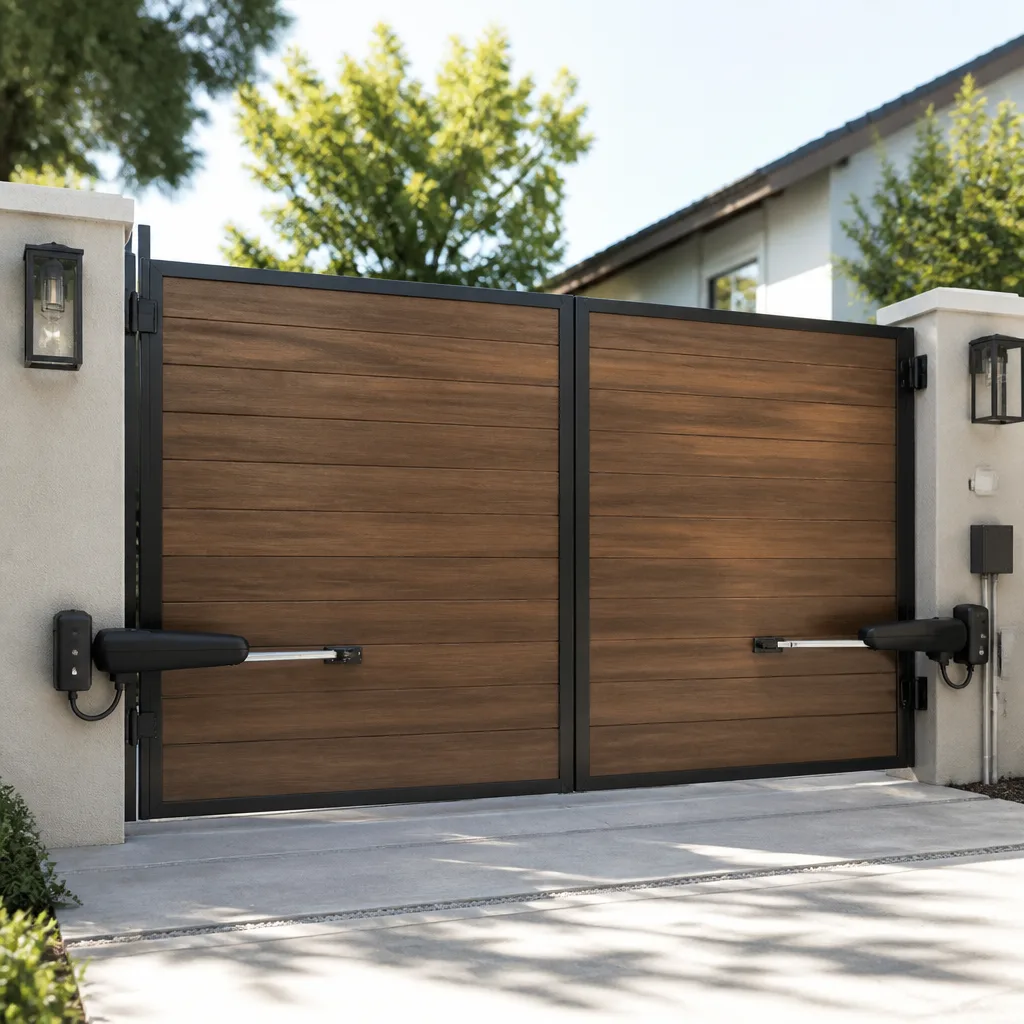
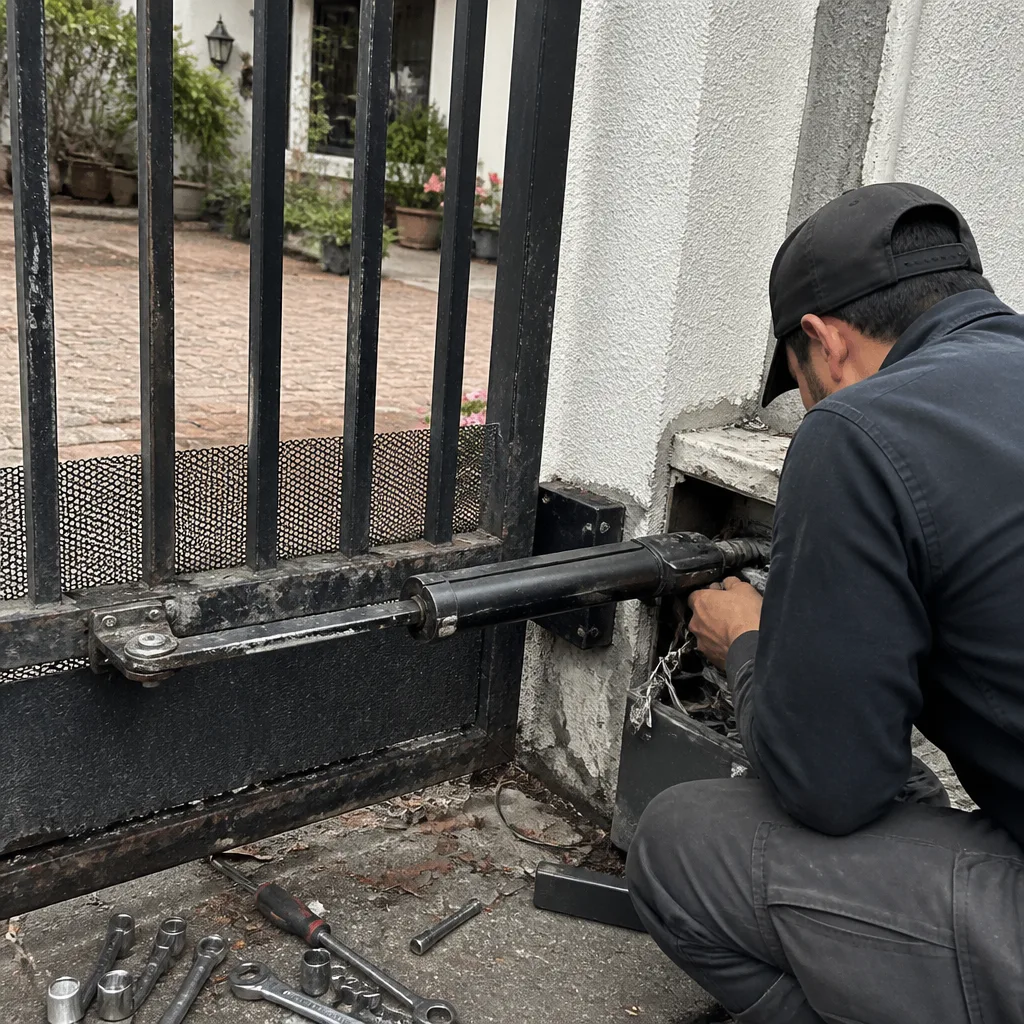 Before
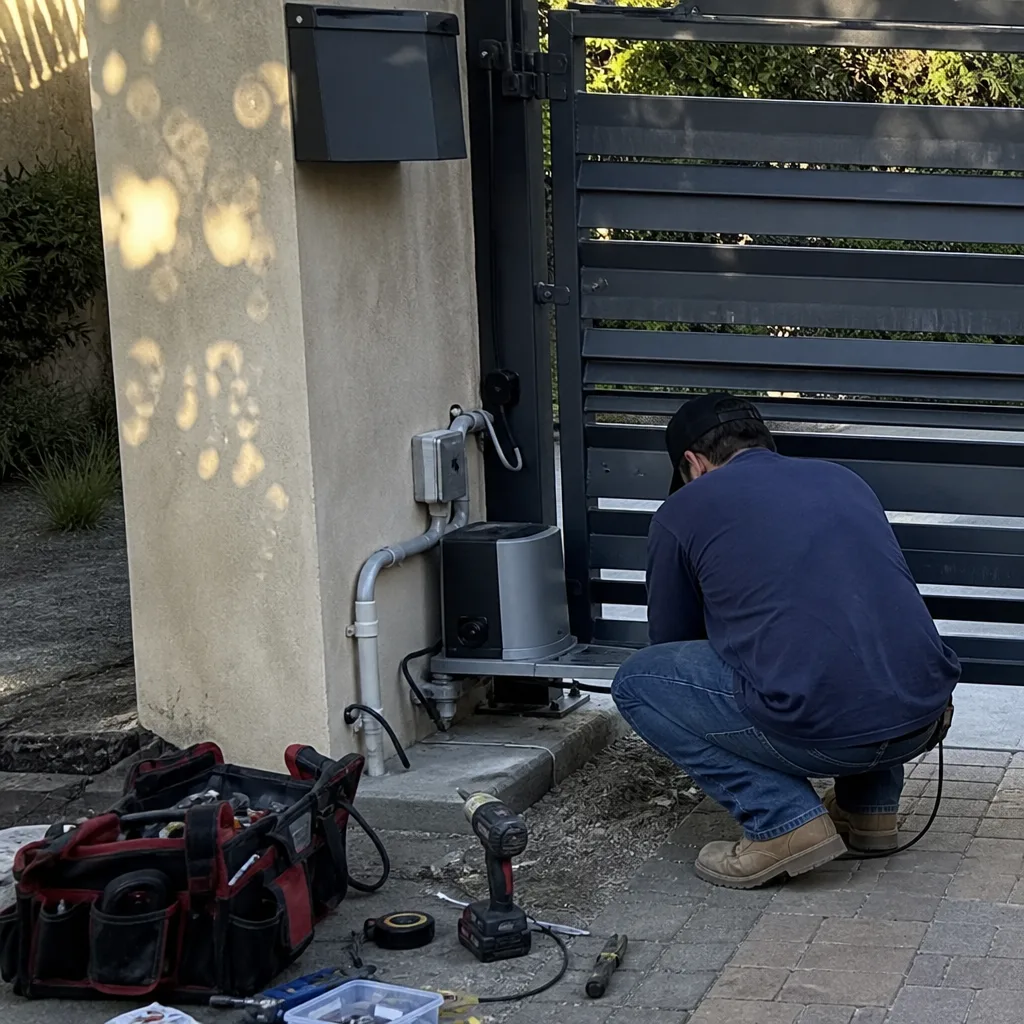 After
After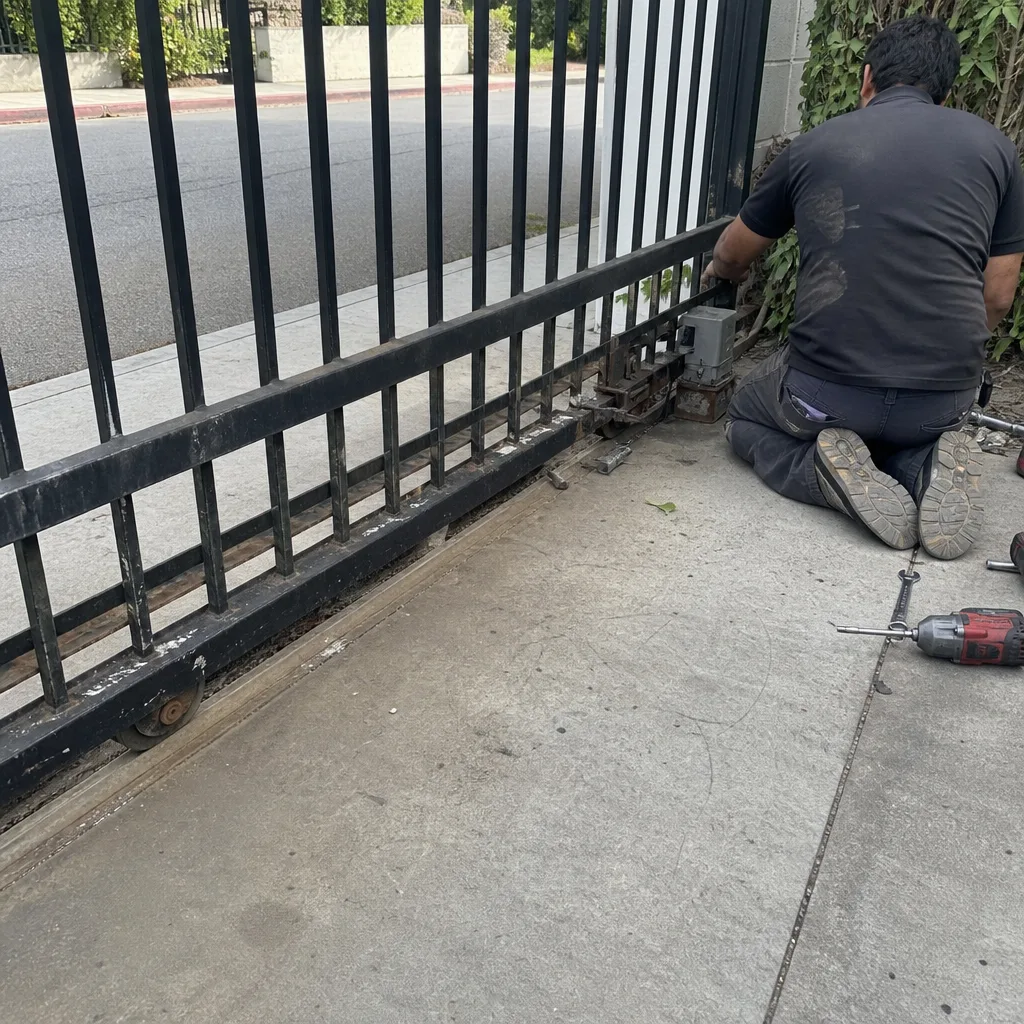 Before
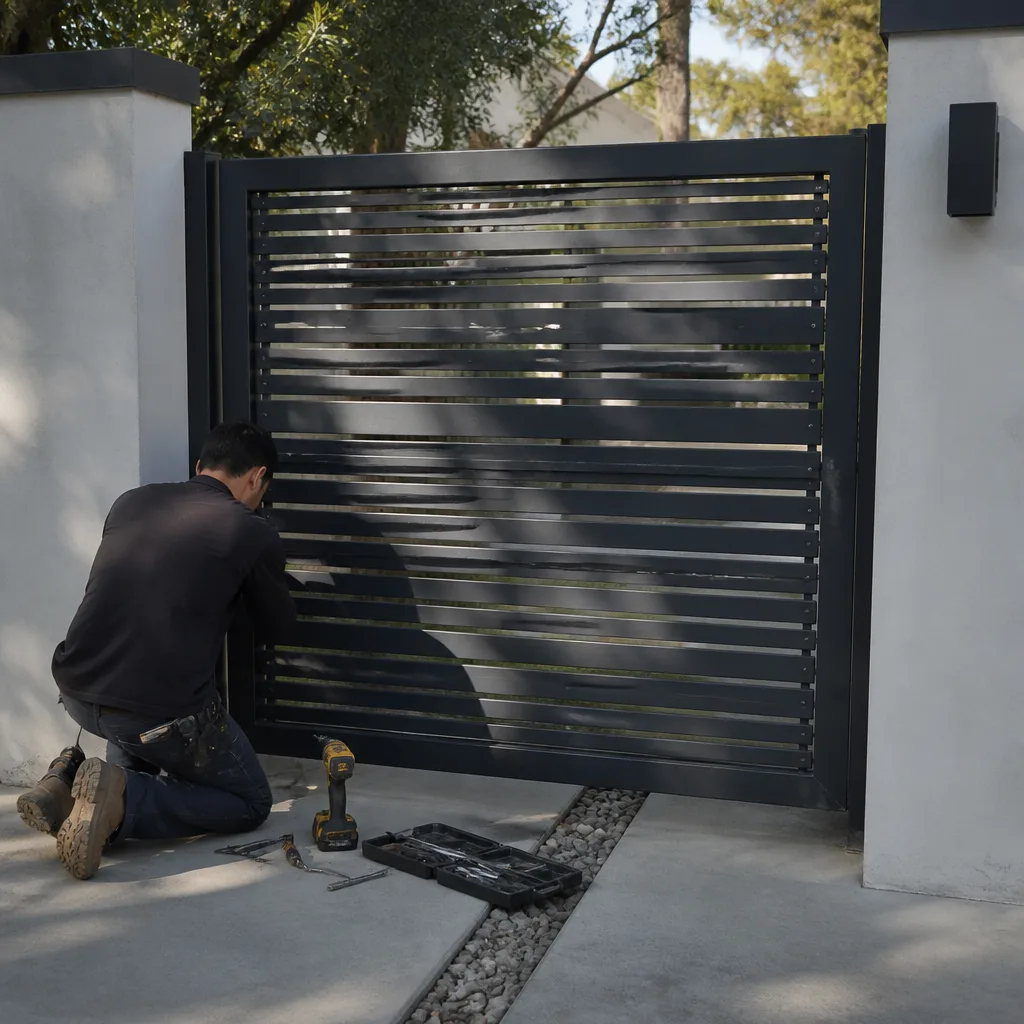 After
After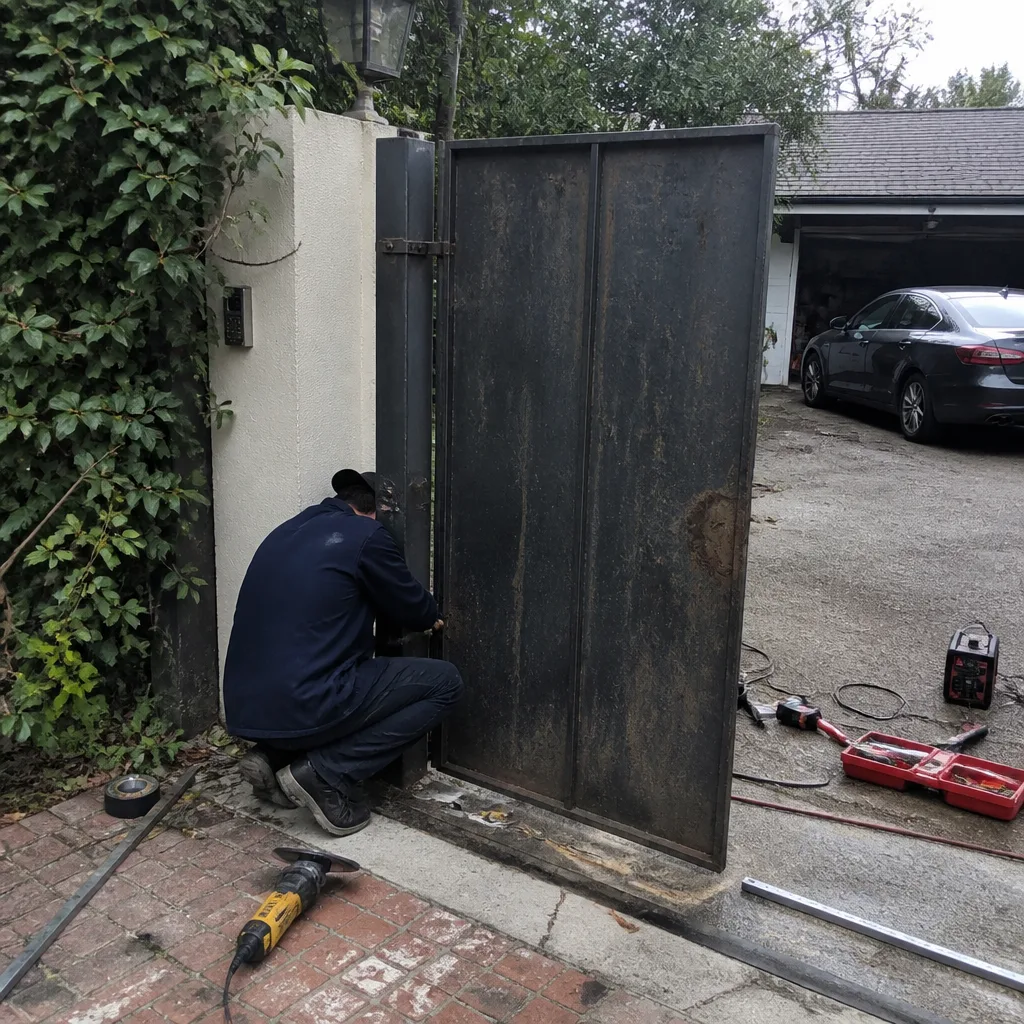 Before
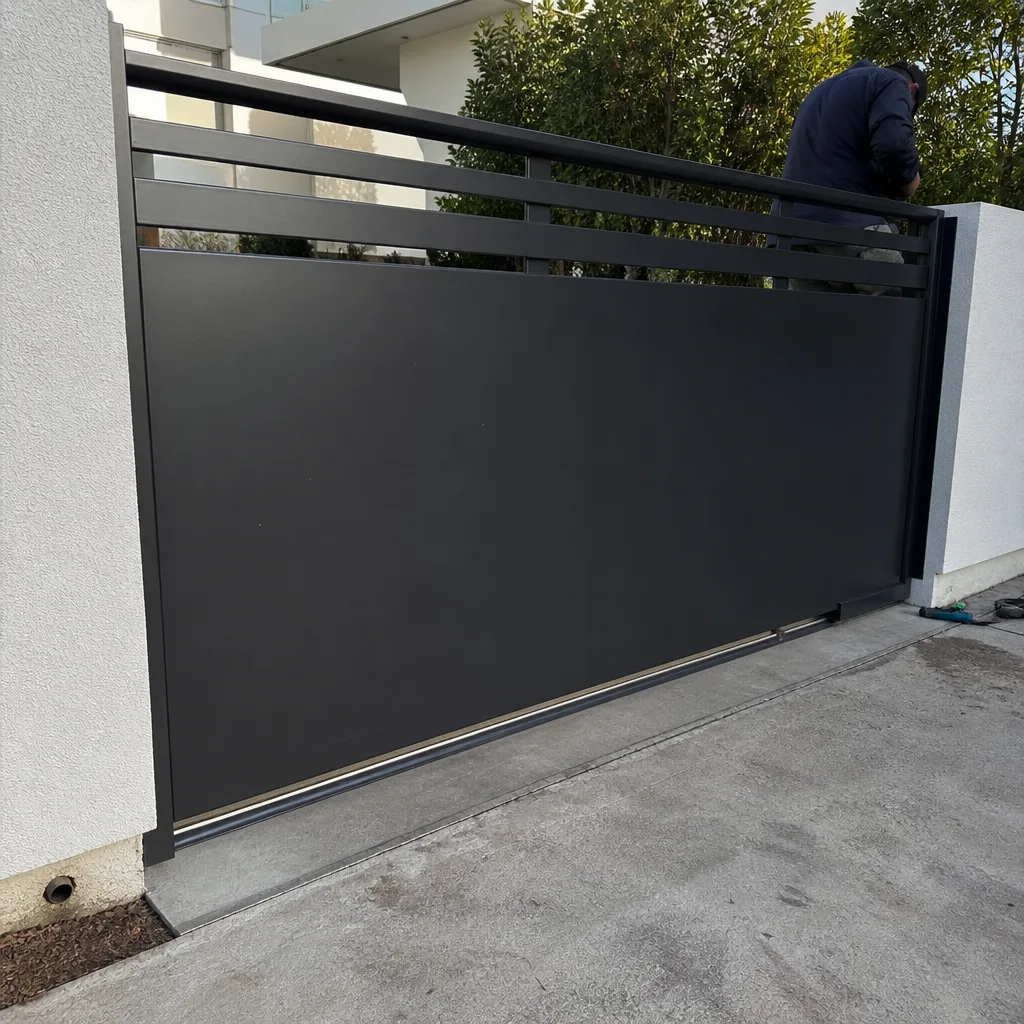 After
AfterGate Access Control Maintenance Checklist for West Hollywood Homeowners
A gate that opens when you press the button looks like a working gate. It isn’t necessarily. The part that actually protects you, the auto-reverse, the entrapment sensors, the loop detector that stops the gate when someone is standing in its path, can be completely dead while the gate swings open and closed as cheerful as ever. In West Hollywood we see this constantly: gates that pass the “does it move” test and fail every safety test that matters. This guide is a maintenance checklist built around the failures you cannot see until something expensive, or someone small, is in the wrong place at the wrong time.
Quick Answer
Access control maintenance in West Hollywood means testing the safety systems, not just the opener: for comprehensive protection, consider our Gate Access Control services, and then run the run the UL 325 reversal and entrapment checks monthly, verify loop detector response every season, clean keypad and intercom contacts twice a year, and check the battery backup under actual load, not just the indicator light. Most of this takes under an hour and catches the quiet failures that turn into four-figure repairs.
Table of Contents
- Why Safety Systems Fail Quietly (And Why the Gate Still Opens)
- The 10-Minute UL 325 Entrapment Protection Test
- Loop Detector Sensitivity: The Cardboard Box Test Explained
- West Hollywood Climate Wear: Dust, Marine Layer, and Your Keypad
- Battery Backup Verification: Why the Green Light Lies
- Smart Access Logs: Finding Unauthorized Code Attempts in Event History
- The Complete Seasonal Maintenance Checklist
- Common Mistakes to Avoid
- When to Call a Professional
- Frequently Asked Questions
- The Bottom Line
Why Safety Systems Fail Quietly (And Why the Gate Still Opens)
An access control system has two jobs. Job one is to open for you. Job two is to not hurt anyone while doing job one. The first job is obvious and easy to verify. The second job is invisible until it fails, and that failure is what separates a gate that works from a gate that is dangerous.
Here is what we have learned at Gatewood Fence & Gate home after more than two decades of pulling covers off operators in West Hollywood: the motor is almost never the first thing to go. The safety circuit goes first. A photocell gets knocked out of alignment by wind. A loop detector loses sensitivity because the wire in the driveway saw one too many hot summers and the insulation cracked underground. A keypad lets in moisture from the marine layer and starts shorting codes. The controller, meanwhile, keeps sending power to the motor without a second thought, because as far as it can tell, everything downstream is fine.
The reason this matters for West Hollywood homeowners specifically is the combination of dry-season dust and the occasional coastal moisture push. Dust coats the contacts on safety edge sensors. Moisture gets into connectors that were never sealed properly. Over months, the resistance creeps up, the signal degrades, and one day the gate closes on a car bumper, or worse, because the auto-reverse never got the signal to stop. The gate still opens. The gate still closes. It looks fine.
What you can do about it is remarkably simple: inspect the safety systems with the same regularity you check your smoke detector batteries. The sections that follow walk through each test, step by step, with no special tools required for most of them. For more guides & resources, see our blog.
The 10-Minute UL 325 Entrapment Protection Test
UL 325 is the federal safety standard that governs automatic gate operators. It mandates specific entrapment protection: the gate must reverse when it encounters resistance, and it must not exert enough force to injure a person. The standard exists because automatic gates have killed people. The tests below are the homeowner version of what a gate technician runs during a service call, and they take about ten minutes total. Before you begin, review Gate Repair Permits, Codes & Inspections in CA: What You Need to Know to ensure compliance.
Test 1: The Obstruction Reversal Test
- Place a solid object, like a full gallon water jug or a sturdy wooden block, in the path of the closing gate.
- Close the gate using your normal control: keypad, remote, or app.
- Watch what happens when the gate contacts the object.
- The gate should reverse immediately and travel a minimum of 2 inches in the reverse direction within 2 seconds of contact.
- If the gate grinds against the object, slows down but keeps pushing, or reverses sluggishly, the force setting is too high or the clutch is worn.
On a properly adjusted system, the gate should reverse fast enough that the water jug barely rocks. On a LiftMaster or FAAC operator with a properly set force dial, you should hear the motor change direction before the gate has pushed the object more than an inch. If you have to manually nudge the gate back, shut the operator off and call someone who knows what they are looking at. This is the single most important safety test you can run.
Test 2: The Sensor Shadow Test
- Find the photoelectric sensors: two small boxes mounted across the gate opening, one sending, one receiving, usually about 18 to 24 inches off the ground.
- With the gate open, wave your hand across the beam path between the two sensors.
- The gate should stop closing, or refuse to close at all, while the beam is broken.
- Use a broomstick to cover the receiver lens while the gate is closed and try to activate the gate. It should not move.
A beam that is aligned on a clear day can drift out of alignment with one strong breeze or a bump from a trash bin. In West Hollywood, where properties sit close together and pedestrian traffic is constant, a misaligned beam on a sliding gate is a liability waiting to become a lawsuit. Check both directions of travel.
Loop Detector Sensitivity: The Cardboard Box Test Explained
Loop detectors are the buried wires in your driveway that sense the metal mass of a vehicle. They tell the gate to stay open while a car is in the path, and they tell it re-close once the car has cleared. When they work, the gate feels smart. When they fail, the gate starts closing on bumpers, or worse, it refuses to close at all and sits open all night like an invitation.
The failure mode we see most often in West Hollywood is a loop that still detects a car but has lost the sensitivity to detect a person, a bicycle, or a small motorcycle. That means your gate will wait for the SUV but close on the delivery cyclist. The test below checks whether the loop is doing its whole job, not just the easy part.
The Cardboard Box Test
- Open the gate fully and confirm it stays open while a car is sitting on the loop.
- Move the car off the loop and wait for the gate to begin closing.
- While the gate is closing, slide a flattened cardboard box, about 2 feet by 3 feet, across the loop area in the driveway.
- If the loop is healthy, the gate should stop or reverse. The cardboard has no metal, but a properly tuned loop reads the change in inductance from the moisture and mass of the box.
- If the gate keeps closing without hesitation, the loop sensitivity is set too low or the loop wire is compromised.
This test is imperfect, but it gives you a baseline. A loop that passes the cardboard test in the dry season will still struggle when the ground is saturated, and a loop that fails it in the dry season is already too weak. If you want a more precise answer, a gate technician with a loop tester can measure the inductance directly and tell you whether the loop has five years left or five weeks.
West Hollywood Climate Wear: Dust, Marine Layer, and Your Keypad
West Hollywood has a particular climate pattern that is rough on gate electronics in ways homeowners in, say, Palm Springs never think about. The dry season coats everything in fine dust that works its way into keypad buttons and intercom speaker grilles. Then the marine layer pushes in from the coast, the dust gets damp, and it turns into a conductive paste that shorts circuit traces. We see keypads in West Hollywood fail from dust and moisture more than from any other cause, including vandalism.
The keypad on your gate or pedestal is the most exposed part of the gate access control in West Hollywood system. The buttons get pressed by delivery drivers, housekeepers, dog walkers, and every visitor who has ever been given a code. They also get rained on, dusted, and baked in the sun. Here is what to inspect, and when:
- Button response: Press each digit and the pound or star key. If any button requires extra pressure, or produces a double entry, the membrane is starting to fail. Replace the keypad before it stops working entirely.
- Gasket and seal integrity: Look at the seam where the keypad face meets the housing. In the West Hollywood dry season, the gasket shrinks and cracks. Once moisture gets in, the keypad can start entering codes on its own, which is how gates open at 3 a.m. for no visible reason.
- Intercom speaker grille: Dust clogs the tiny holes in the speaker grille until visitors sound like they are talking through a blanket. A dry toothbrush run gently over the grille twice a year keeps it clear.
- Sun damage: Direct afternoon sun on a black keypad face will eventually cloud the display and make the numbers unreadable. If your keypad faces west, check for readability in direct light. A hood or shade may extend its life by years.
If you have a telephone-entry or intercom system, check the call quality once a month. Call the gate from your phone and listen for static or dropouts. These systems are the most neglected part of most West Hollywood access control installations, because they work until they do not.
Battery Backup Verification: Why the Green Light Lies
Most modern gate operators, including models from LiftMaster, FAAC, Elite, and Mighty Mule, have a battery backup option that keeps the gate running during a power outage. The backup is a pair of sealed lead-acid batteries, similar to what sits in a UPS for a computer. And here is the thing: the little green indicator light on the control board tells you the batteries are connected, not that they can carry a load.
We have replaced countless battery backups that showed a healthy green light and died within thirty seconds of an actual outage. The chemistry inside a lead-acid battery degrades long before the voltage drops enough to trip the low-battery indicator. The result is a homeowner who believes they have backup power, finds out during a blackout that they do not, and ends up with a gate stuck open, stuck closed, or worse, stuck halfway.
How to Test Backup Under Load
- Find the operator’s main power disconnect. This is usually a switch or breaker dedicated to the gate operator.
- With the gate fully closed, cut the main power to the operator.
- Attempt to open the gate using your normal remote or keypad.
- A healthy backup will cycle the gate open and closed at least three full times without slowing noticeably.
- If the gate opens slowly, struggles, or stops after one cycle, the batteries are near the end of their life. Replace them.
If you are not comfortable cutting power to the operator, or you are not sure which breaker controls the gate, do not guess. The wrong breaker could be feeding something else. A gate repair in West Hollywood call costs less than the frustration of a dead backup on the one night you actually need it.
Smart Access Logs: Finding Unauthorized Code Attempts in Event History
If your access control system is a smart system, meaning it has an app, a web portal, or a network connection, it keeps an event log. That log is the closest thing to a security camera for your gate, and most homeowners have never opened it. The log records every code entry, every remote press, every sensor trigger, and every system fault, time-stamped to the second.
The important thing to understand is that the log does not tell you when someone tried to break in. It tells you when someone tried to guess codes, which is the step before a break-in or a nuisance entry. If you see the same wrong code entered twelve times in a row at 2 a.m., someone is fishing.
What to Look For in Your Access Log
- Repeated failed code attempts: Three or more failed entries within ten minutes is a pattern, not a mistake. Note the time and check any security cameras you have.
- Successful entries at unusual hours: A code that opens the gate at 4 a.m. when no one in the household is awake warrants changing that code, even if you eventually figure out it was a neighbor.
- Relay activation without a corresponding code entry: This points to a stuck relay, a failing control board, or someone bypassing the keypad entirely.
- System fault codes: Manufacturers like Mighty Mule and Elite use specific fault codes for loop failures, sensor malfunctions, and force adjustments. A fault code that clears itself is still a fault that happened. Log it and watch for repeats.
- Power cycles: Unexplained restarts of the controller suggest a power quality issue or a failing component on the board.
Reviewing the log takes five minutes and costs nothing. Do it monthly. The systems that get maintained are the ones that never make the evening news.
The Complete Seasonal Maintenance Checklist
Here is the full checklist, organized by season, adapted for West Hollywood’s climate. The marine layer is strongest in May and June, the dust is worst from July through October, and the rains, when they come, arrive between November and March. Use this as your annual rhythm.
Spring (March to May)
- Run the full UL 325 entrapment tests described above.
- Clean keypad and intercom contacts after the rainy season. Check for corrosion on any exposed terminals.
- Test battery backup under load, not just the indicator light.
- Inspect the gate hinges and track for rust or debris from winter rain.
Summer (June to August)
- Run the cardboard box loop detector test before the dry season peak.
- Check keypad gaskets for shrinkage and cracking. Replace seals before the marine layer can deposit moisture into gaps.
- Review access logs for failed code attempts and unexplained relay activity.
- Test auto-reverse force settings; heat can firm up grease and change resistance characteristics.
Fall (September to November)
- Deep clean all photo eye lenses. Dust from the dry season reduces beam range.
- Check the operator’s internal fan or ventilation if it has one. West Hollywood dust accumulates inside the housing.
- Run the full opening and closing cycle ten times while listening for any change in motor sound.
- Test the manual release mechanism. The gate should free-wheel easily with the operator disengaged.
Winter (December to February)
- After each rainstorm, check loop detector response with a vehicle test.
- Inspect all weather seals on the operator housing and keypad. Re-caulk any gaps.
- Test battery backup again; cold nights and rain stress weak battery chemistry harder than summer heat does.
- Review the full access log for the year and change any codes that have been shared with contractors, house sitters, or temporary visitors.
Common Mistakes to Avoid
- Assuming the gate is safe because it opens. The motor and the safety system are separate circuits. A gate can operate perfectly while every safety feature is dead. Test the safety systems specifically, every time.
- Ignoring a slow reversal. A gate that reverses slowly or after a noticeable delay has a force setting or clutch problem. It will get worse, and eventually it will not reverse at all.
- Using WD-40 on gate hardware. WD-40 is a solvent, not a lubricant. It strips the good grease off your hinges and tracks, then evaporates. Use a proper lithium or silicone grease on moving parts.
- Sharing the same gate code for years. In West Hollywood, with regular visitors, contractors, and deliveries, codes spread. Change them seasonally and review the access log to see who is actually using them.
- Dismissing a blinking indicator light. Any blinking light on the operator board is a fault code. Ignoring it because the gate still works is how small problems become operator replacements.
- Testing battery backup by looking at the light. The green light means connected, not functional. Load-test the batteries or you will find out during the next blackout.
- Hiring the cheapest repair without checking the shop. A gate is a heavy, powered piece of equipment on the edge of your property. The person working on it should have a published address and a name you can find next year. Hal Gatewood’s name is on the shop and on every invoice at gate installation in West Hollywood, and that is the oldest kind of accountability there is.
When to Call a Professional
Some maintenance is honestly a phone call, not a Saturday project. If your gate fails any of the entrapment tests above and adjusting the force dial does not fix it, call a pro before someone gets hurt. If the loop detector is dead or inconsistent, the fix involves cutting into the driveway, not tightening a wire. If the operator makes a grinding noise, a humming noise with no movement, or any sound it has never made before, stop using it and get eyes on it. We service nine major gate brands including LiftMaster, FAAC, BFT, Linear, Viking, Ghost Controls, DoorKing, Elite, and Mighty Mule, and we fix the gate in your driveway rather than hauling it off. Gatewood Fence & Gate offers free estimates in West Hollywood. Call (323) 677-4063 and a live person answers, any hour of any day.
Frequently Asked Questions
Test the auto-reverse and photo eye sensors once a month. These are the systems that prevent entrapment injuries, and they fail quietly. The test takes under ten minutes and requires nothing more than a solid object and your own hand.
Keypad failure from dust and moisture is the most common failure we repair in West Hollywood. The dry-season dust works into the keypad membrane, the marine layer adds moisture, and the combination corrodes the circuit traces. A failed keypad often means the gate opens for codes it should not accept, or stops accepting the codes it should.
Yes, with limitations. The cardboard box test described above gives you a baseline for loop sensitivity. If the gate stops or reverses when you slide a flattened cardboard box across the loop area, the loop is reasonably healthy. For a precise inductance reading, you need a loop tester, which is standard equipment for a professional gate service call. For detailed pricing context, see our Gate Repair Cost Breakdown: The West Hollywood Homeowner’s Reference for 2026.
Expect 3 to 5 years from a quality sealed lead-acid battery backup in West Hollywood. Heat shortens that lifespan, and an operator housing that sits in direct afternoon sun will cook batteries faster. Load-test the batteries twice a year and replace them at the first sign of weak performance.
Random openings are usually one of three things: a failing keypad that is registering phantom button presses, a stuck relay on the control board, or a neighbor’s remote that shares a frequency with yours. Check your access log first. If you see openings with no corresponding code entry, it is likely a hardware failure. If the log shows a code you do not recognize, change your codes.
A full maintenance visit includes every test in this checklist: UL 325 entrapment verification, loop detector testing with a meter, keypad and intercom inspection, battery load test, access log review, mechanical inspection of hinges and tracks, and lubrication of all moving parts. After the visit, you get a written report of what was checked and what will need attention in the next year. Call (323) 677-4063 to schedule one in West Hollywood. Estimates are free.
The Bottom Line
An access control system is a safety device first and a convenience second, and the convenience is the only part you notice day to day. The maintenance that matters is the maintenance that tests the safety systems, not the opener. Run the UL 325 tests monthly, check loop sensitivity every season, clean the keypad before the marine layer gets to it, load-test the batteries twice a year, and read your access log like it is a security report, because it is. If any of it feels over your head, or if you find something that does not pass the tests above, call someone who will put their name on the work. In West Hollywood, that means Gatewood Fence & Gate. We have been doing this since 2001, the shop has a published address, and the person who answers the phone is the person who stands behind the fix.
Written by Hal Gatewood, Owner at Gatewood Fence & Gate, serving West Hollywood since 2001.