
Last updated August 26, 2026
Free on-site gate assessment - hinges, posts, and your LiftMaster or Nice gate operator checked before anything is quoted
The assessment is free and the quote is the invoice.
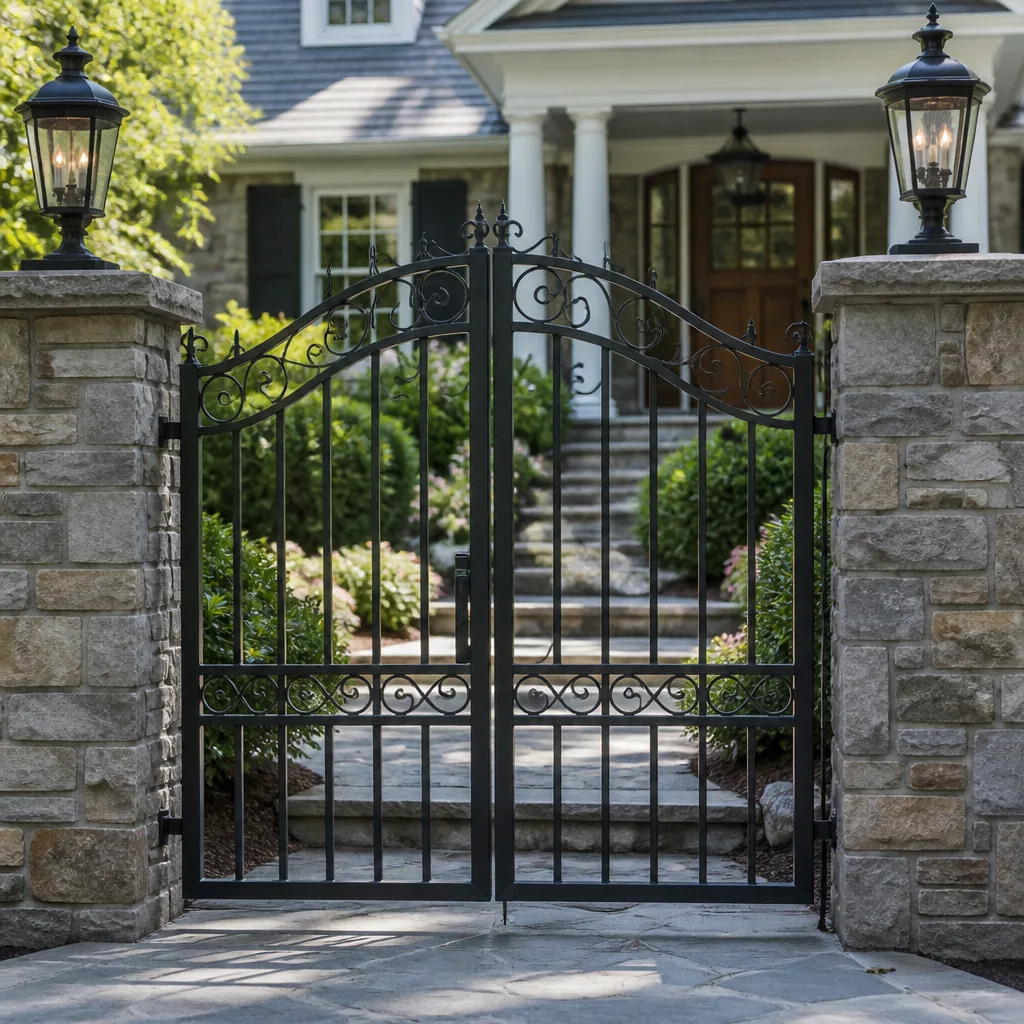
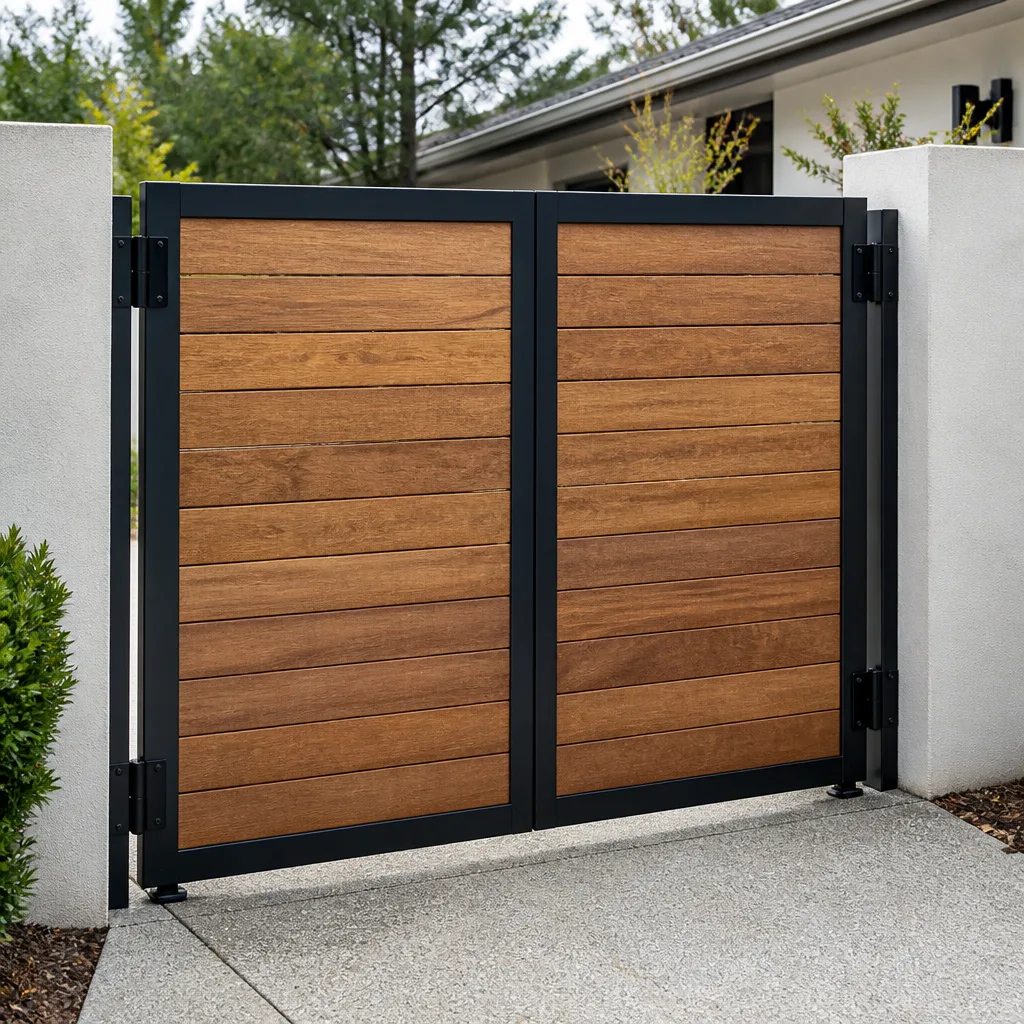
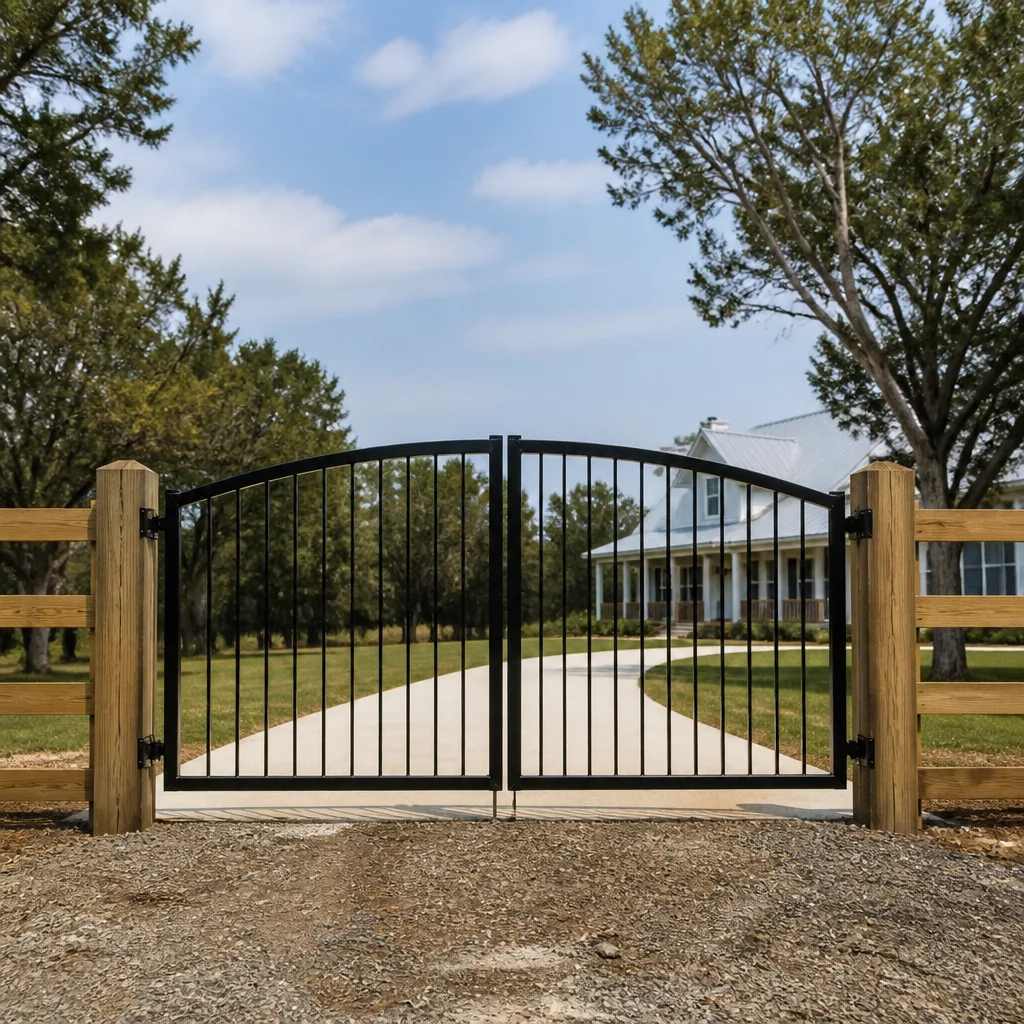
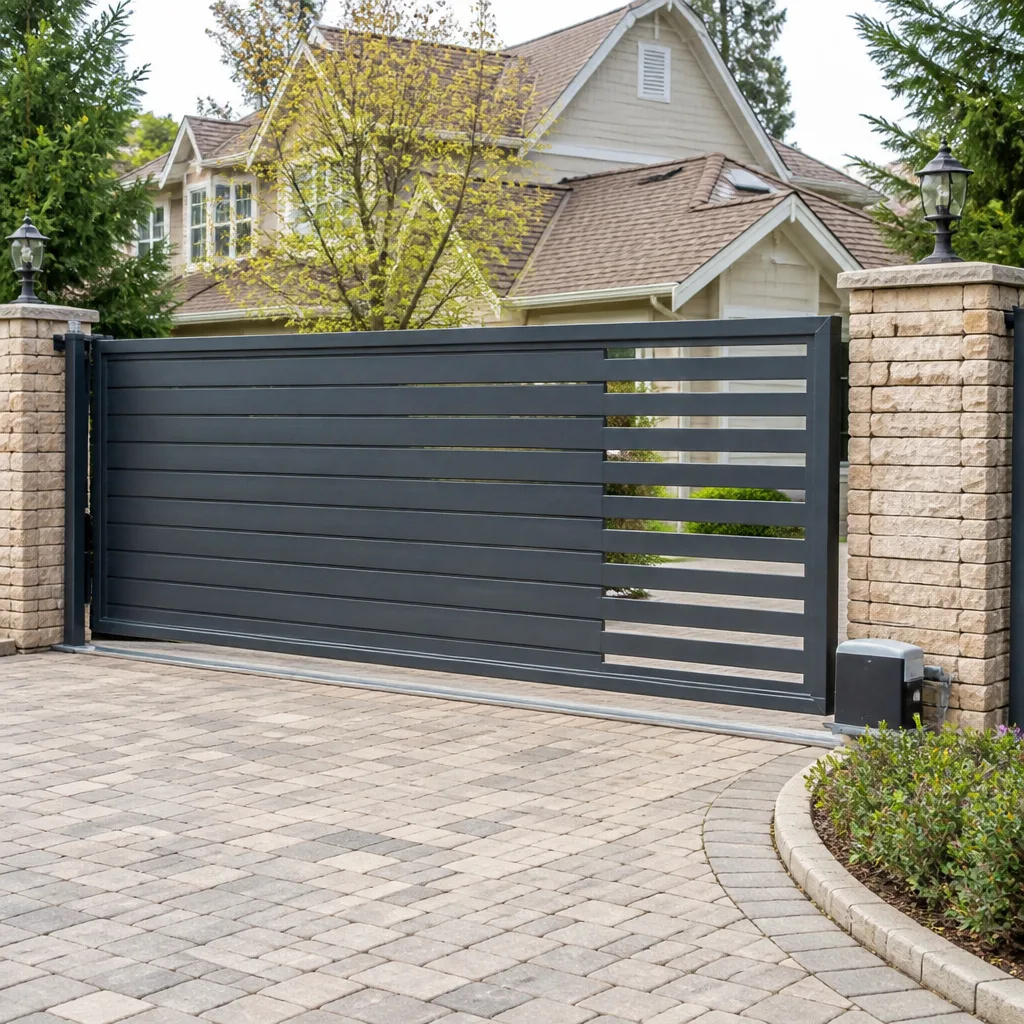
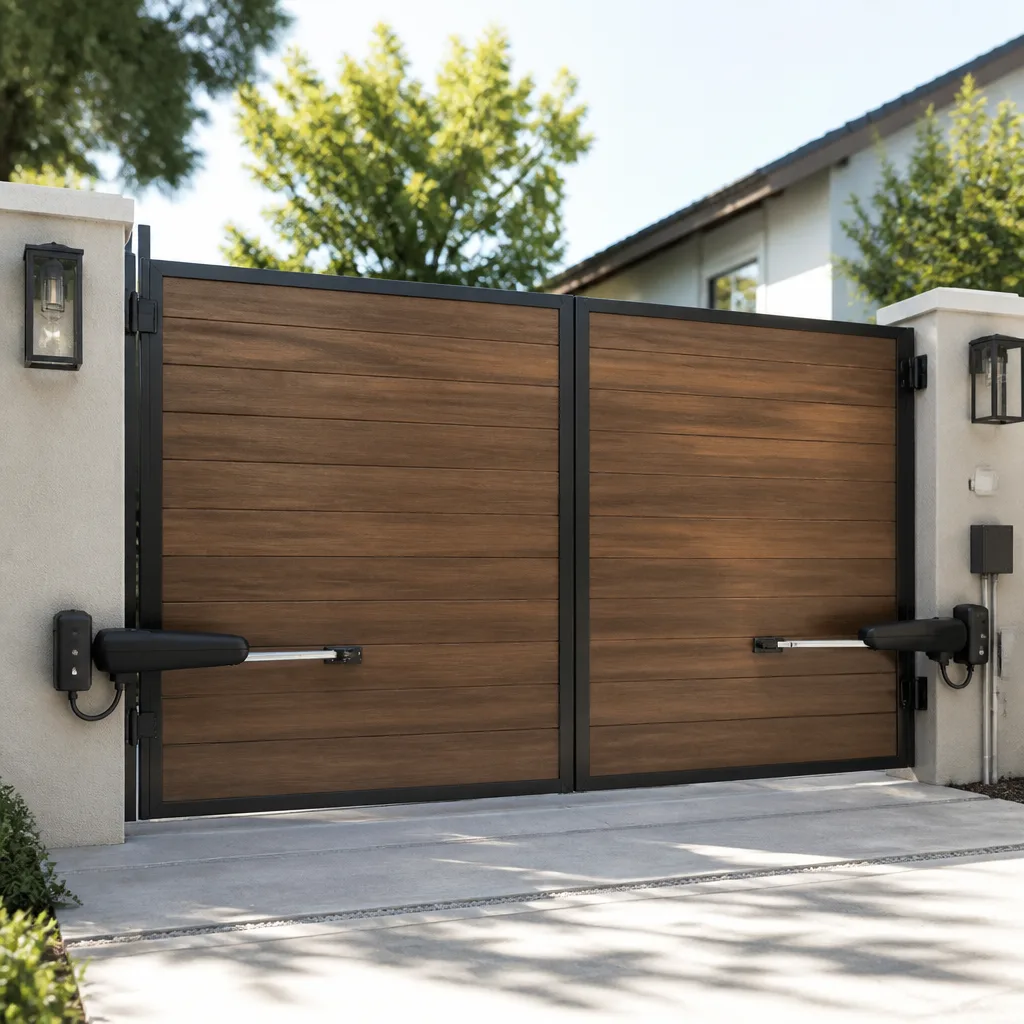
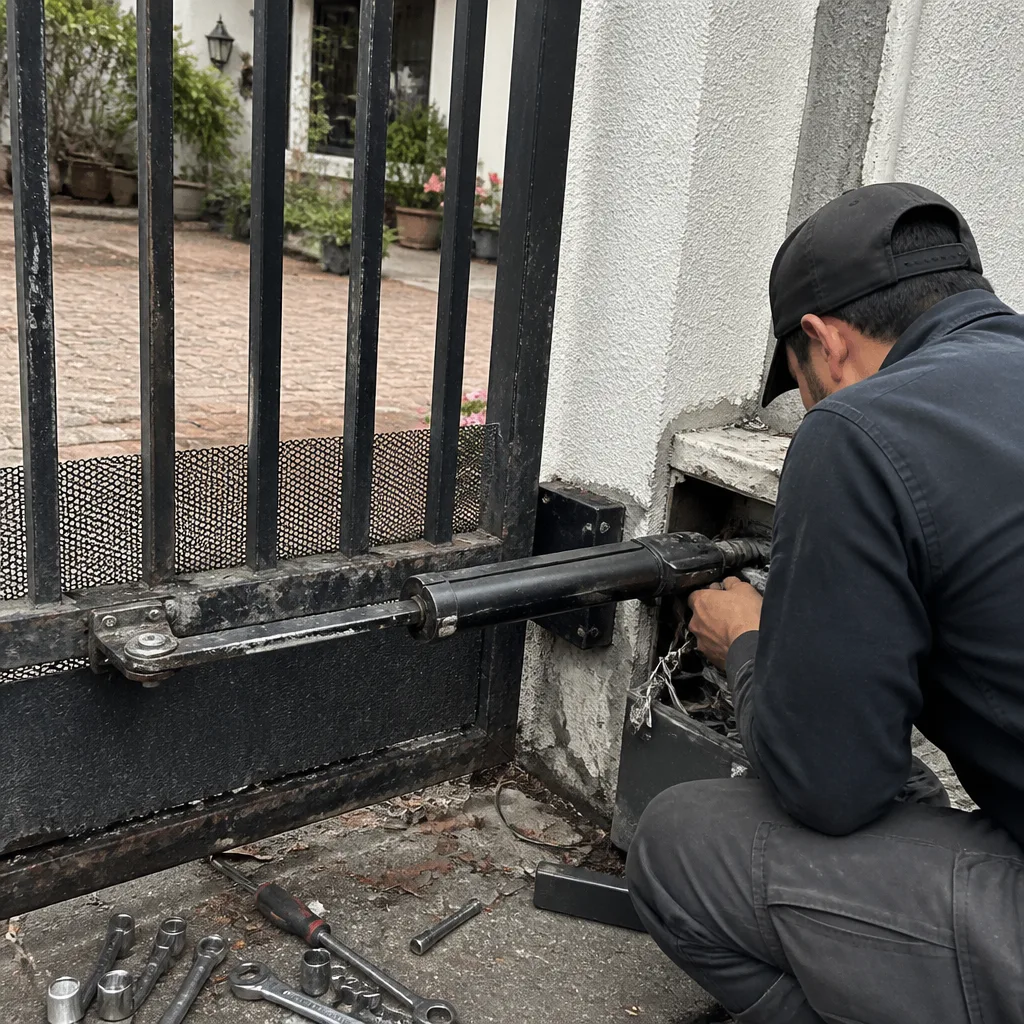 Before
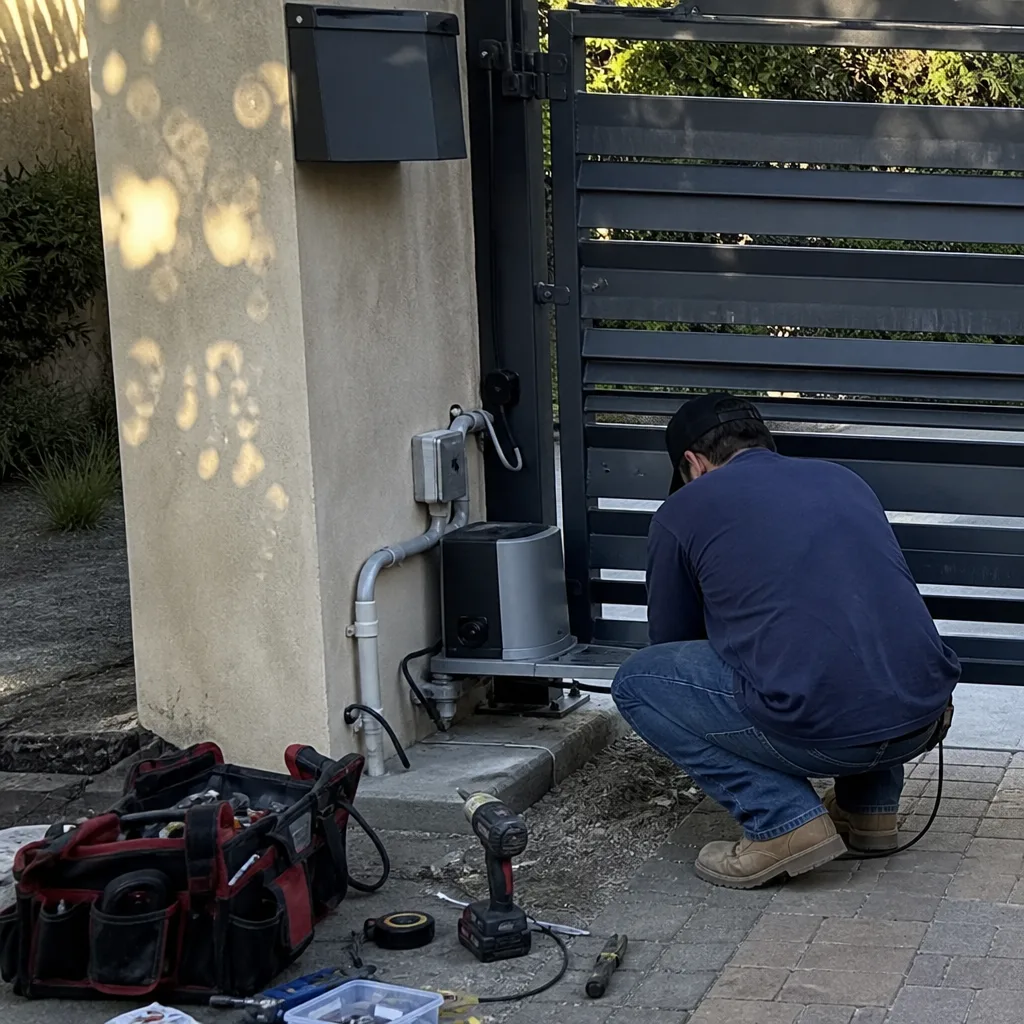 After
After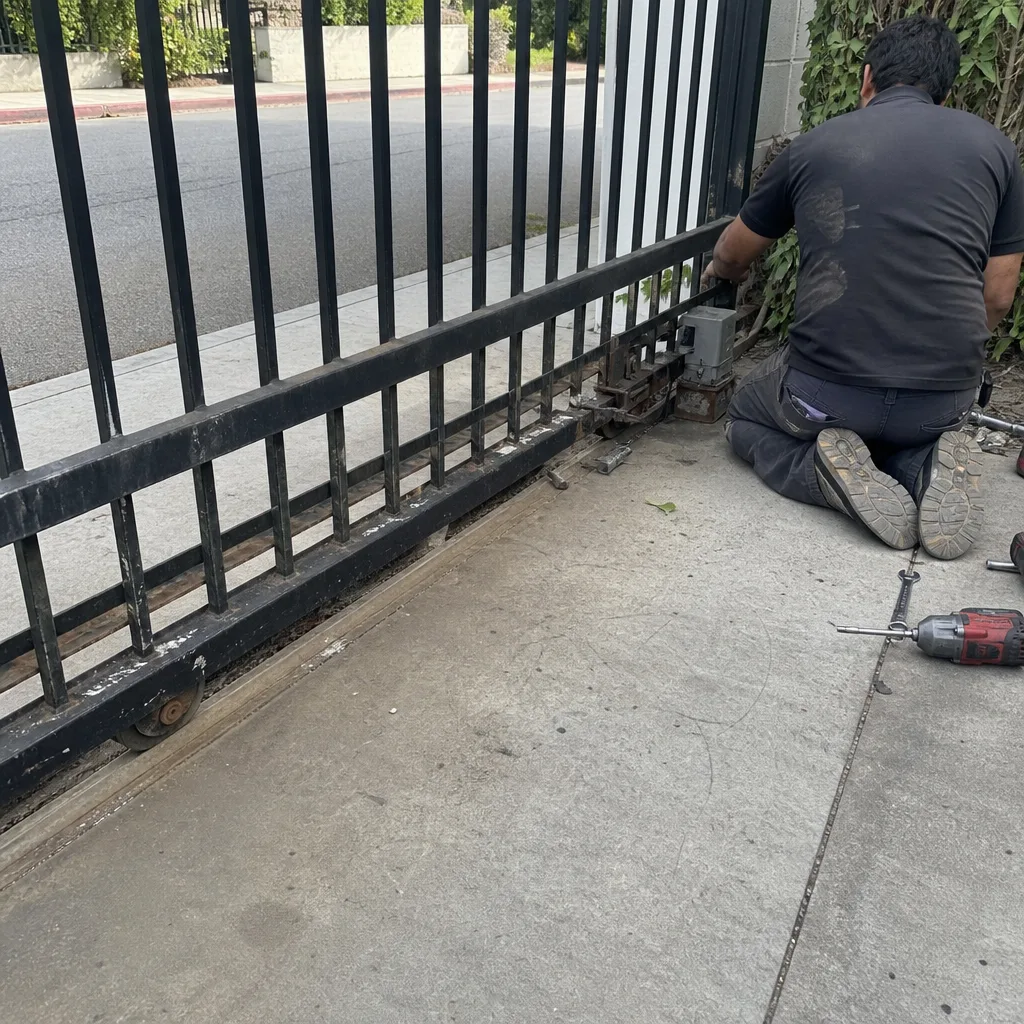 Before
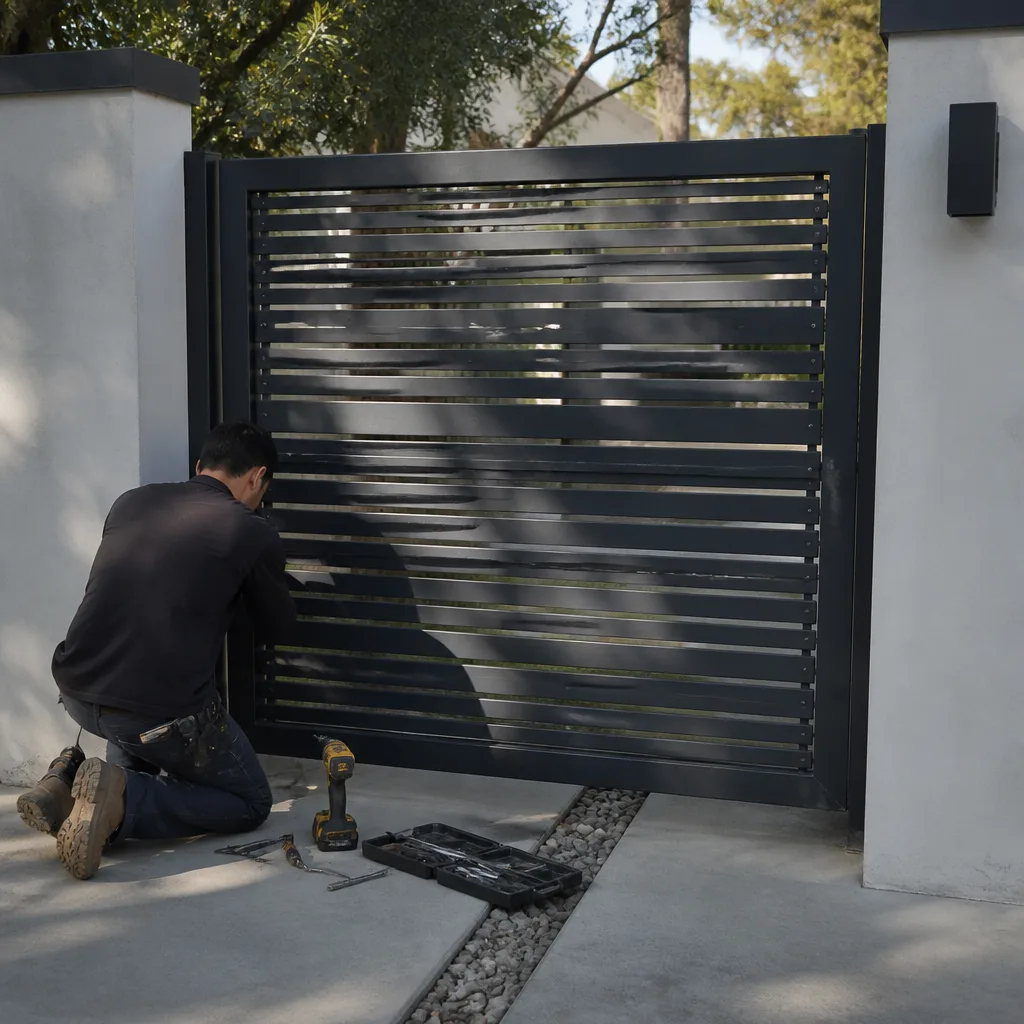 After
After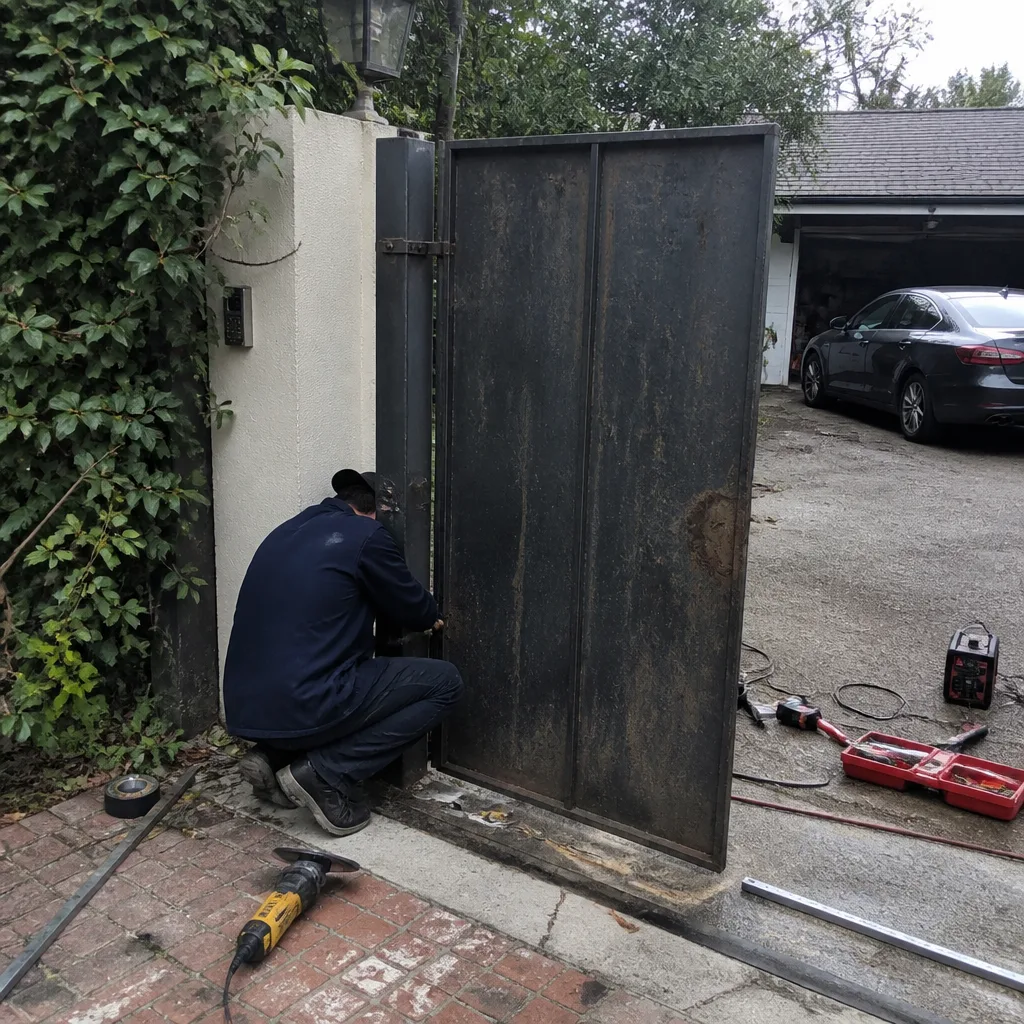 Before
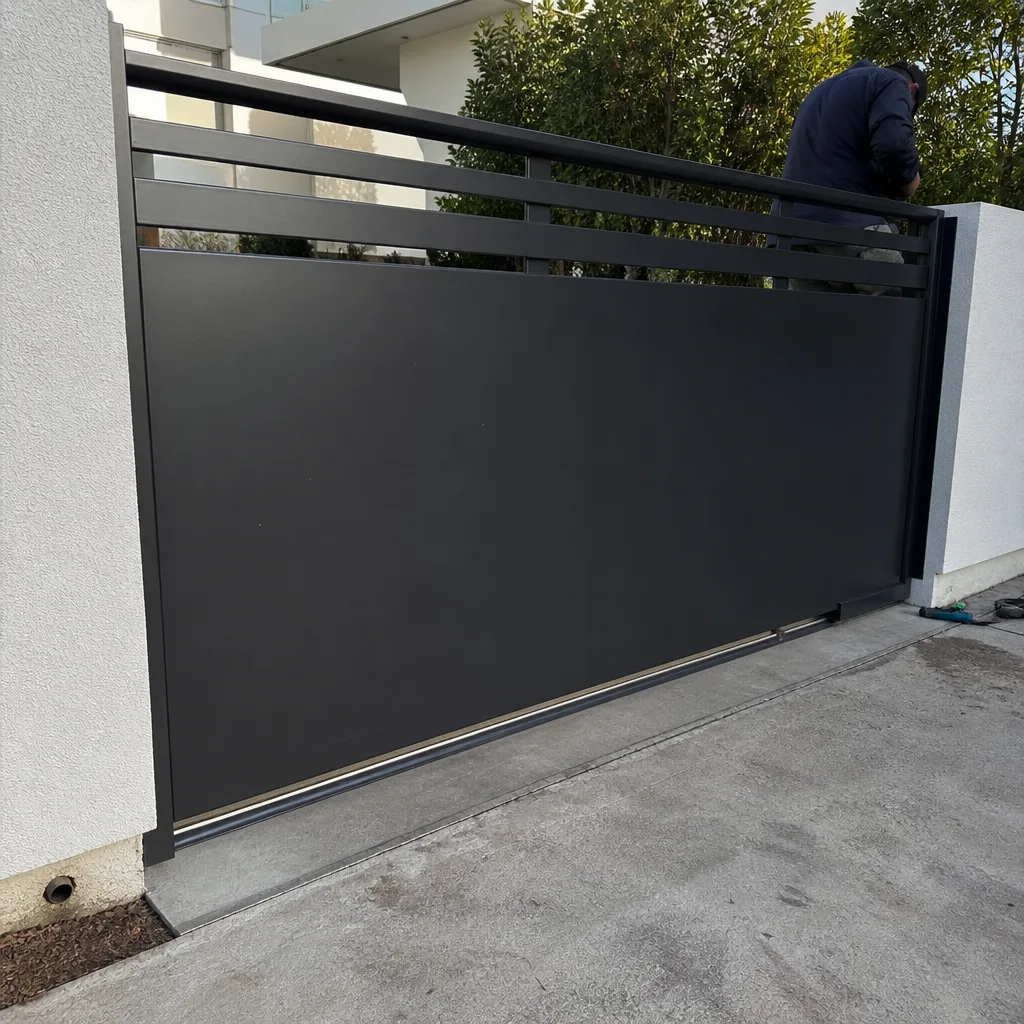 After
AfterThe Complete Guide to Gate Repair in West Hollywood
Most gate problems in West Hollywood trace back to three intersections: where metal meets concrete, where the operator meets the arm, and where the last guy who “fixed” it left a bead of caulk instead of a proper weld. That third one sounds like a joke, but it’s the most common thing we find when we roll up to a gate that failed six months after someone else charged for a repair. This guide maps the specific ways gates fail in West Hollywood, why they fail here more than most places, and what a real Gate Repair services scope should look like before you write a check. By the time you finish reading, you’ll know more about your gate than the last technician who looked at it.
Quick Answer
Gate repair in West Hollywood typically costs between $180 and $650 for most hinge, operator, and weld repairs, and a legitimate company will quote that price in writing before any work starts. The most common failure points in this city are hinge posts that have shifted on sloped driveways, operator arms that were installed at the wrong angle, and rust pockets in ornamental iron where coastal moisture collects. We fix gates at the Gate Repair in West Hollywood level most people need: same-day weld repairs, operator recalibration, and re-hanging gates that were hung wrong the first time.
Table of Contents
- Why Gates Fail in West Hollywood More Than Flat-Lot Cities
- Repair vs. Re-Hang: How to Tell Before You Spend a Dollar
- On-Site Welding vs. Bolt-On Brackets: Why Brackets Fail Within 18 Months
- How to Read a Gate’s Wear: Gate Problem, Operator Problem, or Post Problem
- What a Legitimate Repair Scope Looks Like in Writing
- What Gate Repair Costs in West Hollywood: A Straightforward Breakdown
- Common Mistakes to Avoid
- When to Call a Professional
- Frequently Asked Questions
- The Bottom Line
Why Gates Fail in West Hollywood More Than Flat-Lot Cities
West Hollywood sits on a slope, and that slope is the single biggest factor in how gates wear here. The hillside streets north of Sunset climb at angles that put constant side-load pressure on hinge posts that, in a flat city, would only ever bear downward weight. When a 400-pound steel gate hangs on a post that’s taking lateral stress day after day, the post starts to lean. Not fast, and not dramatically, but enough that the gate’s arc changes by half an inch. Half an inch at the hinge becomes two inches at the latch, and suddenly the gate won’t close all the way, the operator is fighting the added resistance, and the whole assembly is working against itself.
The second factor is air. West Hollywood is far enough inland that people forget the marine layer reaches it, but ask anyone who has lived here more than a decade and they’ll tell you the morning fog is regular. That moisture settles on ornamental iron and finds every pinhole in the paint, every spot where two pieces of metal were welded together and the finish didn’t fully penetrate the joint. Rust starts there. Ornamental ironwork that looks beautiful and holds water in the worst spots is a West Hollywood signature, and it’s why we see gate repairs that are as much about cutting out corroded sections and welding in fresh steel as they are about adjusting hinges. For ongoing care, see our Gate Access Control Maintenance Checklist for West Hollywood Homeowners.
The third factor is age. A lot of West Hollywood’s residential stock went up in the 1920s through the 1960s, and many of those gates have been through two or three operators and double that many technicians. Each time someone swapped a part without addressing the underlying post movement or the angle of the operator arm, they bought time at the cost of cumulative damage. By the time we see these gates, the repair isn’t a single failure; it’s a chain of small decisions that all need to be unwound.
Repair vs. Re-Hang: How to Tell Before You Spend a Dollar
The most expensive mistake we see in West Hollywood is paying to repair a gate that needs to be re-hung. They sound like the same thing, but they’re not. A repair fixes a failing component: a worn hinge bushing, a cracked weld, a limit switch that needs recalibrating. A re-hang addresses the geometry: the posts, the alignment, the way the gate sits in relation to the operator. You can replace every hinge and still have a gate that sags if the post has moved, because the problem was never the hinge. Fix the panel without the post and you’ll fix it twice.
Here’s how to tell which you have in under five minutes:
- Look at the gap between the gate and the post at the hinge side. If that gap is wider at the bottom than the top, or wider now than it was when the gate was installed, the post has moved. No hinge replacement fixes a moved post.
- Stand back and sight down the top rail. A gate that’s straight but sagging is a hinge problem. A gate that’s got a visible kink or bow is a structural problem with the gate itself.
- Watch the latch as the gate closes. If the latch plate hits the striker at an angle or the gate has to be lifted slightly to engage, the geometry has shifted. That’s a re-hang, not a repair.
- Check the post for movement. Put a hand on the post and push. A post that moves under hand pressure, even a little, is compromised at the foundation and everything else is secondary.
A gate sags in the hinge post, not in the middle, and that is where we start. Our Gatewood Fence & Gate home page shows the kind of work we do, but the short version is this: we’d rather spend an hour proving a gate only needs a hinge replacement than sell you a re-hang you don’t need. Hal Gatewood has been at this since 2001, and his name goes on the invoice either way.
On-Site Welding vs. Bolt-On Brackets: Why Brackets Fail Within 18 Months
When a weld cracks on a residential gate, there are two ways to fix it: weld it, or bolt a repair bracket over the cracked section. The bracket is faster, cheaper, and requires no hot work. It’s also, in a high-use gate, a temporary patch wearing a permanent disguise. Show me the gate closing on its own and I’ll show you where it’s failing.
Here’s why brackets fall short. A weld, done properly, fuses the two pieces of metal into one continuous section. The repaired joint carries load the same way the original did, and there’s no hardware to loosen. A bolt-on bracket, by contrast, sandwiches the break and depends on the clamping force of four or six bolts to hold everything together. Every time the gate cycles open and closed, the bracket shifts a few thousandths of an inch. Bolts work loose. The crack underneath keeps spreading. Within 12 to 18 months on a daily-use gate, the bracket is doing almost nothing, and the owner is calling us to fix what the bracket was supposed to fix.
In high-use West Hollywood gates, especially the decorative iron drive gates common in the flats and the hills north of Santa Monica Boulevard, on-site welding is the only repair that actually lasts. We weld in your driveway. The gate stays where it is, the repair is done in a single visit, and the joint is as strong as the day the gate was fabricated. No hauling it away, no shop fee, no two-week wait while your property sits unsecured. That’s the point of being a Gate Installation in West Hollywood company that actually welds: we handle the whole life of the gate, not just the parts swap.
Now, a caution. Welding is hot work, and a gate that has been heavily corroded or that’s carrying latent cracks in the adjacent sections needs a skilled set of eyes before the torch comes out. A bad weld on a compromised section adds stress and hides the real problem. We always grind back the corrosion, identify the true limits of the crack, and weld with the right filler for the base metal. Done wrong, a weld can fail faster than a bracket. Done right, it’s the only repair that doesn’t come with an expiration date.
How to Read a Gate’s Wear: Gate Problem, Operator Problem, or Post Problem
Most gate repair calls in West Hollywood start with a vague description: the gate is slow, the gate is noisy, the gate won’t open. But the three root causes are distinct, and they’re easy to separate if you know what to look for. Here’s the diagnostic sequence we use, and you can do most of it with your eyes and your hands.
Is it the post? Walk out to the gate and look at the bottom of the post. If you see a rust-colored stain where the post meets the concrete, water has been getting into the base. If the post moves when you push it, the foundation is gone. If the gate drags on the driveway or binds at the hinge side, the post has shifted. This is a structural problem, and it means everything else is being asked to compensate.
Is it the gate? Look at the welds where the pickets meet the rails, and where the rails meet the stile. Rust-colored lines radiating from any joint are cold-shut cracks, the kind that start small and propagate with every cycle. A gate that rattles when it’s still, or that shows visible movement between two welded sections when it’s opening, has a gate-level failure. Weld it, or don’t, but recognise it for what it is: a gate problem, not an operator problem.
Is it the operator? If the gate moves freely by hand, with no binding, no drag, no strange noises, then the gate and the posts are fine and the operator is the problem. The hum of a motor that’s trying to move an unloaded gate but failing to start, or a gate that opens then immediately reverses before it reaches the stop, points to limit switches, capacitors, or the board. DoorKing and LiftMaster operators both need to be assessed with the arm disconnected from the gate, because a gate that moves fine by hand and still trips the operator is an easy diagnosis: the operator is fighting something internal.
We’ve seen every combination, from a Mighty Mule operator that was nine years old and simply done, to an Elite operator that was rebuilt three times before someone recognised the post had leaned a quarter inch and the arm geometry had altered. Diagnosing the wear correctly is the difference between spending $400 on a new board and $800 on re-hanging a post. Guess wrong and you pay twice.
What a Legitimate Repair Scope Looks Like in Writing
Before you approve any gate repair in West Hollywood, you should hold a piece of paper that tells you exactly what is going to be done, what it’s going to cost, and what happens if it isn’t done right. A vague “service call” invoice that commits nobody to anything is a red flag. A legitimate scope answers three questions in plain language: what broke, how we’re fixing it, and what it costs.
Here’s what a proper repair scope includes, line by line:
- The diagnosis in writing. “Hinge post shifted 3/4 inch at the base, causing gate to bind on latch side” tells you the technician saw something specific. “Gate repaired” tells you nothing.
- The repair method. “On-site weld repair to cracked top rail hinge weld, grind back to clean metal, re-weld, prime and paint” is a scope. “Made adjustments” is not.
- The parts, with brands. If a limit switch or a capacitor is being replaced, the scope should say whether it’s a LiftMaster board or a generic equivalent. Brand matters for operator compatibility.
- The labor rate and hours. You should know what you’re paying per hour and how many hours the job should take, not a single mystery number.
- The guarantee in writing. Every Gatewood Fence & Gate job carries the 90-Day Done Right Promise, stamped on the invoice. If it’s not done right, we make it right. One call brings Hal back, no runaround.
We quote the price up front and we stand by it. The price is agreed before any work starts, and the only way that number changes is if we open something up and find additional damage that we can’t see from the outside, at which point we call you with a new number and you decide whether to proceed. No surprises at the door, no invoice that’s bigger than the quote. That’s not a selling point; that’s the basic transaction.
What Gate Repair Costs in West Hollywood: A Straightforward Breakdown
Here’s what we see across West Hollywood, from the hills north of Sunset to the flats south of Santa Monica Boulevard. These are real ranges for the most common repairs, and they’re what we quote when the specifics line up.
- Hinge replacement, single gate: $120 to $280, including parts and labor. Most residential hinges are off-the-shelf or weld-on, and the job takes under two hours if the post is sound.
- Operator limit switch or capacitor replacement: $140 to $320, depending on the operator brand. DoorKing and LiftMaster parts are easier to source than some older Viking units, and that affects the price.
- Weld repair to a cracked frame or rail: $180 to $400. The range is wide because it depends entirely on how much corrosion has to be ground out and whether we can reach the joint without removing the gate.
- On-site welding of a broken hinge weld: $200 to $450. This is the classic ornamental iron failure, and the price reflects the prep work and the repainting, not just the weld itself.
- Operator replacement, installed: $650 to $1,800. The spread covers a basic residential opener at the low end versus a high-end Elite or LiftMaster unit with battery backup at the high end.
- Post re-set or replacement: $400 to $1,000. If the post has moved at the foundation, the repair requires excavation or a new footing, and that’s a full day’s work in West Hollywood’s compacted hill soil.
Every one of those numbers is quoted and agreed before any work starts. We also honor a few standing offers that don’t require haggling: $40 off any repair over $200, a free second opinion on any written estimate, no trip charge inside the county, and a permanent 10% discount for seniors and veterans. Call (323) 677-4063 and a live person answers. Always. Not a voicemail, not a queue, not a chatbot.
Common Mistakes to Avoid
- Paying for a repair without seeing the diagnosis in writing. If the tech can’t tell you in plain language what broke and how he’s fixing it, he probably doesn’t know. That’s the customer paying for an education the technician should already have.
- Approving a bolt-on bracket without asking whether a weld is possible. The bracket is cheaper up front and more expensive inside of 18 months. West Hollywood’s daily-use gates cycle too often for a clamp to hold forever.
- Replacing the operator before checking the gate geometry. A gate that’s binding because the post moved will destroy a new operator the same way it destroyed the old one. That’s a $400 board sacrificed to a $600 post problem.
- Skipping the paint touch-up after a weld. A fresh weld that’s left bare will rust before the month is out, especially with the coastal air that settles over West Hollywood in the morning. Primer and paint are part of the repair, not an upgrade.
- Hiring on price alone without asking who’s coming to the door. We’ve followed more than a few “cheap” gate repairs that were done by someone who left an unsealed weld and a phone number that no longer rings. The name is on the shop, and the shop is down the road. That’s the oldest accountability there is.
When to Call a Professional
If the gate won’t stay closed at night, call. If you hear a sound like a gunshot and the gate won’t move, that’s a torsion spring or a failed weld, and both of them are under tension; a professional needs to look at it. If the gate has shifted an inch or more at the latch, or you can see daylight through a joint that used to be tight, the problem has moved past adjustment and into repair. If the operator runs but the gate barely moves, you’re burning the motor out, and every cycle is more expensive than the last. If there’s any doubt at all, Gatewood Fence & Gate offers free estimates in West Hollywood. Call (323) 677-4063 and ask us to come look. The estimate doesn’t obligate you to anything, and it’s free.
Frequently Asked Questions
Most gate repairs in West Hollywood run between $180 and $650, and the price is quoted in writing before any work begins. Weld repairs, hinge replacements, and operator part swaps are the most common jobs, and the specifics depend on what failed and how much access your driveway allows. Call (323) 677-4063 for an exact quote; estimates are free.
We keep slots open for emergency gate repairs in West Hollywood because a broken gate is a security problem, not a scheduling problem. A live person answers the phone 24/7, and if we can’t make it today, we’ll tell you that honestly and secure the gate so you’re not left open to the street. Call and talk to someone; don’t leave a message and hope.
A repair fixes a broken component: a hinge, a weld, a limit switch. A re-hang addresses the geometry of the gate: post alignment, gate level, and the relationship between the gate and the operator. If the post has moved, replacing hinges won’t fix the problem, and that’s the single most expensive misdiagnosis we see in West Hollywood.
We service nine major brands including DoorKing, Elite, Mighty Mule, and LiftMaster, which covers the vast majority of residential operators in West Hollywood. If you’ve got an operator that’s older or off-brand, we’ll look at it before telling you what the options are. The Gate Access Control in West Hollywood side covers operator integration and controllers, and the same phone number handles all of it.
Yes. The price is quoted and agreed before any work starts, and the only way it changes is if we open something up and find additional damage we can’t see from the outside. If that happens, we call with a new number and you decide. No surprises at the door. The 90-Day Done Right Promise covers every job, and it’s written on the invoice, not buried in fine print.
A proper weld repair with primer and paint will last years, even with the marine layer that blows over West Hollywood in the mornings. A bolt-on bracket on a daily-use gate will start to loosen within 12 to 18 months. The difference is whether the repair addressed the actual break or just clamped over it. We do the first kind.
The Bottom Line
West Hollywood gates fail in patterns you can learn to read, and reading them saves you money. Look at the post first, the gate second, and the operator third. Demand a written scope that names the problem and the fix, and walk away from any quote that doesn’t. Weld it in place and repaint the joint, and the repair holds. And remember that the person who does the work is the best warranty there is. Hal Gatewood has been repairing gates in West Hollywood since 2001, his shop has a published address, and his name is on the invoice. Call (323) 677-4063 for a free estimate, and a live person will answer.
Written by Hal Gatewood, Owner at Gatewood Fence & Gate, serving West Hollywood since 2001. Explore more guides & resources.