
Last updated August 26, 2026
Free on-site gate assessment - hinges, posts, and your LiftMaster or Nice gate operator checked before anything is quoted
The assessment is free and the quote is the invoice.
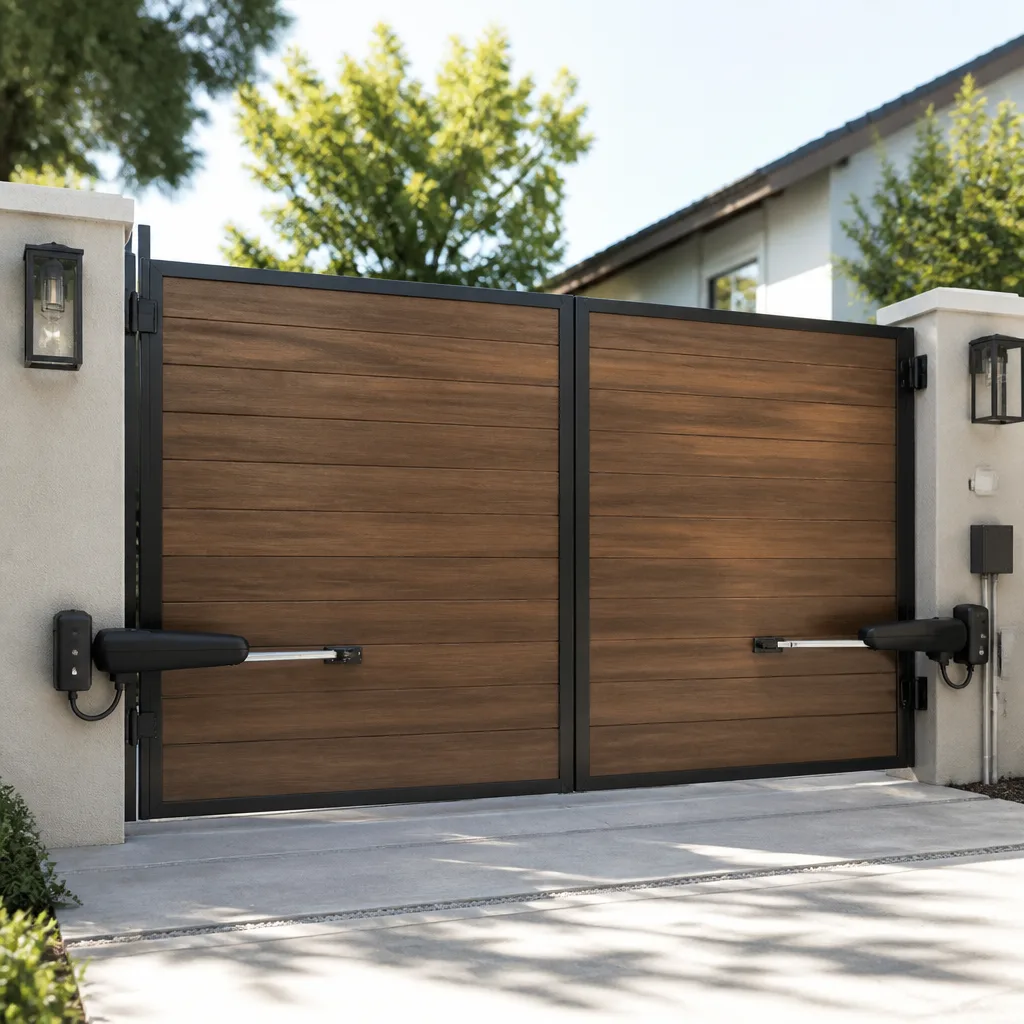
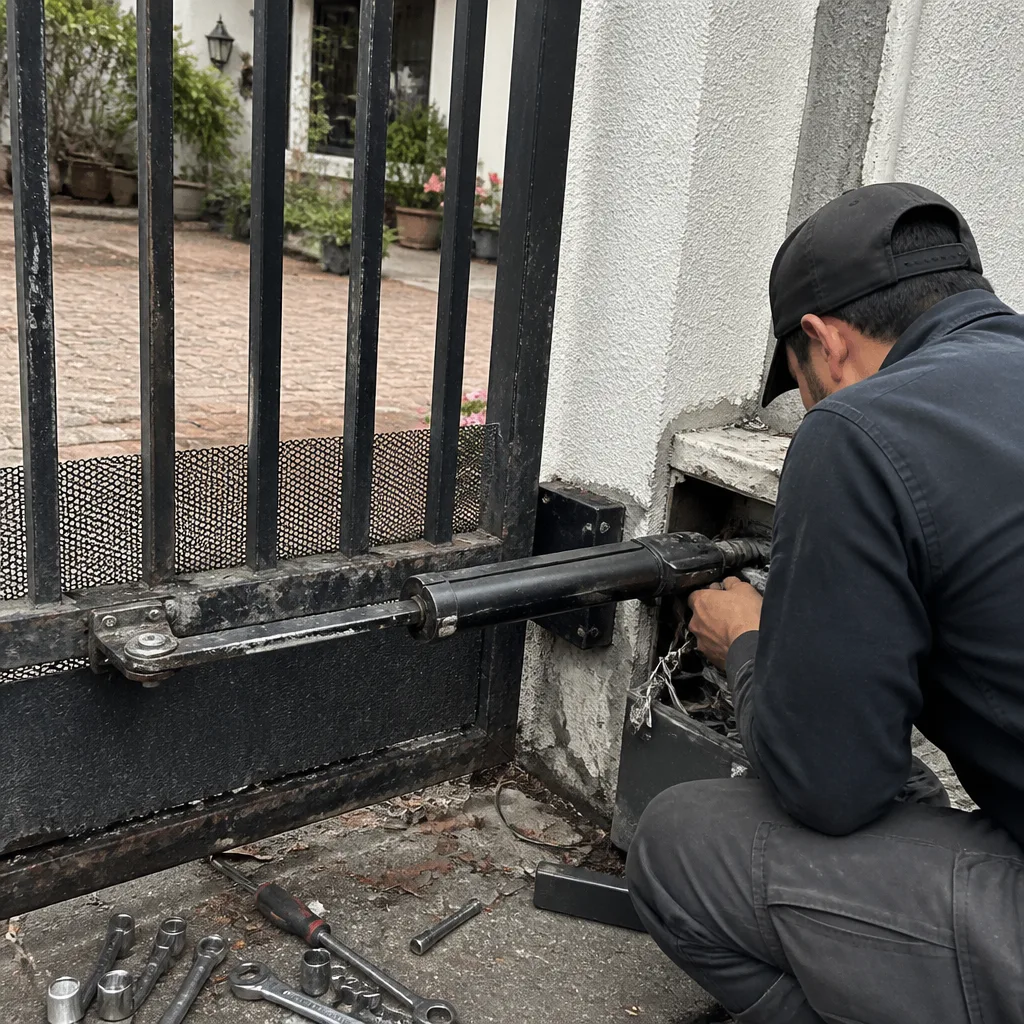 Before
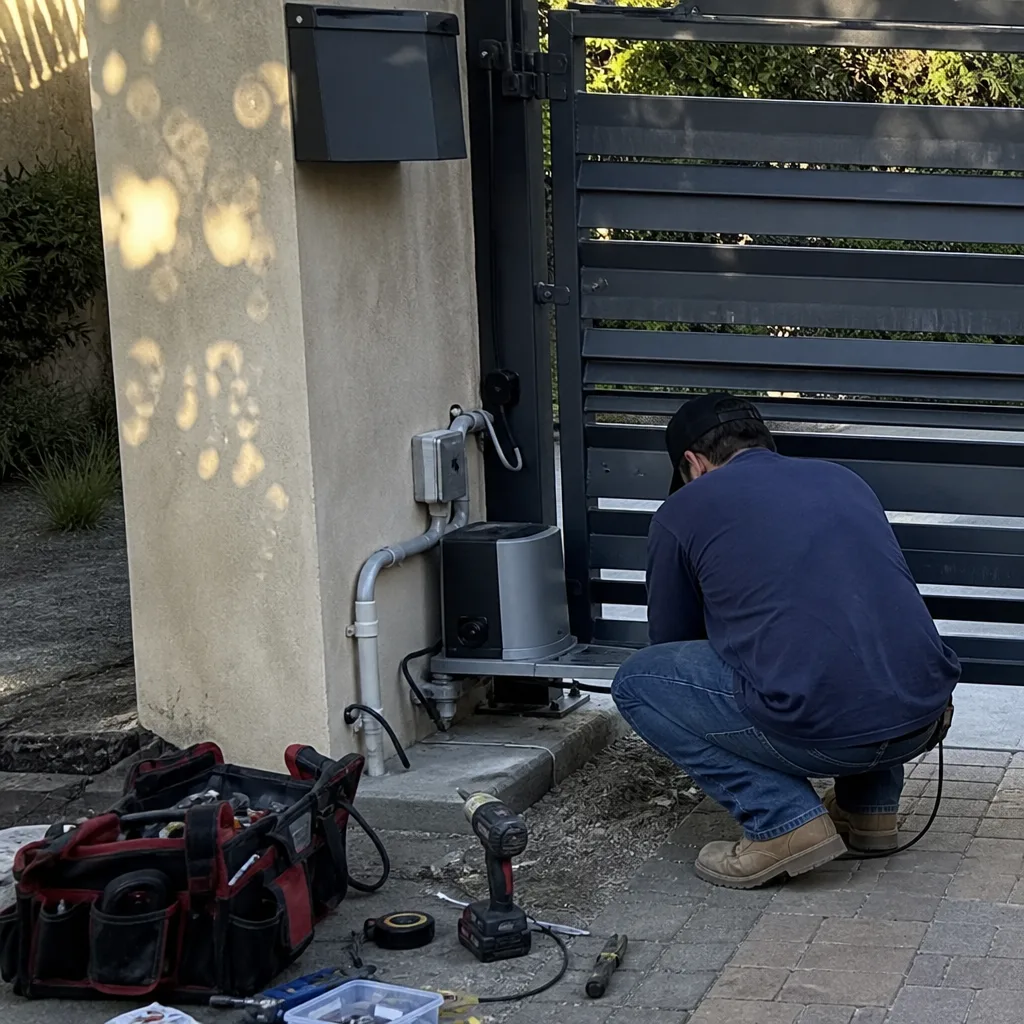 After
After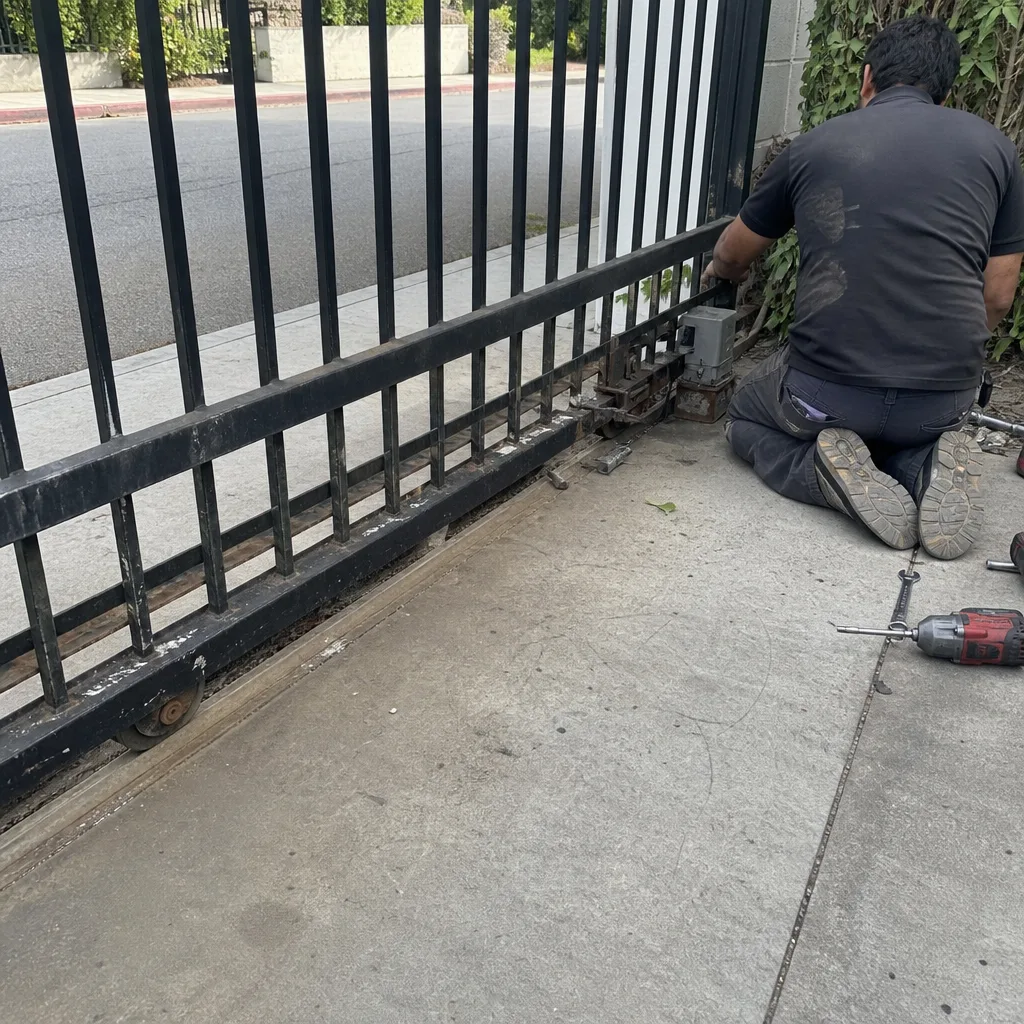 Before
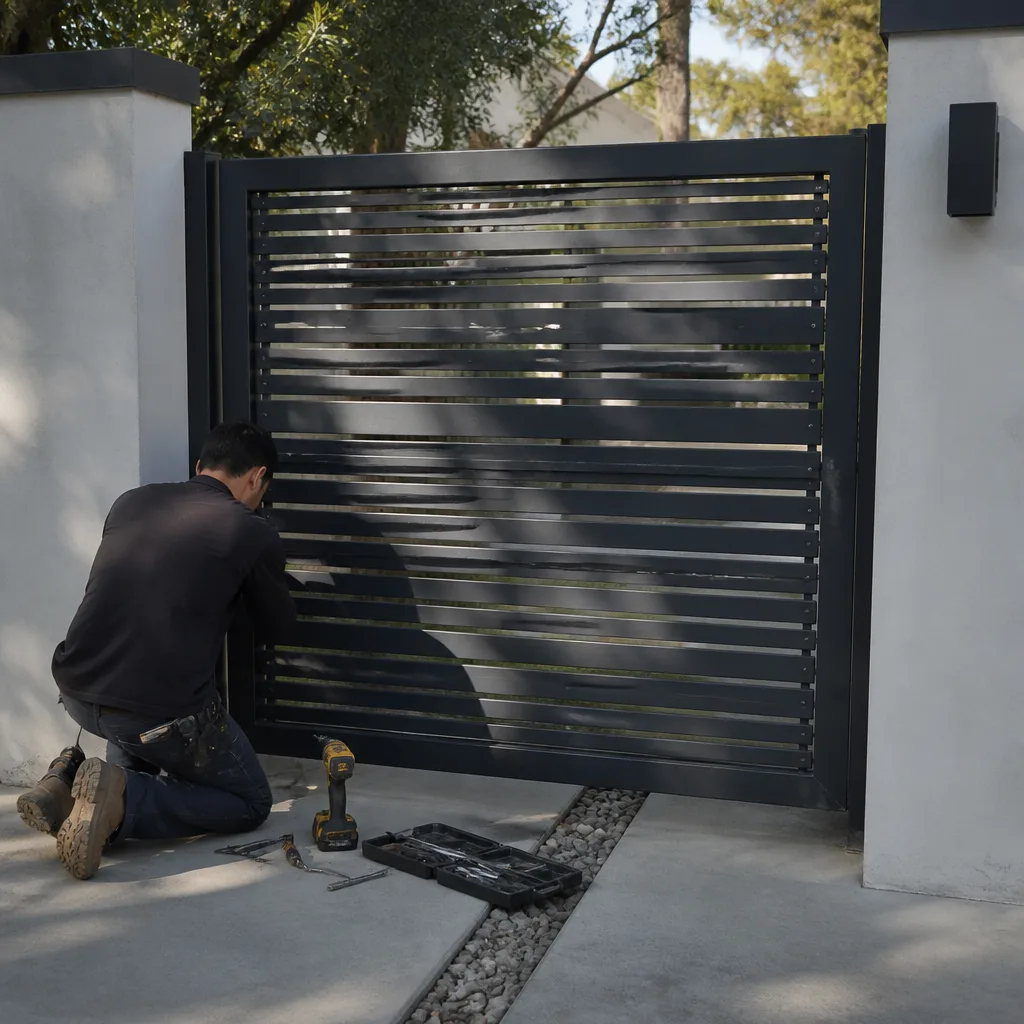 After
After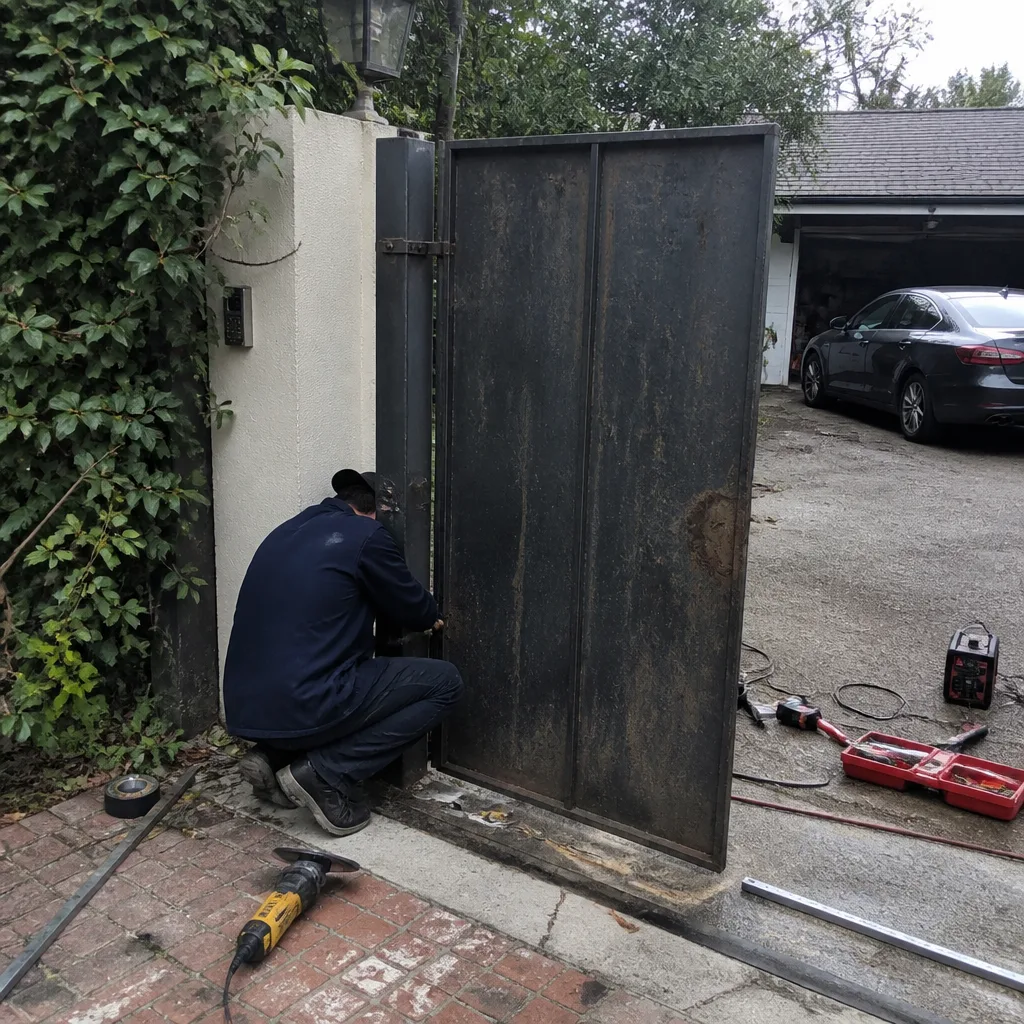 Before
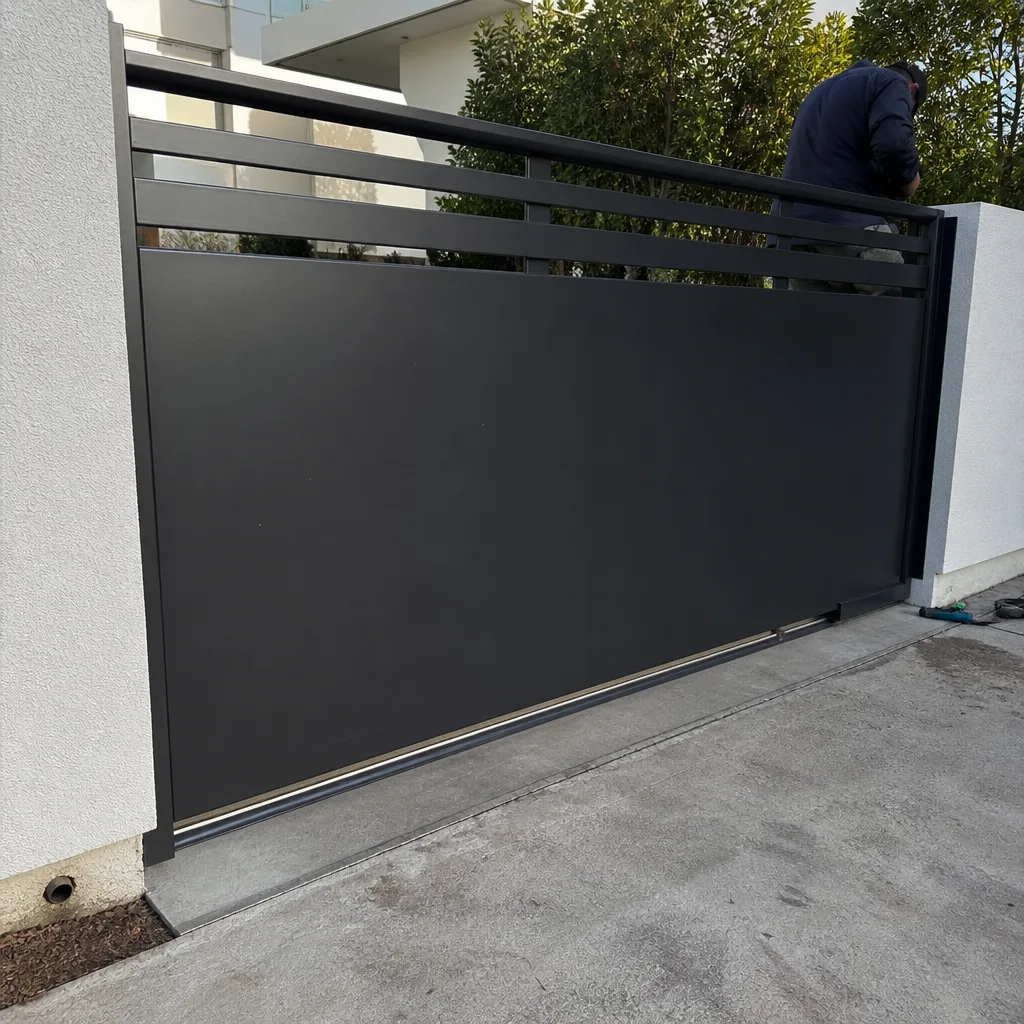 After
AfterGate Repair Warning Signs: A West Hollywood Homeowner’s Reference Guide
The grinding noise your gate makes in the morning but not the afternoon is telling you something specific. So is the gate that hesitates before moving, or the one that reverses for no visible reason. These aren’t random failures. They have causes, and knowing what they point to puts you in a better position when you call for help. This guide translates those signals into plain language, so you can describe exactly what’s wrong before a Gate Repair services technician even arrives at your West Hollywood home.
Quick Answer
The most common warning signs that a gate needs repair are changes in sound (grinding, clicking, humming with no movement), changes in travel speed (slow, jerky, or hesitant movement), visible sag at the latch end, and intermittent failures that happen unpredictably. In West Hollywood, where many properties rely on automated driveway gates for both security and daily convenience, catching these signals early typically means a $150 to $400 repair instead of a $2,500 to $6,000 full replacement. For Seasonal Gate Repair Care for West Hollywood: Year-Round Homeowner’s Guide, see our maintenance tips.
Table of Contents
- Sound Diagnosis: What Your Gate Is Saying When It Moves
- Timing Changes: The Slow Gate That Used to Be Fast
- Visual Sag: How to Measure Whether Your Gate Has Dropped
- Intermittent Failure: The Gate That Works All Week and Fails When Guests Arrive
- When to Stop Using the Gate Entirely
- Common Mistakes to Avoid
- When to Call a Professional
- Frequently Asked Questions
Sound Diagnosis: What Your Gate Is Saying When It Moves
Gates are not quiet machines, but they are consistent. A healthy gate makes the same sounds every day, in the same order, at the same volume. When that pattern changes, the sound itself is a diagnostic tool. Over 29 years of working on gates across West Hollywood, from the hillside properties off Sunset to the gated courtyards near Santa Monica Boulevard, we’ve learned to identify failing components by ear before we ever touch the gate. Here’s what the most common sounds indicate.
Grinding that’s worse in the morning. West Hollywood’s marine layer brings moisture overnight, and that moisture interacts with worn metal parts. A grinding noise that fades by midday usually points to dry or failing bearings in the gate wheels or the opener’s internal gear set. The moisture causes surface rust on already-worn bearing surfaces, which grinds until movement wears it off. It’s rarely a lubrication problem by the time you hear it. It’s a wear problem announcing itself.
Clicking without movement. A sharp, repeated click when the gate tries to open but doesn’t move typically means the opener’s capacitor has failed or the limit switch is stuck. On DoorKing and Elite operators, which are common in West Hollywood’s older gated properties, this click is the sound of the motor trying to draw starting current and failing. It’s a specific failure, and it’s repairable without replacing the whole opener in most cases.
Humming with zero movement. A low electrical hum that continues for a few seconds after the gate stops moving, or a hum that happens with no movement at all, points to a motor that is receiving power but cannot turn its output shaft. This is usually a seized gear train inside the opener, a failed start capacitor, or a gate that has physically bound against its track or post. If you hear this, stop using the gate. Forcing it can burn out the motor windings and turn a $200 repair into an $800 opener replacement.
Chain slap. On chain-drive openers like many Viking and Ghost Controls models, a slapping or rattling chain sound means the chain has stretched beyond adjustment or a sprocket has worn to the point of slipping. Chain stretch happens gradually, but the sound often appears suddenly because the chain reaches a critical slack point all at once. Left alone, a stretched chain can jump the sprocket mid-cycle and leave your gate stuck half open.
A table of sounds, causes, and urgency:
- Grinding in morning only: Worn bearings, rust from nighttime moisture. Medium urgency. Schedule repair within 1-2 weeks.
- Clicking, no movement: Failed capacitor or stuck limit switch. Medium urgency. Gate will likely stop opening soon.
- Humming, no movement: Seized gear train, failed capacitor, or bound gate. High urgency. Stop using immediately.
- Chain slap or rattle: Stretched chain or worn sprocket. Medium-high urgency. Chain can jump sprocket unexpectedly.
- Squeal only when opening: Belt slippage or dry roller. Low urgency, but inspect within a month.
Timing Changes: The Slow Gate That Used to Be Fast
A gate that takes 30% longer to travel than it used to is not being quirky. It’s giving you a specific warning about motor load or track condition. We hear this from West Hollywood homeowners all the time: the gate still opens, so they don’t think about it. But timing changes are one of the earliest and most reliable indicators that a gate system is working harder than it should.
How to measure your gate’s travel time.
- Open the gate from fully closed. Use the stopwatch on your phone.
- Time from the moment the gate starts moving to the moment it stops at the fully open position.
- Close the gate and time that direction too.
- Compare your times to what the gate did when it was installed or last serviced. If you don’t have that number, compare opening time to closing time. They should be within a second or two of each other.
- If opening takes noticeably longer than closing, or if both directions are slower than they were six months ago, something is loading the motor.
What slow travel usually means.
In our experience with gates in West Hollywood, slow travel breaks down into three common causes. The first is track or roller wear. Sliding gates ride on a track or a set of wheels at the base, and when those wheels are flattened, caked with debris, or the track has bent slightly from settling, the gate drags. The motor compensates by pulling harder, which slows the gate and shortens the motor’s life.
The second cause is hinge binding on swing gates. A swing gate that rubs against its post or drags its latch end on the driveway surface is fighting friction every time it moves. The opener motor is a constant-torque machine in most residential systems, which means it slows down under load rather than pushing through it. The slower travel is the motor telling you it’s straining.
The third cause is motor or gearbox wear inside the opener itself. A BFT or FAAC operator that has been running for 15 years without a gearbox service will develop internal resistance. The motor draws more current, runs hotter, and moves the gate more slowly. This is the point where a gearbox service can extend the life of the operator for years, and ignoring it can mean a full opener replacement.
Visual Sag: How to Measure Whether Your Gate Has Dropped
A gate sags in the hinge post, not in the middle. That’s an important distinction, because most people look at a sagging gate and assume the gate itself is bent. It rarely is. The sag happens because the hinge post leans, the hinges wear, or both. Fix the panel without the post and you’ll fix it twice.
How to measure sag at the latch end.
- Stand back 15 feet and look at the gate in its closed position.
- Find the latch on the gate and the latch receiver on the fence or post.
- Note how they line up. The latch should enter the receiver squarely.
- Measure the vertical gap between the latch and the receiver with a tape measure, or simply note how far the gate has dropped by comparing the gate’s top rail to a level sightline.
- If the latch misses the receiver by half an inch or more, the gate has dropped. That half inch is meaningful.
What the measurement tells you.
If the gate has dropped less than half an inch and the hinge post is still plumb, you likely have worn hinge bushings or loose hinge bolts. That’s a straightforward repair: the hinges get shimmed, rebushed, or replaced, and the gate gets re-lifted and aligned. In West Hollywood, where many of the ornate iron gates date back decades, this is one of the most common repairs we do. The gate itself is often perfectly good.
If the gate has dropped more than half an inch, or if the hinge post visibly leans, you’re looking at a post problem. The post may be rusting at the base, set in concrete that has cracked from years of gate movement, or the post was undersized for the gate’s weight to begin with. This is a bigger repair, but it’s still a repair. We weld on site, which means the gate stays in your driveway. We don’t haul it off and email you a replacement quote. In many cases, we can cut the post at the base, reset or reinforce it, and weld it back in place the same day.
The sag is the warning, not the failure.
A gate that has sagged will keep sagging. Every time it sags a little more, the motor works a little harder, the latch wears a little more, and the auto-reverse or photo eye system gets a little more confused about where the gate actually is. Measuring the sag early, before the latch stops latching, is the difference between a hinge service and a gate rebuild. For more detail on what a full repair involves, see our guide to Gate Repair in West Hollywood.
Intermittent Failure: The Gate That Works All Week and Fails When Guests Arrive
Show me the gate closing on its own and I’ll show you where it’s failing. That’s not a riddle. It’s the reality of electrical and electronic gate systems. They fail intermittently before they fail permanently, and the pattern of the intermittent failure tells you what’s wrong. The gate that works perfectly all day and then refuses to open when your dinner guests pull up at 7 p.m. is not cursed. It’s symptomatic.
Why intermittent failures happen.
Intermittent gate failures in West Hollywood fall into a few recognizable patterns. The most common is temperature-related. Control boards are full of solder joints, capacitors, and relays, and they expand and contract with heat. A board that fails in the late afternoon when it’s been sitting in direct sun all day, but works fine in the cool of morning, has a cracked solder joint or a heat-sensitive relay. This is repairable at the component level if you’re working with a shop that actually does board-level work rather than swapping the whole control cabinet.
The second pattern is moisture-related. West Hollywood’s nighttime marine layer isn’t hard on gates, but irrigation overspray is. A photo eye or edge sensor that gets sprayed by a sprinkler every night will misbehave first thing in the morning and then settle down by midday as it dries out. If your gate acts up on a schedule that matches your irrigation timer, check for water contact before you call for repair.
The third pattern is the one that drives homeowners crazy: the gate that works every time you test it and fails every time someone else tries. This usually means the photo eyes are marginally aligned, or the safety edge is right at the edge of its sensitivity threshold. When you test the gate, you’re standing in a different spot than a guest is. The photo eye beam is being broken by a visitor’s car position, or the safety edge is just barely not making contact. Marginal alignments produce marginal behavior.
What to tell the repair person.
Write down the exact conditions when the gate fails. Time of day, temperature if you know it, whether it’s wet, whether a specific car was in the driveway, which remote was used. That level of detail shortens the diagnostic time dramatically, which saves you money. It’s also the difference between someone who guesses and someone who diagnoses.
When to Stop Using the Gate Entirely
Not every warning sign means stop using the gate, but some do. The line is simple: if the gate is fighting itself, stop. If the gate is moving slower than normal, you can usually keep using it while you arrange repair. If the gate is making a humming noise with no movement, banging against the end stop, reversing for no reason, or if a chain or cable looks visibly loose or frayed, stop using it immediately and either secure it open or closed manually.
Forcing a failing gate makes some repairs more expensive and others dangerous. A humming motor left running burns out windings in about 10 to 15 seconds. A jumping chain can whip and break in a single cycle. A gate that reverses at the wrong moment because a photo eye is failing can close on a car or a person. The auto-reverse systems on residential gate openers are safety systems, not conveniences. When they’re not working correctly, the gate is not safe to operate.
Here’s the simple checklist for West Hollywood homeowners:
- Safe to keep using while you schedule repair: slow travel, mild grinding in the morning, gate sag under half an inch, intermittent remote range issues.
- Stop using and secure the gate: humming with no movement, loud grinding that changes pitch, chain slap that’s getting worse, auto-reverse failures, visible chain or cable damage, any noise that sounds like metal on metal impact.
- Stop using and call immediately: the gate moves on its own without input, the gate reverses randomly and repeatedly, sparks or smoke from the opener, a chain or cable that has jumped its sprocket.
In West Hollywood, a failed gate is also a security issue. A gate stuck open advertises an unsecured property. A gate stuck closed blocks your car from leaving for work. When the gate fails, you want a live person on the phone, not a voicemail. That’s exactly how Gateway Fence & Gate operates. Call (323) 677-4063 and a live person answers, 24 hours a day, every day of the year.
Common Mistakes to Avoid
- Lubricating a worn-out component. Grease hides the sound. It doesn’t fix the wear. A bearing that’s grinding has already failed; lubricating it just means you’ll hear it again in a week, only worse. Over-greasing openers also attracts West Hollywood dust and grit, which accelerates wear.
- Replacing the remote batteries before checking the photo eyes. Weak or dirty photo eyes are the most common cause of a gate that won’t close, and it’s the first thing we check because it takes 30 seconds. New batteries don’t fix a misaligned photo eye.
- Ignoring the manual release mechanism. Every automated gate has a way to disengage the opener and move the gate by hand. If you don’t know where yours is and how it works, you’ll be stuck when the opener fails. We show every homeowner how to disengage their gate as part of any repair.
- Forcing the gate past an obstruction. If the gate hits something and stops, don’t override the safety and keep pushing the button. The motor is telling you something is in the way. Find out what. Forcing it past the obstruction is how you bend a track or strip a gear.
- Waiting too long on a sagging gate. A half-inch sag becomes a two-inch sag. A worn hinge bushing becomes a broken hinge weld. The repair doesn’t get cheaper by waiting, and the gate gets harder on the motor every week it runs misaligned.
- Calling a general handyman for a gate opener problem. Gate automation is a specialty. The safety systems, the control board logic, and the mechanical load all interact. A handyman with a toolbox can change a hinge, but when the problem is in the control board or the motor gearbox, you want someone who has worked on Viking, Ghost Controls, DoorKing, and Elite systems long enough to know their quirks. That’s the difference we’ve been providing since 2001.
- Assuming the gate needs replacement. We’ve lost count of how many West Hollywood homeowners called us expecting a replacement quote and ended up with a repair that cost a fraction of the price. Gates are steel. Steel can be welded. Motors, boards, and gearboxes can be rebuilt or replaced individually. The repair-first approach isn’t just cheaper; it keeps a good gate in service for another decade or two.
When to Call a Professional
Call a professional when the warning signs are structural, electrical, or safety-related. That means sagging hinge posts, chain damage, humming motors, intermittent control board behavior, auto-reverse failures, or any time the gate doesn’t respond correctly to its safety inputs. If you can see the problem and it involves welding, call. If you can hear the problem but can’t see it, call. If the gate is doing something it never did before, call. Gatewood Fence & Gate offers free estimates in West Hollywood. Hal Gatewood has been fixing gates since 2001, the address is published, and a live person answers the phone at (323) 677-4063 every hour of every day.
Frequently Asked Questions
Most gate repairs in West Hollywood run between $150 and $600. A hinge replacement or rebushing typically costs $150 to $300, a new photo eye set runs $120 to $220 installed, a control board repair or replacement runs $250 to $600, and a full opener replacement runs $800 to $1,800 depending on the brand and model. Every repair we quote includes the price agreed before any work starts, and we offer $40 off any repair over $200. Call (323) 677-4063 for an exact quote on your specific gate, estimates are free.
Yes, in most cases a humming gate motor is repairable. The hum usually points to a failed start capacitor, a seized gear train, or a gate bound against its track. We diagnose the specific cause on site and repair it if it’s repairable. If the motor windings have been burned out from repeated forced starts, the opener may need replacement, but that’s the exception, not the rule. Stop using the gate as soon as you hear the hum and call us before the windings burn.
A repair fixes the specific component that failed. A replacement removes the whole gate or the whole operator and installs new. We’re a repair-first shop. If the panel is good, the post is good, and the operator is good, we fix the part that isn’t. That’s why we weld on site instead of hauling gates off, and why we rebuild opener gearboxes rather than recommending a new opener whenever a gear wears. If a gate or operator is genuinely beyond repair, we’ll tell you that too, and we’ll show you why. For new gates when replacement is the right call, see Gate Installation in West Hollywood.
Yes. We install, service, and repair gate access control systems including keypads, telephone entry systems, and vehicle detection loops for gates across West Hollywood. If your gate works fine from the remote but won’t respond to the keypad or the call box, the problem is usually in the access control wiring or programming, not the gate itself. We handle both. See Gate Access Control in West Hollywood for specifics.
For a gate that’s stuck open and leaving your property unsecured, or stuck closed and blocking your cars, we prioritize emergency calls and respond as quickly as the schedule allows, day or night. A live person answers the phone 24/7 at (323) 677-4063, which means you’ll talk to a human immediately. For non-emergency repairs, we typically schedule within a few days, and we show up in the window we promised. The name is on the shop, and the shop is down the road.
Intermittent gate failures usually point to one of three causes: a heat-sensitive control board that fails in direct afternoon sun, moisture in a sensor from irrigation overspray, or marginal photo eye alignment that depends on exactly where a car parks in the driveway. Note the conditions when the gate fails, time of day, temperature, and whether anything was wet, and tell us when you call. That information gets us to the diagnosis faster, which saves you paid diagnostic time. Call (323) 677-4063 and describe what you’re seeing, and we’ll tell you if it’s urgent or if it can wait for a scheduled visit.
The Bottom Line
Your gate tells you when it’s failing, but only if you know how to listen. Changes in sound, timing, alignment, and behavior are all specific signals pointing to specific components. The homeowner who reads those signals early gets a $200 hinge repair instead of a $5,000 gate replacement, and keeps their West Hollywood property secured without interruption. The most valuable thing you can do is write down exactly what the gate is doing differently, then call someone who will actually listen to the symptoms. We’ve been at it since 2001, we answer the phone around the clock at (323) 677-4063, and every repair carries the 90-Day Done Right Promise in writing. Visit the Gatewood Fence & Gate home page to see the shop, the address, and the kind of work we’ve been doing in West Hollywood for over two decades.
Written by Hal Gatewood, Owner at Gatewood Fence & Gate, serving West Hollywood since 2001.