
Last updated August 26, 2026
Free on-site gate assessment - hinges, posts, and your LiftMaster or Nice gate operator checked before anything is quoted
The assessment is free and the quote is the invoice.
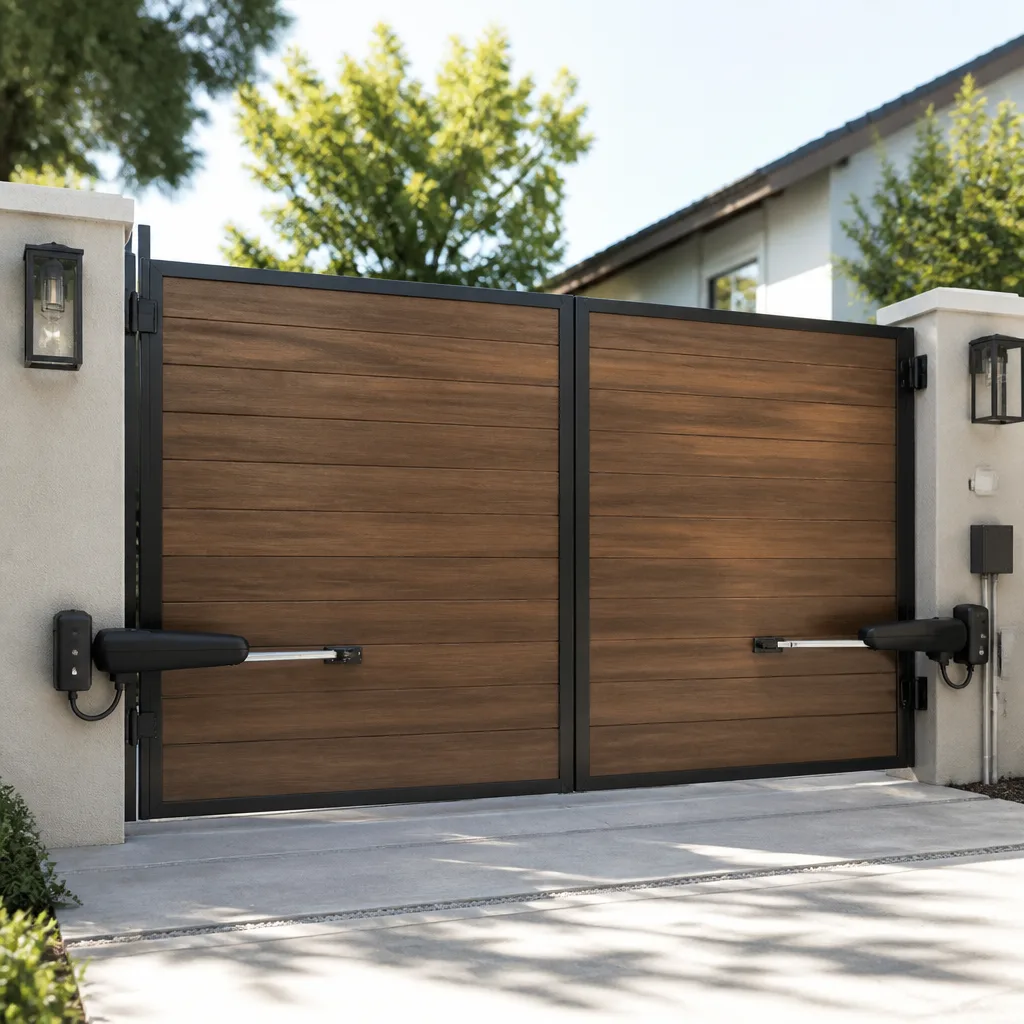
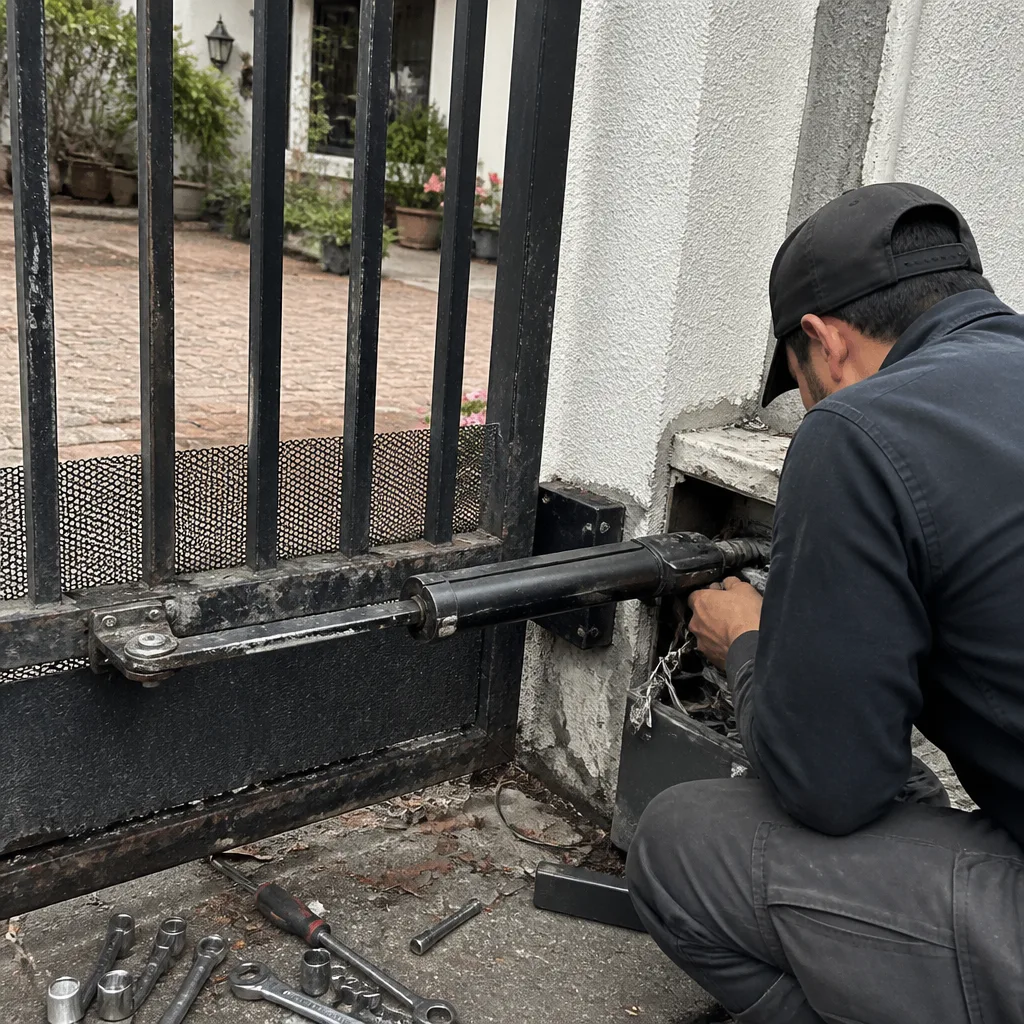 Before
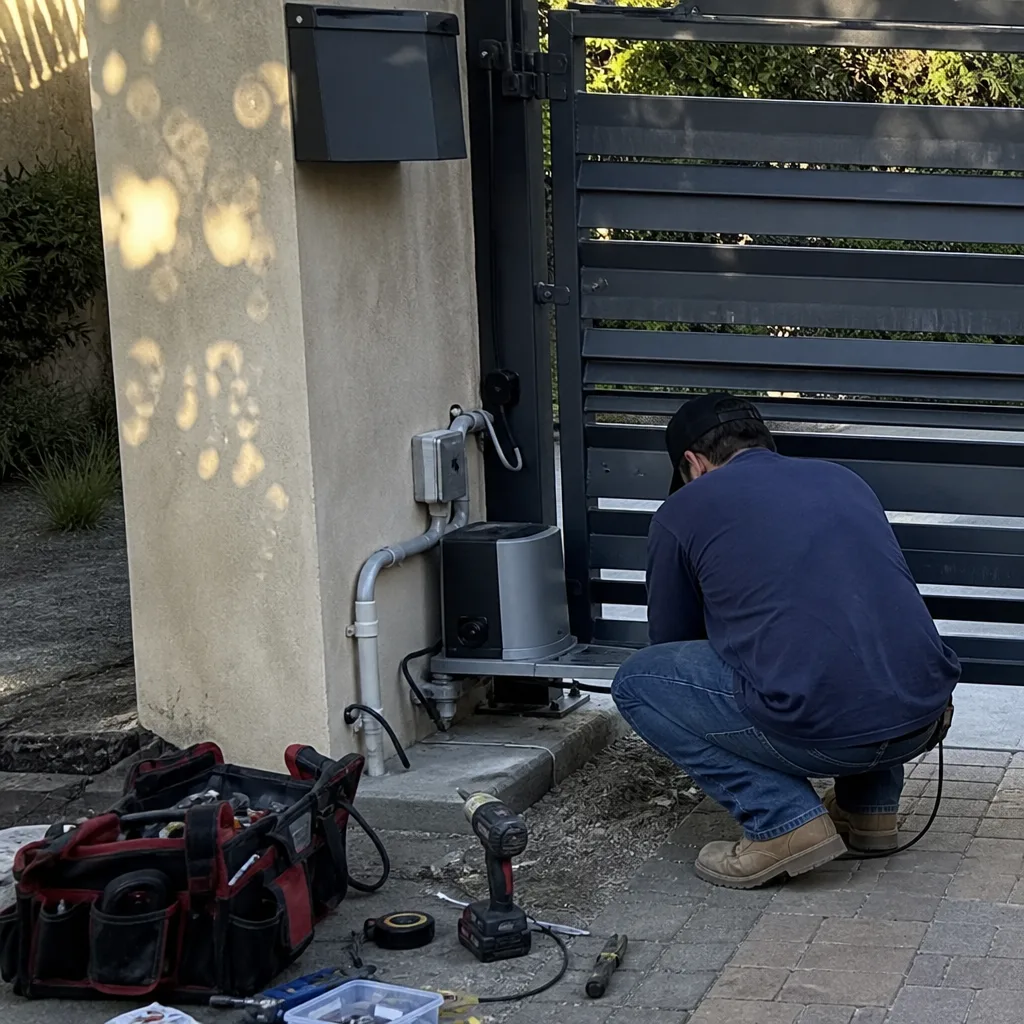 After
After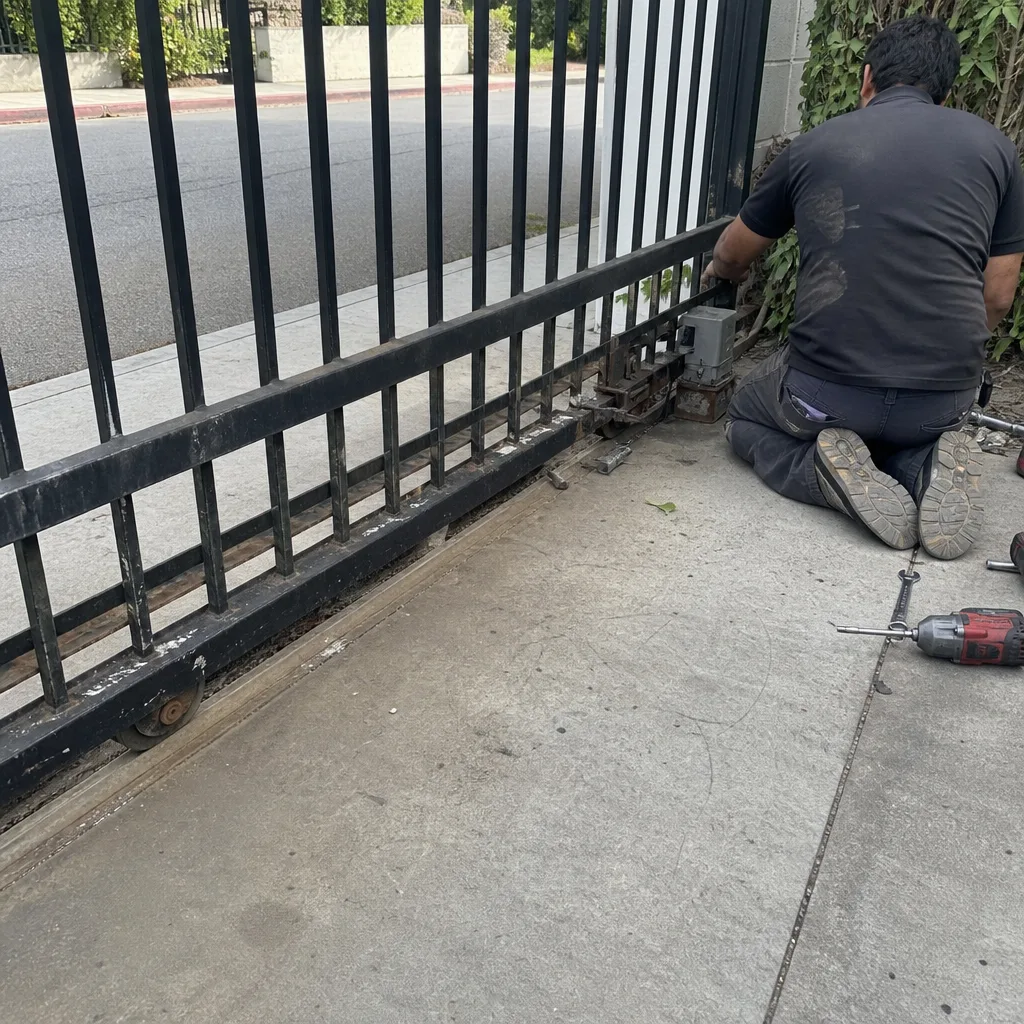 Before
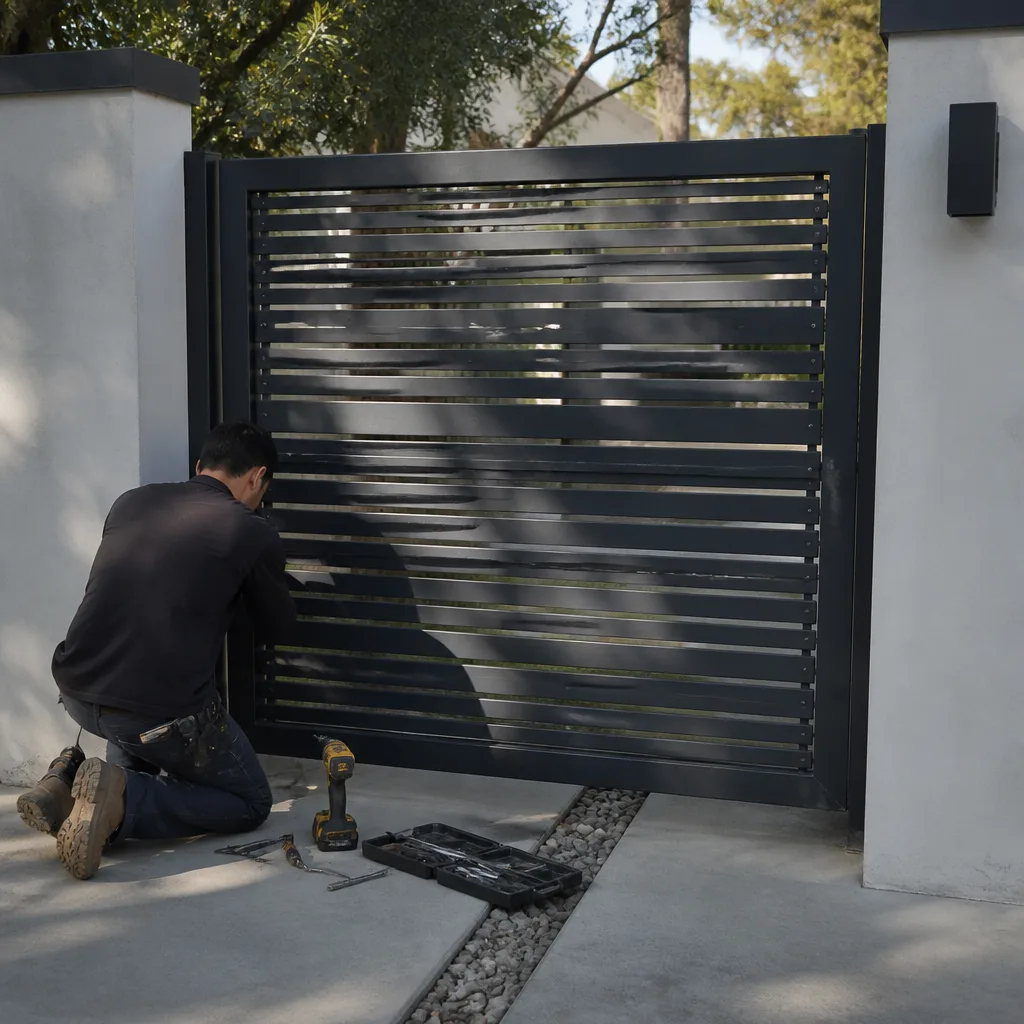 After
After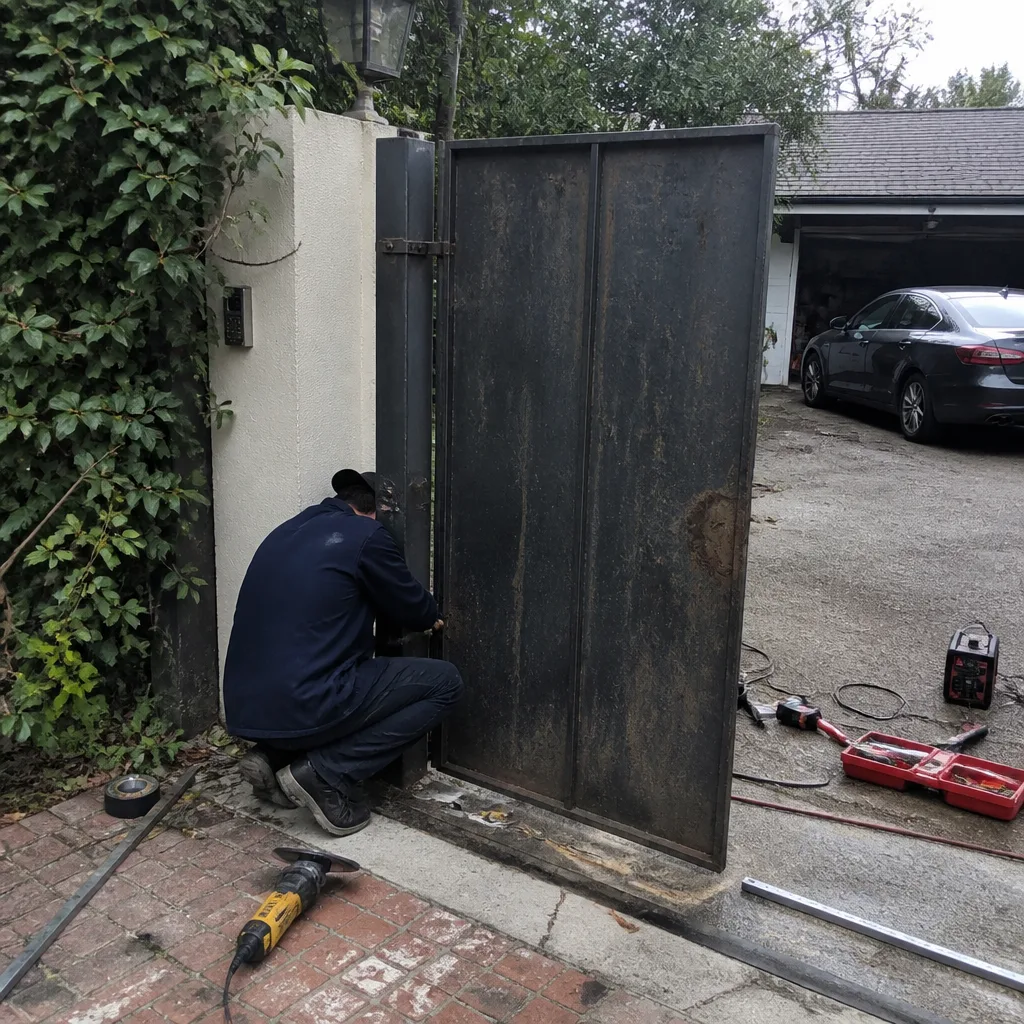 Before
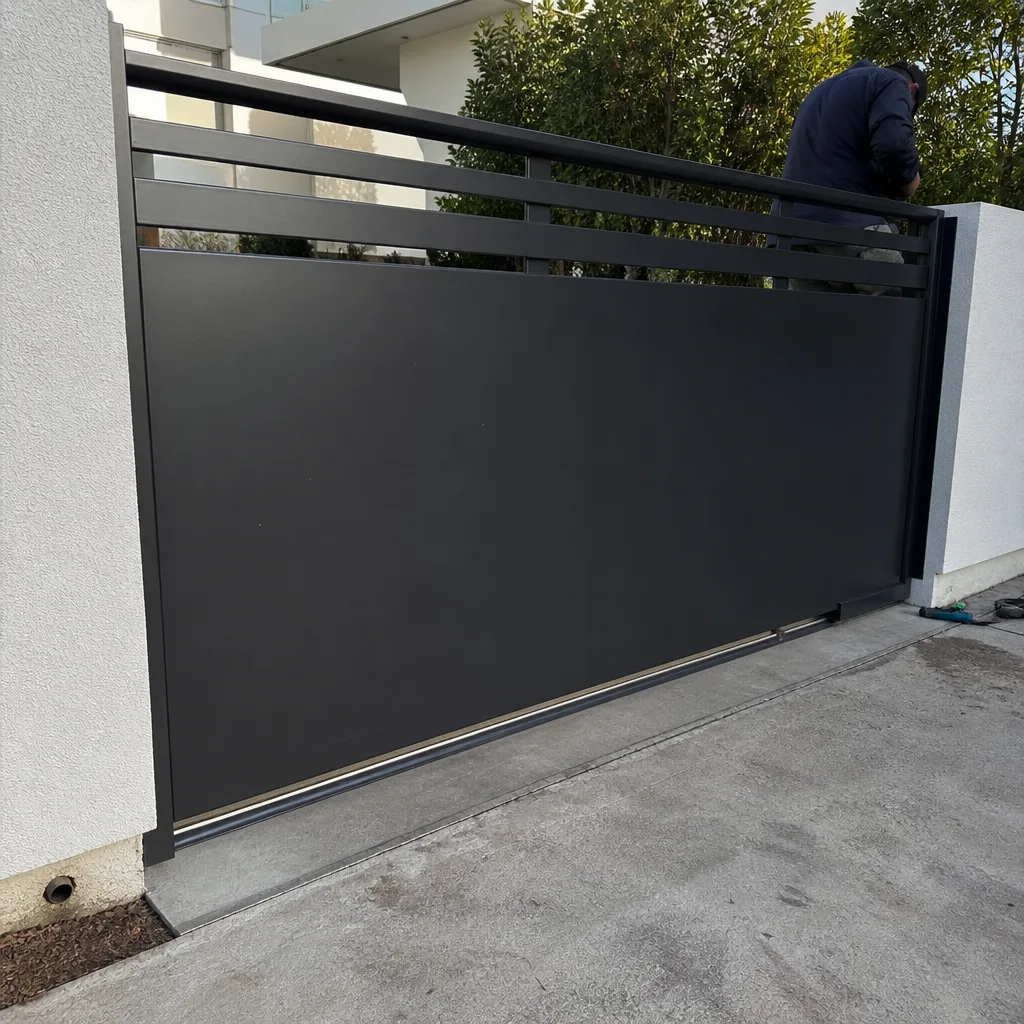 After
AfterGate Repair Cost Breakdown: The West Hollywood Homeowner’s Reference for 2026
The $150 service call that turns into a $2,400 operator replacement happens on a specific script. A gate stops opening, you call a company, someone shows up with a clipboard and a catalog, and within twenty minutes you’re hearing that the “whole system” needs to go. But here’s what that script leaves out: most gate failures in West Hollywood are repairable for a few hundred dollars, and the difference between a $280 hinge repair and a $2,400 replacement often comes down to whether the person in your driveway knows how to weld. This guide - alongside our more guides & resources - walks you through what each component of a gate repair actually costs - parts, labor, welding time - so you can evaluate a quote while it’s being given to you, not after the check clears.
Quick Answer
Our Gate Repair services in West Hollywood typically cost between $180 and $650 for most component-level fixes - hinge replacements, latch adjustments, wheel and track service - while operator and intercom replacements run $500 to $2,400 depending on the brand, power requirements, and whether the existing mounting and wiring can be reused. The single biggest variable isn’t parts cost; it’s whether the contractor welds on site or bolts on a bracket that will fail again in two years. The cheapest legitimate repair is usually a hinge swap or latch adjustment, and the most expensive is a full operator replacement with new safety edges and access control integration.
Table of Contents
- The Eight Most Common West Hollywood Gate Repairs and What They Cost
- What On-Site Welding Actually Costs (and Why It’s Cheaper Long-Term)
- Parts Markup Transparency: The 20-40% Rule and How to Ask About It
- The Real Cost of Deferred Repair: How $180 Becomes $900
- Repair Versus Replace: The Math That Actually Makes Sense
- Operator Replacement Costs by Brand in the West Hollywood Market
- Permits, Code, and What West Hollywood’s Climate Does to Gates
- Common Mistakes to Avoid
- When to Call a Professional
- Frequently Asked Questions
- The Bottom Line
The Eight Most Common West Hollywood Gate Repairs and What They Cost
A gate fails in predictable ways. The hinge post shifts, the operator’s capacitor gives out, a loop detector stops reading the car sitting on it, or the latch and strike stop lining up after a few hundred cycles. Here’s the honest itemized range for each of the eight repairs we see most often in West Hollywood, with notes on what drives the price up or down.
- Hinge replacement: $180-$420 per hinge. This covers cutting off the old hinge, grinding the post clean, welding on a new hinge, and re-hanging the leaf. If the post itself is rotted or shifted, the hinge job exposes it - and that’s a separate repair. Gate age matters: older ornamental steel gates often have seized hinge pins that need to be cut, which adds labor.
- Operator swap (same brand, same mounting): $650-$1,400. If the existing arm, chain, or swing operator is being replaced with a like-for-like unit and the mounting points are still solid, this is mostly parts plus a few hours of labor and reprogramming. Brands matter: a LiftMaster swing operator runs differently than a BFT or FAAC unit, and that affects installation time.
- Weld repair (cracked gate frame, broken picket, split seam): $150-$500. This is the repair that national companies quote as “recommend replacement.” A cracked frame or broken weld is cut, prepped, and re-welded in place. The gate stays in your driveway. If the crack is in a stressed section like a bottom rail or hinge plate, the repair includes reinforcing the area, not just closing the crack.
- Post reset (concrete excavation, re-pour, re-set): $500-$1,200 per post. This is the deepest gate repair because it means digging out the old footing, setting the post plumb, pouring fresh concrete, and re-hanging the gate after the concrete cures. A sagging gate almost always traces back to the post, not the panel - fix the panel without the post and you’ll fix it twice.
- Intercom replacement: $300-$900. A basic intercom or keypad swap is straightforward. Costs climb if you’re replacing a phone-line intercom with a cellular or internet-connected one, or if the existing wiring buried under the driveway has finally corroded and needs to be re-pulled.
- Loop detector replacement: $250-$600. The loop detector is the buried coil in your driveway that tells the gate your car is waiting. In West Hollywood, vehicles do a number on loop wires over time - especially with repeated expansion and contraction of the pavement. The detector itself might be fine; the loop in the ground often isn’t.
- Latch and strike repair or replacement: $150-$350. When a gate doesn’t close securely, the latch and strike are the first suspects. Common fixes include adjusting strike plate alignment, replacing a magnetic lock, or welding a new latch plate into place. If the gate frame is bent, the latch work is temporary unless the frame is straightened.
- Wheel and track service: $200-$500. Sliding gates ride on wheels and a track. Wheels wear out, track gets bent, debris builds up in the rail. Replacing a set of wheels and clearing and re-leveling track is a same-day job when the parts are in hand.
These ranges assume a gate in reasonably standard condition with accessible mounting points and functioning electrical. West Hollywood properties with old, non-standard gates - or those installed decades ago without proper footings - are going to land toward the top of these ranges.
What On-Site Welding Actually Costs (and Why It’s Cheaper Long-Term)
On-site welding in West Hollywood runs roughly $95-$150 per hour, and most gate weld repairs take one to three hours of actual arc time, plus prep and cleanup. A full hinge repair with welding might total four hours on site. That’s $380 to $600 in labor, plus parts. But here’s the comparison that matters: a bolt-on hinge bracket repair costs less up front - maybe $220 - and it fails within two years because the bracket flexes, the bolts loosen, and the same stress that broke the original hinge starts working on the new hardware. You’re paying $220 now and $400 later. The welded hinge repair, done right, doesn’t come back.
The reason welding matters is structural. A properly welded hinge becomes part of the post and part of the gate leaf - it doesn’t rely on mechanical fasteners that vibrate loose. West Hollywood gates are heavy. They’re ornamental steel, they’re steel-framed wood, they’re wrought iron from the 1930s. They cycle hundreds of times a month. Any repair that depends on a bolt in a hole is a repair with a countdown clock. The weld goes up the minute you’re done and it stays up.
We’ve also seen enough bad welding to tell you what to look for. A good weld is smooth and uniform, with no pinholes, no undercut along the edges, and no spatter that someone painted over. A bad weld is lumpy, porous, or looks like someone dragged a stick across the joint. If a contractor’s weld fails, the gate often comes down - and a falling gate is a hazard to people, cars, and the gate itself. This is one repair where the cheapest bid is genuinely dangerous.
Parts Markup Transparency: The 20-40% Rule and How to Ask About It
Industry standard parts markup on gate repair is 20 to 40 percent over wholesale. That’s not greed; it’s delivery, stocking, and the warranty risk the contractor carries. But there’s a difference between a 30% markup and a contractor who sees a $180 operator motor and writes $560 on an invoice. The way to tell is simple: ask to see the parts pricing.
Here’s how that conversation should go. Say: “Can you show me the part price and your markup on it?” A legitimate operator will pull up a supplier invoice or a parts catalog and walk you through it. They’ll tell you a LiftMaster swing arm costs them $310 and they’re charging $430. That’s a 38% markup, in the normal band, and they’re not hiding it. A refusal to show parts pricing is the tell. If a contractor won’t show you a parts cost, you’re being steered - either toward a replacement you don’t need or toward a margin that’s off the scale.
Here’s a step-by-step on evaluating any parts line you’re given:
- Ask for the brand and model number of the part being replaced. Write it down.
- Ask what the wholesale cost of that part is and what your price is. Expect a gap of 20-40%.
- If the contractor can’t or won’t provide the wholesale figure, ask why not. There’s no legitimate answer that holds up.
- Look up the retail price of that part yourself. If you’re being charged 150% over retail, end the conversation.
- Ask whether the part carries a manufacturer’s warranty and what the contractor’s own warranty covers beyond it.
West Hollywood is a market with a lot of high-end gates and a lot of high-pressure upsells to match. The parts markup question cuts through both.
The Real Cost of Deferred Repair: How $180 Becomes $900
A hinge wears out. The gate starts to lean, just a little. Six months later the gate drags on the driveway. A year later the operator is straining against a gate that’s now out of level, and the motor is drawing double the amps it was designed for. Then the post starts leaning because the sagging gate is pulling on it in a direction it was never engineered to take. What starts as a $180 hinge replacement becomes a $900 post reset plus a new hinge, plus the operator repair that would never have happened if the hinge had been replaced at the first sign of wear - one reason we published Gate Repair Warning Signs: A West Hollywood Homeowner’s Reference Guide.
This is the deferral cost curve, and it’s the most expensive thing most West Hollywood homeowners never see. Specific example from a job we did in the Norma Triangle area: a property owner called us for a gate that wouldn’t open. The operator motor was burned out. The cause wasn’t the motor - it was a gate leaf that had sagged two inches over three years because of a hinge pin that was never replaced. The operator had been fighting the gate every cycle. Total cost by the time we got there: a new operator, a re-set post, a new hinge, and two days of labor. The hinge alone would have been $220.
Deferred repair also affects safety. A gate that won’t close all the way leaves a gap. A gate that’s out of alignment can trip a safety sensor and reverse into a car - or a person. The single best way to avoid the big bill on any gate is to fix the small thing the week it shows up.
Repair Versus Replace: The Math That Actually Makes Sense
Here’s the rule of thumb for deciding whether a gate in West Hollywood is worth repairing or should be replaced: if the gate’s structural frame is sound and the posts are plumb and solid, repair it. If the frame is rusted through in multiple sections, the posts are rotted at the base or leaning, or the gate has been hit by a vehicle and is structurally twisted, replacement starts to make sense. The math is simple: a repair that costs less than 40% of a replacement and buys you another five to eight years is a good repair. A repair that costs more than 60% of replacement is a signal.
- Ask the age of the gate. Steel and iron gates in good condition can last 40 years. If yours is 10 years old and structurally sound, repair is the obvious call.
- Check the posts. Walk up to each post and push on it. If it moves, the footing is compromised. That’s a post reset or a replacement conversation, not a hinge job.
- Look at the frame. Rust is manageable if it’s surface-level. If you can poke a screwdriver through a weld or a section of rail, the gate is tired.
- Do the 40/60 test. Repair cost under 40% of a new gate? Repair it. Over 60%? Start pricing replacement.
- Ask yourself who’s recommending the replacement. A contractor who does repairs will tell you when repair doesn’t make sense. A contractor who sells replacements will tell you replacement always makes sense.
And one more thing: if you’re quoted a replacement, ask for a written explanation of why the repair isn’t viable. We’ve written second opinions on dozens of gates other companies said were done, and a surprising number of them just needed a hinge, a motor capacitor, or a square-up adjustment. For a full picture of what a new gate costs and what’s involved, Gate Installation in West Hollywood walks through the process step by step.
Operator Replacement Costs by Brand in the West Hollywood Market
When an operator truly does need replacing, the brand matters for cost. Here’s a realistic look at what the major lines cost in the West Hollywood market, installed, with existing mounting and wiring in reusable condition:
- LiftMaster swing or slide operator: $850-$1,600 installed. LiftMaster is the most common residential brand in West Hollywood. Parts are readily available, the controls are standard, and most technicians know them well.
- FAAC swing operator: $1,100-$2,000 installed. FAAC hydraulic and electromechanical operators are common on larger, heavier estate gates. They’re solid equipment, but they’re less familiar to technicians who don’t do gate-specific work every day.
- BFT swing or slide operator: $950-$1,800 installed. BFT makes reliable mid-to-premium operators. Their swing arms are well-suited to the ornamental heavy gates common in West Hollywood’s older neighborhoods.
- Linear slide operator: $800-$1,500 installed. Linear is often the value option on slide gates. Components are consistent, and they’re less expensive to service over the long run than some imported brands.
These ranges assume the gate itself is balanced and level. If the operator failed because the gate is misaligned, no new operator will last - the replacement is only as good as the gate it’s bolted to. That’s why our repair sequence always starts with the gate itself, not the motor. For more on the broader repair landscape in the area, see Gate Repair in West Hollywood.
Permits, Code, and What West Hollywood’s Climate Does to Gates
West Hollywood doesn’t require a permit for most component-level gate repairs - hinges, operator swaps, latch work, and weld repairs on existing gates are generally considered maintenance. Where permits come into play is structural work: resetting posts in new footings, significant modification of the gate’s structural frame, or any work that changes the gate’s dimensions or swing direction. If your repair requires concrete work beyond simply reusing an existing footing, it’s worth checking with the city. A legitimate contractor will know the threshold and tell you up front.
Climate plays an underrated role in West Hollywood gate wear. The combination of coastal moisture, the occasional heat spike, and the steady dust and grit from Santa Monica Boulevard traffic takes a real toll on gate hardware. Powder coating fades and pits. Bearings fill with dust and bind. Mild steel corrodes faster than it does ten miles inland. If you live in the flats near the Beverly Hills border or up in the hills off Doheny, expect to service hardware more often than a property in a drier inland city. Greasing hinges, checking bearings, and addressing paint chips before they spread are all cheap now and expensive later.
And a word on operators in West Hollywood’s older buildings: if you’re in a condo or a multi-unit property, gate access may be controlled by a building-wide system, which means repairs need to coordinate with the HOA or property manager. We regularly work on shared pedestrian and vehicle gates in properties along Norma Triangle and the streets off Fairfax. Gate Access Control in West Hollywood covers those systems in detail.
Common Mistakes to Avoid
- Accepting a phone quote without a visit. A gate repair can’t be accurately quoted without seeing the gate, the posts, the operator, and the wiring. A phone price is a fishing line. The price you’re given after a real inspection, in writing, is the number that should hold. If a contractor won’t put a repair price on paper, call someone else.
- Going with the cheapest weld. Structural welding on a heavy gate is a skill. The lowest bid is often the lowest because the welder doesn’t know how to prep a joint, control heat, or grind properly after the weld. A failed weld on a gate can drop a leaf on someone.
- Letting a gate sag for months. The cost of a hinge repair doesn’t change. The cost of what happens while you wait does.
- Believing the ‘operator is obsolete’ line. Unless your operator is genuinely discontinued and parts are no longer manufactured, it’s probably repairable. And even if parts are scarce, the fix is often a generic capacitor, a gear, or a control board, not a whole new unit.
- Ignoring the manual release. Every automatic gate has a manual release mechanism. If the contractor doesn’t show you where yours is and how to use it, they’ve left you one power outage away from being locked out of your own driveway.
- Not asking about the post. Gate problems usually start at the post. Any repair quote that addresses the panel or the operator but never mentions the post is incomplete.
- Replacing a gate you could have kept. The national replacement-first approach is common in West Hollywood because it’s a wealthy market. The gate you have may be forty years old and built better than anything available today. Don’t assume old means done.
When to Call a Professional
Call if your gate is leaning, dragging, or making a noise it didn’t make before. Call if the operator opens but won’t close, or closes but won’t open, or reverses mid-cycle. Call if the safety sensors stop working, because a gate that doesn’t reverse on a car or a person is a liability sitting in your driveway. Call if the gate was hit by a car, even if it looks fine - impact damage shows up later as a cracked weld or a torqued frame. And call if you’ve just bought the house and inherited a gate system with a history you don’t know. Gatewood Fence & Gate offers free estimates in West Hollywood - call (323) 677-4063. A live person answers, 24/7. We’ve been at this since 2001, the shop address is published, and Hal Gatewood’s name is on every invoice.
Frequently Asked Questions
Most gate repairs in West Hollywood fall between $180 and $650 for component-level fixes like hinge replacement, latch adjustment, and wheel or track service. Operator replacements run $650 to $2,400 depending on brand, power requirements, and whether the existing mounting works. The exact price depends on the gate’s condition and what the repair exposes - a hinge replacement on a solid post is at the low end, and the same repair on a rotted post will add a post reset. Call (323) 677-4063 for a fixed price on your gate once we’ve looked at it; estimates are free and the price is set before any work starts.
Most gates can be repaired. The frame, posts, hinges, and operator components are replaceable, and a structurally sound gate is worth repairing even if it’s old. Replacement makes sense when the frame is rotted through, the posts are compromised, or the gate has been structurally twisted by an impact. If a contractor tells you replacement is the only option, ask for a written explanation of why repair won’t work - and get a second opinion. We offer a Gatewood Fence & Gate home second opinion on any written estimate you’ve received, free.
A gate operator replacement in West Hollywood typically runs $650 to $2,400, with the brand, the gate’s weight and length, and the condition of the existing mounting and wiring driving the price. A basic LiftMaster swap on a standard residential swing gate is at the low end; a FAAC operator on a heavy estate gate, with new safety edges and reprogramming, lands at the high end. The operator should only be replaced after the gate itself is confirmed level and balanced - a new motor on a misaligned gate is a future repair.
Welding requires skilled labor, equipment on the truck, and time for prep, arc time, and cleanup. But the cost difference matters: a welded repair becomes part of the structure, while a bolt-on bracket relies on fasteners that loosen and flex. The bolt-on is cheaper the first year and more expensive by year three. In our experience, a properly welded hinge on a West Hollywood gate outlasts the gate’s remaining finish, not just the repair warranty.
Component-level repairs - hinges, operators, latches, weld repairs on existing gates, and wheel or track service - generally don’t require a permit in West Hollywood. Structural work like posting new footings, significantly modifying the frame, or changing the gate’s dimensions or swing direction may trigger permit requirements. A qualified contractor will know the line and tell you which side of it your job falls on.
Most component repairs - hinge replacement, latch work, wheel replacement, capacitor swaps - are completed in a single visit, usually two to four hours. Post resets take longer because the new concrete needs to cure before the gate is re-hung, which means a second visit a day or two later. Operator replacements that require new wiring or access control integration can take from half a day to a full day. The quote you get is the time you get; we don’t disappear mid-job for another call.
The Bottom Line
Gate repair pricing in West Hollywood isn’t a mystery when you know the parts, the labor, and the difference between a real repair and a sales script. A hinge costs a couple hundred dollars. A post reset costs more, but it’s still a repair. A welded fix often outlasts the gate finish, and a bolt-on bracket often doesn’t. Parts markup is normal up to 40% and a red flag past it. And the most expensive thing you can do is wait. When the gate starts acting differently, call (323) 677-4063. Hal Gatewood has been fixing gates in West Hollywood since 2001 - the name’s on the shop, the address is published, and every job carries a 90-Day Done Right Promise in writing.
Written by Hal Gatewood, Owner at Gatewood Fence & Gate, serving West Hollywood since 2001.