
Last updated August 26, 2026
Free on-site gate assessment - hinges, posts, and your LiftMaster or Nice gate operator checked before anything is quoted
The assessment is free and the quote is the invoice.
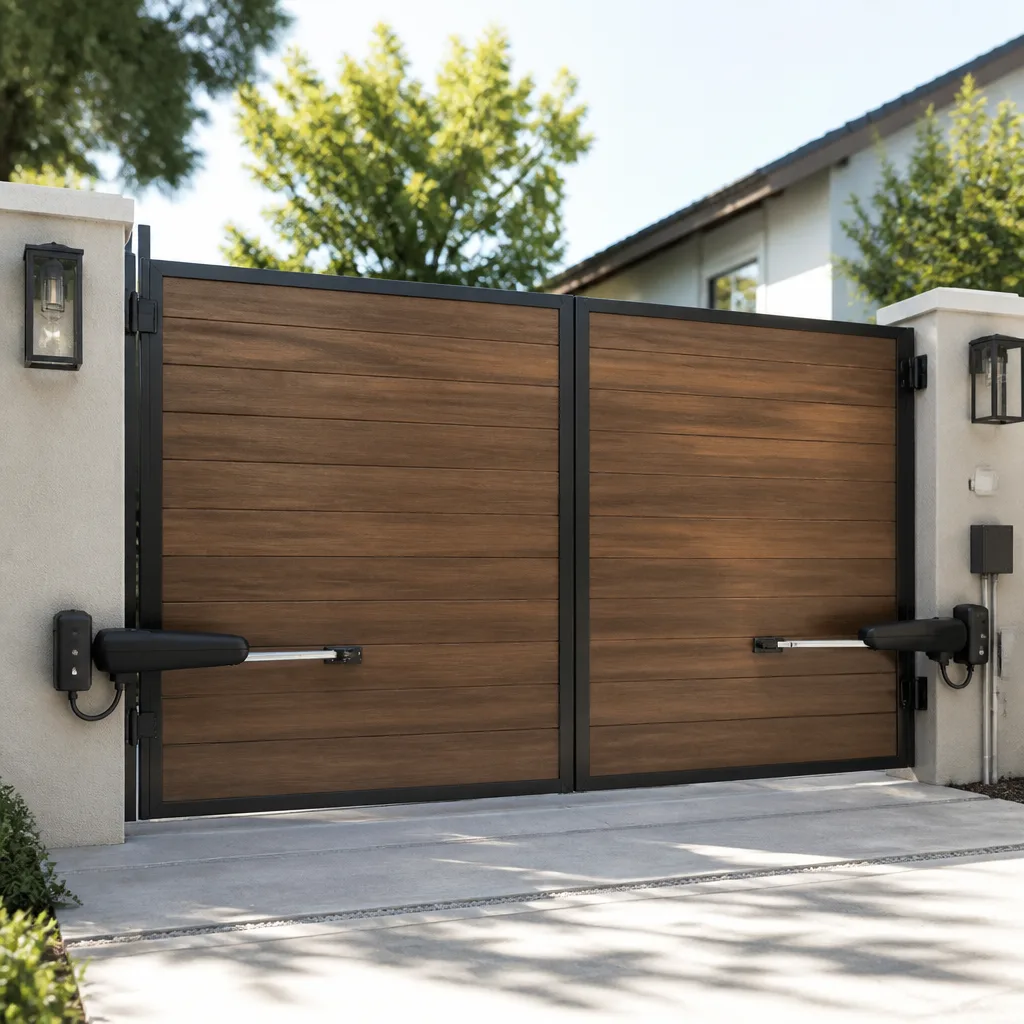
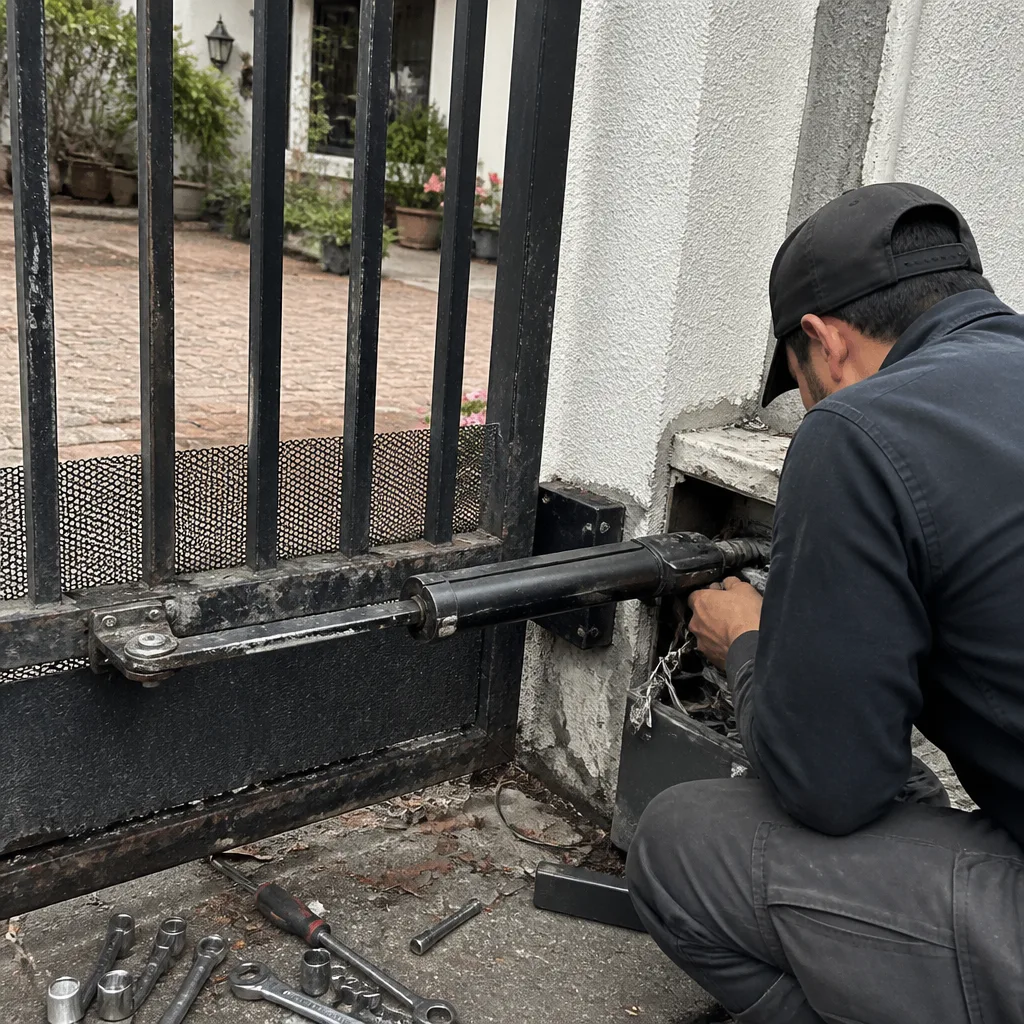 Before
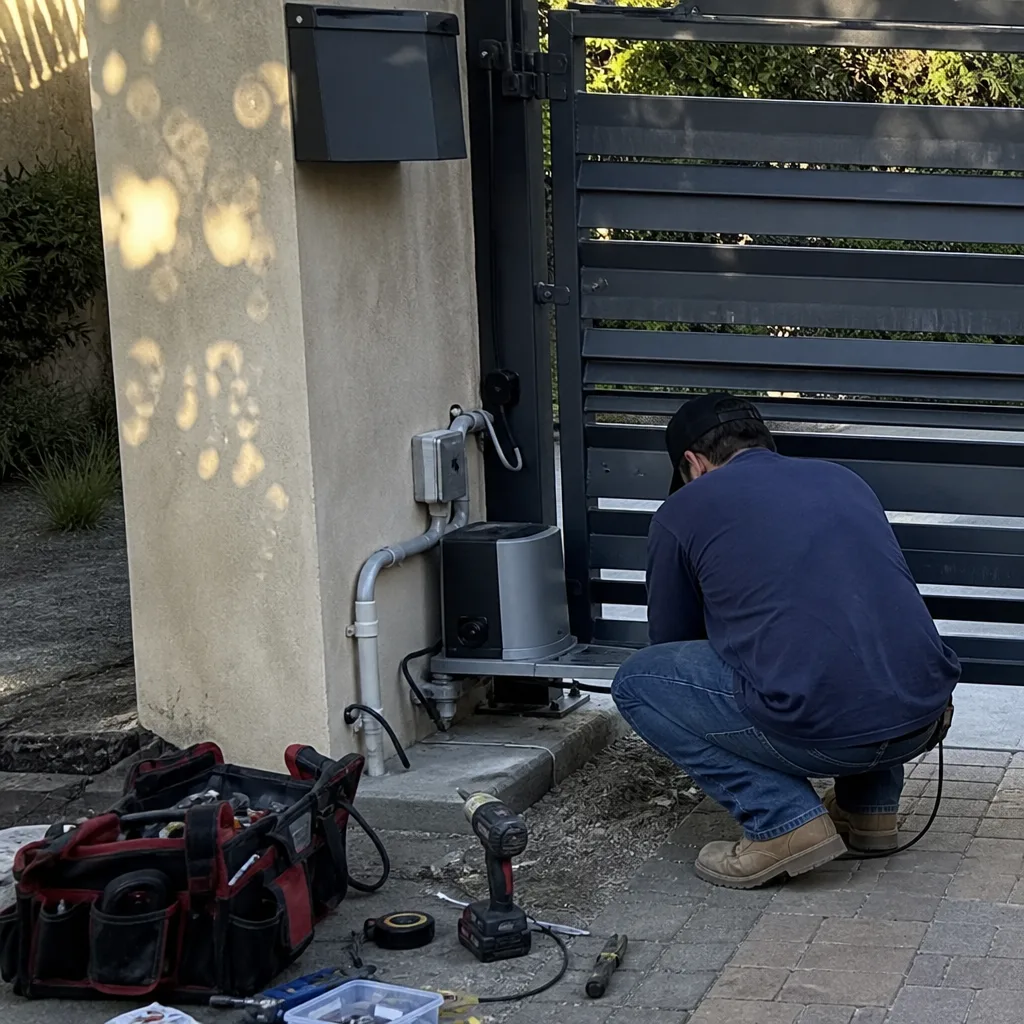 After
After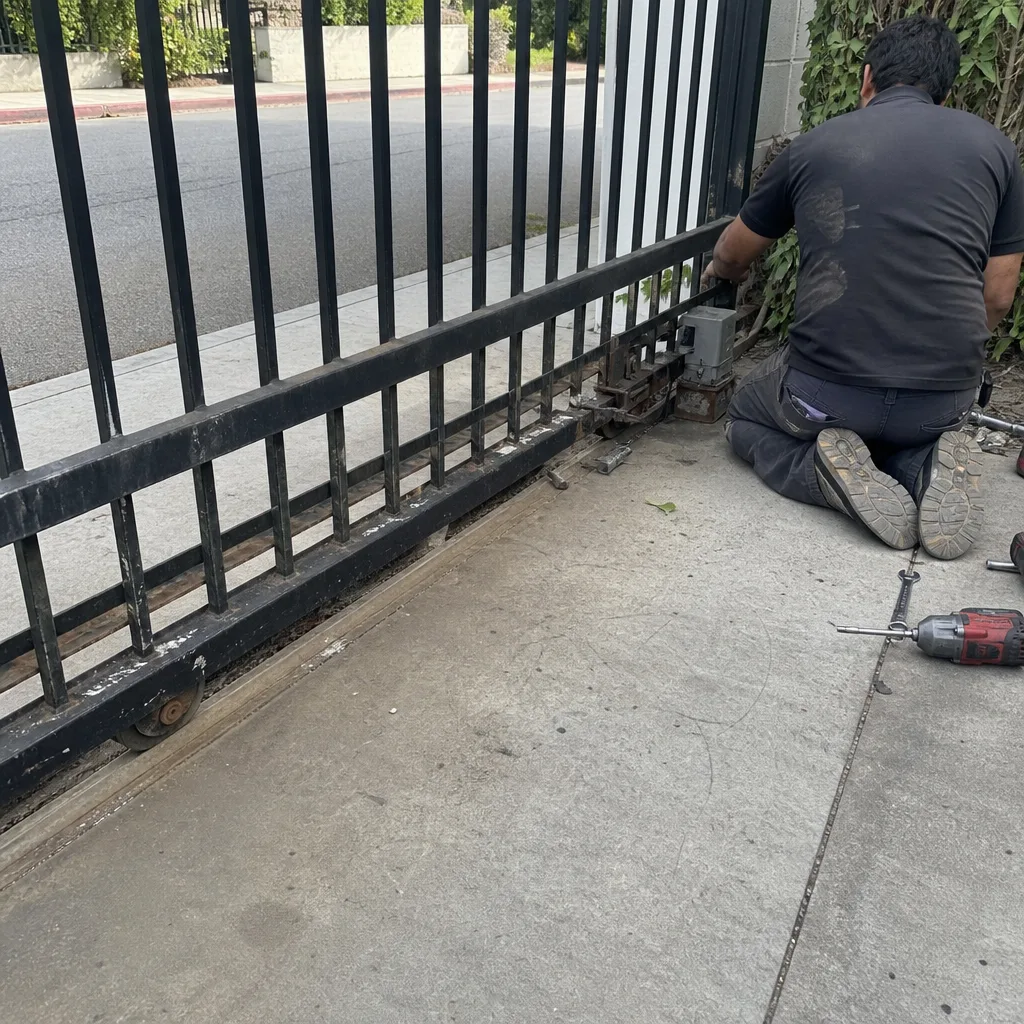 Before
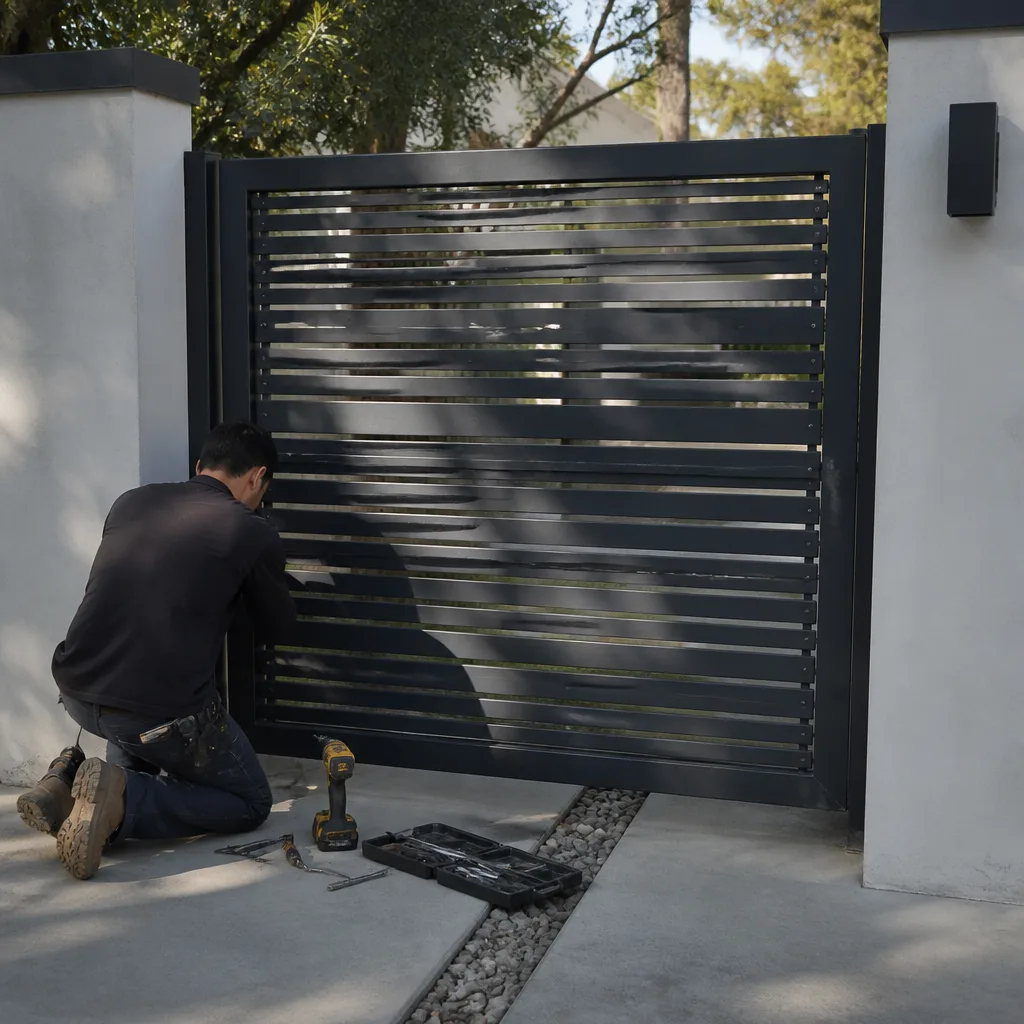 After
After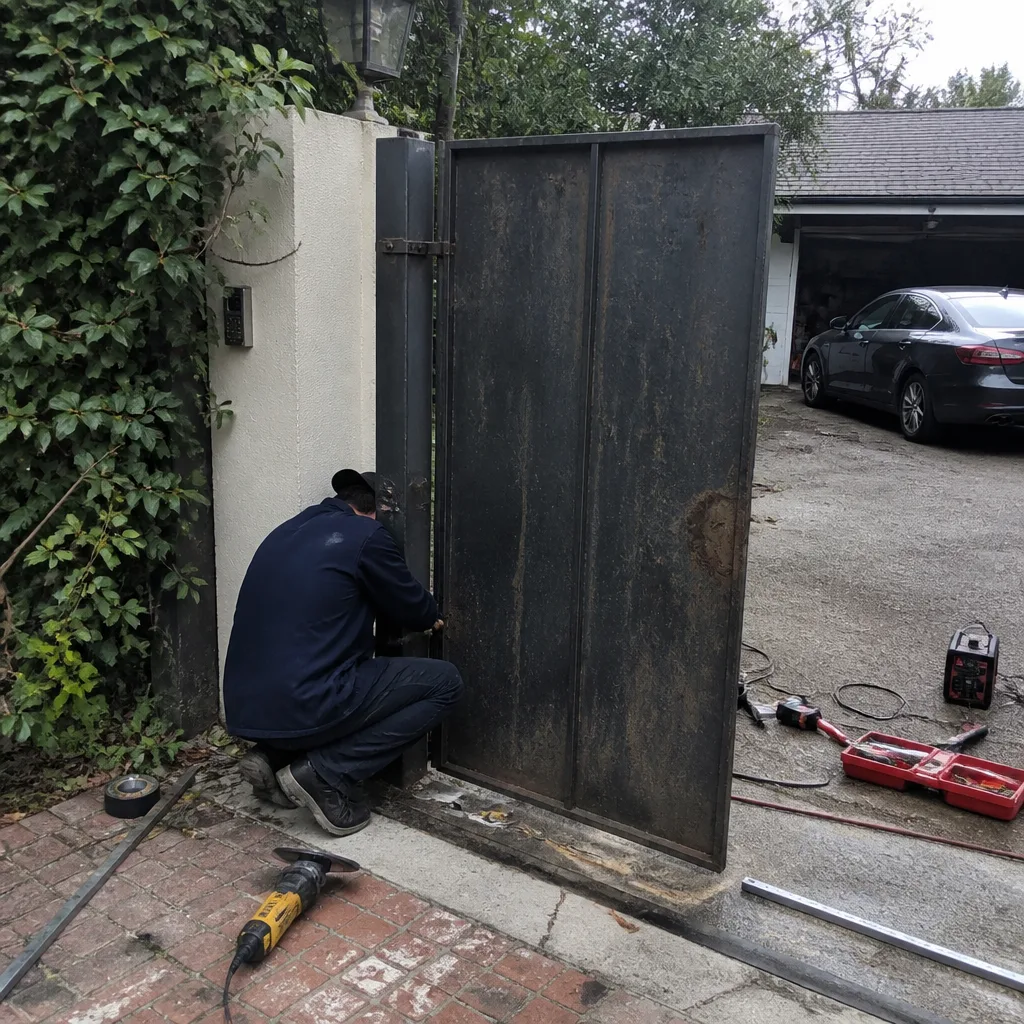 Before
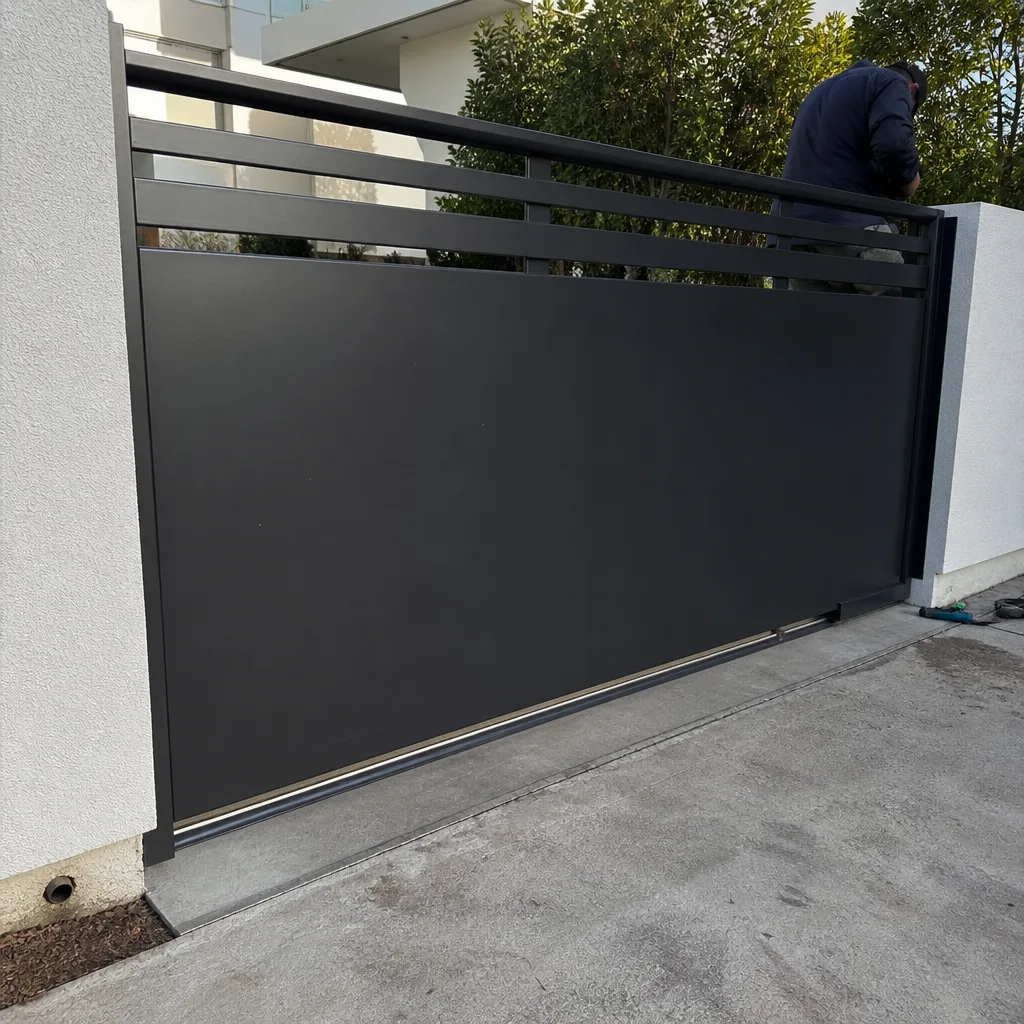 After
AfterHow to Hire a Gate Repair Contractor in West Hollywood: A Step-by-Step Guide
Here’s a pattern we see every month in West Hollywood: a homeowner calls a gate repair company at 9 p.m., someone answers on the first ring, a truck shows up by 7 a.m., and by 8 a.m. the homeowner is staring at a $6,400 replacement quote for a gate that needed a $200 hinge. Fast availability in this market sometimes isn’t hustle. It’s a volume game. The person who showed up was never going to repair anything. This guide walks you through the license checks, the interview questions, and the paperwork rules that filter out the replace-first crews before they ever pull into your driveway. For more detail, see our Complete Guide to Gate Repair in West Hollywood.
Quick Answer
To hire a gate repair contractor in West Hollywood, verify their California contractor license and confirm they hold the proper classification for gate and fencing work, ask three repair-first interview questions before describing your problem, demand a written scope of work with line-item pricing before any labor begins, and confirm they have a published physical address you can actually visit. A repair-first gate contractor will diagnose before quoting, name the replacement parts by brand, and put their guarantee in writing. Call Gatewood Fence & Gate at (323) 677-4063 for a free estimate from a West Hollywood shop that’s been owner-operated since 2001.
Table of Contents
- Step 1: Verify the California Contractor License in Two Minutes
- What License Classifications (C-13, C-23, D-Series) Actually Tell You
- Step 2: The Three Questions That Separate Repair-First From Replace-First
- Step 3: What a Written Scope of Work Must Include (And What Vague Language Hides)
- Step 4: Why a Published Physical Address Matters More Than Reviews
- Step 5: Red Flags Specific to Gate Operators, Motors, and Access Control
- Step 6: Pricing Protection for West Hollywood Homeowners
- Common Mistakes to Avoid
- When to Call a Professional
- Frequently Asked Questions
- The Bottom Line
Step 1: Verify the California Contractor License in Two Minutes
Before you describe a single symptom, before you send a photo, before you even let a company know your street name, check their license. In California, any contractor performing gate repair, gate installation, or work on gate operators for more than $500 in total labor and materials must hold a valid contractor license issued by the Contractors State License Board (CSLB). That’s not a suggestion. It’s state law, and it’s your first filter.
The check takes two minutes. Go to the CSLB website and search by the contractor’s name, license number, or phone number. When the result comes up, look for four things:
- The license number matches what the contractor gave you. A real operator knows their number without looking it up. If they stumble, write down what they say and verify it anyway.
- The license status shows “Active.” An expired, suspended, or revoked license means they can’t legally work on your gate. Walk away from that one.
- The business name on the license matches the name on the truck, the invoice, and the website. In West Hollywood, we’ve seen companies operating under three different names with one license number that belongs to none of them. That’s a shell game.
- The license classification covers the work. This matters more than most people realize, and it’s the next section.
Hal Gatewood’s license number is published on the shop and on every invoice. You don’t have to ask twice. Nobody should have to ask twice.
What License Classifications (C-13, C-23, D-Series) Actually Tell You
The license classification is the part most homeowners skip, and it’s the part that tells you what the contractor is actually qualified to do. In California, a contractor’s license comes with a classification that defines the scope of work they’re legally allowed to perform. Here’s what the relevant ones mean for gate work in West Hollywood:
- C-13 (Fencing Contractor): This classification covers the installation, repair, and modification of fences and gates, including the posts, hinges, panels, and structural components. This is the classification that applies to the physical gate itself.
- C-23 (Ornamental Metals Contractor): This classification covers work on ornamental iron, steel, aluminum, and other metal structures, including custom gates, welding, and metal fabrication. If your West Hollywood gate is wrought iron or steel, a C-23 holder is qualified to weld and fabricate on it.
- D-series (Specialty Classifications): There are several D-series classifications that touch gate work. D-28 covers doors, gates, and activating devices, which includes the installation and repair of gate operators and automatic opening systems. A contractor holding only a C-13 may not be qualified to wire a new gate motor.
What this means in practice: if someone holds a C-13 but starts quoting you work on a LiftMaster operator’s control board, ask whether they also hold a D-28 or have a qualified electrician on the job. The wrong classification often shows up when a fencing company tries to upsell an operator replacement they’re not licensed to perform. We’ve fixed more than one job in West Hollywood where a fencing crew wired a gate motor incorrectly because the work was outside their classification.
Ask the contractor to state their classification out loud. Then verify it on the CSLB site. If the classification doesn’t match the work being proposed, that’s the conversation to end.
Step 2: The Three Questions That Separate Repair-First From Replace-First
Here’s the counterintuitive part: the best time to ask these questions is before you describe your gate problem. A replace-first company will answer differently than a repair-first shop, and you want to hear that difference before they know what they’re looking at.
Question 1: “What’s your policy on repairing versus replacing?”
A repair-first contractor will tell you something specific: they diagnose first, they replace only what’s failed, they keep the gate in your driveway, and they put the repair decision in writing. A replace-first company will hedge, talk about “the age of the gate,” or say they’ll “have to see it first.” What they mean is they’ve already decided before they’ve seen it. The age of the gate matters less than the condition of the post, the hinges, and the operator. A 25-year-old steel gate with good posts beats a five-year-old gate with a rotted post every time.
Question 2: “Do you weld on site, or do you haul the gate to a shop?”
This question tells you more than it seems to. A contractor who welds on site is a contractor who repairs in place. They’re not pulling your gate off the hinges, loading it onto a trailer, and driving it somewhere you’ll never see. On-site welding also means they’re equipped to fix the actual failure point, which on a sagging gate is almost always the hinge post, not the middle of the panel. Fix the panel without addressing the post and you’ll fix it twice. A contractor who doesn’t weld on site is often a contractor who doesn’t actually repair gates at all. They swap. And swapping is how a $150 hinge job becomes a $5,000 replacement.
Question 3: “If my gate operator fails, do you diagnose the board, the limit switch, or the motor before quoting a replacement?”
Listen carefully to the answer. A repair-first shop names components: the control board, the limit switch, the capacitor, the arm. A replace-first shop names the whole operator: “sounds like you need a new opener.” Anyone who quotes an operator replacement without a diagnostic hasn’t diagnosed anything. At Gatewood Fence & Gate home, we service nine major gate brands including LiftMaster, FAAC, BFT, Linear, Viking, Ghost Controls, DoorKing, Elite, and Mighty Mule. That means when we diagnose, we can source the specific part, not just a whole new unit.
Step 3: What a Written Scope of Work Must Include (And What Vague Language Hides)
The written scope of work is the document that protects you from the price-at-the-door problem. A legitimate scope is specific. It names the parts, the work, and the price, line by line. A vague scope is a blank check. And “assess and repair as needed” is the vaguest check there is.
Here’s what a written scope of work must include before you agree to anything:
- A line-item list of parts with brand names. Not “gate opener.” It should say “LiftMaster LA400 operator” or “Mighty Mule MM571W control board.” If the contractor won’t name the brand in writing, they’re either marking the part up beyond reason or they haven’t figured out what’s actually wrong yet.
- A line-item list of labor, with hours and rates. “Labor: $600” tells you nothing. “Labor: 3 hours at $120/hour” tells you what you’re paying for and how long the contractor thinks the job will take.
- A clear statement of what’s included. Does the price include removing the old part? Hauling away debris? Testing the safety features after the repair? In West Hollywood, where most gates are automatic and many are tied to building security, safety checks matter. If the scope doesn’t mention safety testing, the contractor may not be doing any.
- A clear statement of what’s excluded. A door that’s square, a post that’s plumb, a concrete pour. If there’s a chance the job uncovers something extra, the scope should say what that something is and what it costs to address.
- A written guarantee, stated plainly. Not “we stand behind our work.” A real guarantee says what’s covered, for how long, and what happens if it fails. The 90-Day Done Right Promise at Gatewood Fence & Gate is stamped on every job. It says if it’s not done right, we make it right. No fine print, no “up to,” no “in most cases.”
If the contractor refuses to put the scope in writing before starting work, that’s not a scheduling issue. That’s the deal falling apart, and you should let it.
Step 4: Why a Published Physical Address Matters More Than Reviews
Reviews can be bought, farmed, and gamed. Google knows it, the CSLB knows it, and in a market like West Hollywood, where gate repair companies come and go like summer heat, a five-star rating on a two-year-old profile means considerably less than a published shop address that has been at the same location since before the smartphone existed.
A published physical address does several things at once. It means the contractor pays rent or property tax somewhere you can find. It means they have a place to return to when the job goes wrong. It means their name is attached to a location, not just a website and a phone number that can be deleted tomorrow. The name is on the shop, and the shop is down the road. That’s the oldest accountability there is.
How to check whether a contractor’s listed address is real:
- Run the address through a maps search. Does it show a commercial building, a workshop, a fenced yard with trucks? Or does it show a parking lot, a P.O. box storefront, or a residential home that doesn’t match the business name?
- Check the CSLB record. The CSLB requires a physical business address on every active license. If the address on the license doesn’t match the address on the website, ask why.
- Drive by it. In West Hollywood, the drive rarely takes more than 15 minutes. If you see a shop with a company sign, welding equipment in the yard, and a truck with matching lettering, that’s a contractor with something to lose. If you see an empty storefront or a mail drop, that’s your answer too.
Hal Gatewood’s shop is at a published address in West Hollywood. His name is on the shop and on every invoice. You can drive there and look him in the eye. Plenty of our neighbors have done exactly that.
Step 5: Red Flags Specific to Gate Operators, Motors, and Access Control
Gate operators, motors, and access control systems are where the replace-first game runs wild in West Hollywood. The equipment is technical, the failure modes are unfamiliar to most homeowners, and the replacement cost is high enough to be worth flipping. Here are the operator-specific red flags to watch for:
- The contractor won’t name the replacement parts brand. A real technician knows what they’re specifying. If you need a new control board, they should say “FAAC” or “LiftMaster” or “Elite,” not “a quality board.” If they won’t name the brand, they’re either protecting a markup or they don’t know the equipment well enough to diagnose it.
- The contractor won’t show you the old part they removed. Ask to see it. A failing capacitor, a burned relay, a stripped gear. The old part tells the story. If the contractor leaves with the part and won’t show it to you, ask why. You paid for the diagnosis and the replacement. The failed component is evidence of both.
- The contractor quotes an operator replacement without running a diagnostic. This should never happen. An operator failing can be a bad control board ($150-$500), a bad limit switch ($40-$120), a burned motor ($200-$600), or a dead power supply ($80-$250). Replacing the entire operator for any of those is like replacing the engine because a spark plug fouled. We fix more operators than we replace, and we carry parts for all nine brands we service.
- The contractor quotes a “complete system upgrade” for a single failed component. If one safety edge fails, you don’t need a new operator, a new receiver, and a new keypad. You need a new safety edge. A contractor who bundles everything into one upgrade quote is running a sales pitch, not a repair.
- The contractor can’t explain how the safety features work. Every automatic gate in West Hollywood is required to have safety devices: photo eyes, safety edges, or both. The contractor should be able to explain what yours has and how they’ll test it after the repair. If they can’t, they shouldn’t be touching the controls. For Gate Access Control in West Hollywood, ask whether the contractor can integrate your existing keypads, remotes, and intercom, or whether they’re planning to replace all of it.
Here’s the truth that protects you: a qualified gate operator technician can diagnose before they quote. They can show you the failed part. They can name the replacement by brand. If a contractor can’t do those three things, they’re not repairing your gate. They’re selling you a new one.
Step 6: Pricing Protection for West Hollywood Homeowners
In West Hollywood gate repair, the quoted price and the invoiced price should be the same number. If they’re not, you didn’t hire a contractor. You got caught in a bait. Here’s how to protect yourself:
- Get the price in writing before any work starts. Not a verbal estimate, not a text message, not a “ballpark.” A written quote, itemized, with the bottom line clearly stated.
- Ask whether the price can change mid-job. The right answer is “only if we uncover something the quote didn’t cover, and you’ll approve the change in writing before we touch it.” The wrong answer is “depends on what we find.” What they find is usually a reason to charge more.
- Ask whether there’s a trip charge. Inside the county, Gatewood Fence & Gate doesn’t charge one. Not for the diagnostic, not for the estimate, not for the second opinion. If a contractor charges a trip fee just to look at your gate, ask what happens to that fee if you hire them. If it doesn’t roll into the job, you’re paying to be sold.
- Ask about standing discounts. We offer $40 off any repair over $200. We offer a permanent 10% discount for seniors and veterans. If a contractor has no standing discounts and only negotiates under pressure, that’s not a discount policy. That’s a pricing strategy.
The strongest protection is a free second opinion. If you’ve already got a written estimate from another company, bring it to us. We’ll look it over and give you a straight answer on whether the price is fair and whether the work is even necessary. That’s not a sales tactic. That’s a Gate Repair shop doing what repair-first shops should do.
Common Mistakes to Avoid
- Hiring the first company that answers the phone. In West Hollywood, fast availability sometimes means the crew isn’t booking jobs because they’re repairing gates. It means they’re booking jobs because they’re flipping them into replacements. Speed on the phone is not a qualification.
- Describing your gate problem before verifying the license. A legitimate shop verifies out the same whether you describe a stuck wheel or a snapped post. If you describe the problem first, you’ve just given a bad actor a script to work from.
- Accepting a quote without a written scope of work. A verbal quote is a negotiation tactic, not a contract. Without a written scope, the price at the door is whatever the contractor says it is.
- Choosing a contractor with a hidden or missing physical address. If you can’t find their shop, you can’t find them when the repair fails. In West Hollywood, a real gate contractor has a real shop, with a real sign, on a real street.
- Letting someone replace a gate operator they never diagnosed. A dead capacitor doesn’t require a new LiftMaster. Anyone who quotes the whole unit without a component-level diagnostic is either unqualified or dishonest. Either way, you shouldn’t pay for the quote, and you shouldn’t call them back.
- Skipping the written guarantee. If the guarantee isn’t in writing, it doesn’t exist. A three-month promise with a name and a phone number attached is worth more than a “lifetime” guarantee from a company that won’t be around in two years.
- Believing that higher price means higher quality. In the LA-area gate repair market, some of the highest quotes come from the most aggressive replace-first crews. And some of the fairest prices come from shops that actually fix things because fixing costs less than replacing and the honest shop charges what the job actually calls for.
When to Call a Professional
You should call a professional the moment you notice the gate isn’t moving the way it used to. A sag, a scrape, a grinding noise, a gate that reverses halfway through its cycle, an opener that buzzes without moving. These are not going to fix themselves. They’re going to get worse, and every week they get worse, the repair gets more expensive. A gate that sags in the hinge post, not in the middle, and that is where we start. If your automatic gate closes on its own, that is a safety failure, not a quirk. Show me the gate closing on its own and I’ll show you where it’s failing.
For anything involving gate motors, operator arms, or control boards, call a professional before you touch anything yourself. Gate operators run on springs, high-tension cables, and moving arms that can cause serious injury if they release under load. The danger is real, and it’s not the place to learn by doing. Gatewood Fence & Gate offers free estimates in West Hollywood. Call (323) 677-4063 and we’ll send someone who knows what they’re looking at. You’ll get a written quote with a name on it, a shop you can drive to, and a promise that’s in writing.
Frequently Asked Questions
Gate repair in West Hollywood typically ranges from $180 for a minor hinge or latch fix to $1,200+ for a complete operator replacement with new safety edges. The exact price depends on the gate’s material, the failure point, and whether the operator needs component-level repair or full replacement. A repair-first shop quotes line items, not ballparks. Call (323) 677-4063 for a free estimate with the price in writing before any work starts.
Emergency gate repair is available same day in most West Hollywood cases, especially for security failures like a gate that won’t close, a motor that’s smoking, or an access panel that’s gone dark. Routine repairs are scheduled within a few days. A live person answers our phone 24 hours a day, so you’re never leaving a voicemail when your gate fails at 11 p.m. Call (323) 677-4063 and we’ll tell you straight when we can be there.
We repair first, by policy and by preference. Hal Gatewood has been fixing gates since 2001, and the shop welds on site, in your driveway, so the gate stays where it belongs. If a post is rotted, we fix the post. If a hinge is seized, we free or replace the hinge. We replace a gate only when the gate is genuinely beyond repair, and we’ll show you why before you pay for it. See Gate Repair in West Hollywood for more on how we approach the work.
A full gate installation in West Hollywood includes removing the existing gate and hardware, setting new posts in concrete, hanging the new gate with proper clearances, installing the operator and safety devices if it’s an automatic gate, and testing everything under load. The price should cover permits if required, debris removal, and a written guarantee on the labor. Ask for a line-item scope so you know exactly what’s included before you sign. For more on full installs, see Gate Installation in West Hollywood.
Yes. We offer a free second opinion on any written estimate. Bring it in or send it over, and Hal will go through it line by line to tell you whether the price is fair, whether the parts are specified correctly, and whether the work is even necessary. In West Hollywood, we’ve reviewed estimates where a $300 hinge repair was quoted as a $5,800 replacement. A free second look can save you thousands.
Yes. Gatewood Fence & Gate is a licensed California contractor and carries the proper classification for gate and fencing work. We’re insured and bonded, and Hal Gatewood’s license number is published on the shop and on every invoice. You can verify it through the CSLB in two minutes, and you’re welcome to drive by the shop and see the sign for yourself.
Yes. We’re certified to service nine major gate brands including LiftMaster, FAAC, BFT, Linear, Viking, Ghost Controls, DoorKing, Elite, and Mighty Mule. That means when your operator fails, we can usually diagnose the specific component and replace it rather than swapping the entire unit. We carry parts for all nine brands, and we’ll show you the old part before we leave.
The Bottom Line
Hiring a gate repair contractor in West Hollywood comes down to filtering for repair-first behavior before you ever let anyone onto your property. Verify the license and the classification. Ask the three questions that separate repair from replacement. Demand a written scope of work with named parts and line-item pricing. Confirm the physical address is real, published, and something you can drive to. Watch for the operator red flags: no brand names, no diagnostics, no old part to show you. The right contractor makes all of this easy because they’ve been doing it the right way for years. The wrong contractor makes it hard because they need it to be hard. Choose the one whose name is on the shop.
Written by Hal Gatewood, Owner at Gatewood Fence & Gate, serving West Hollywood since 2001.